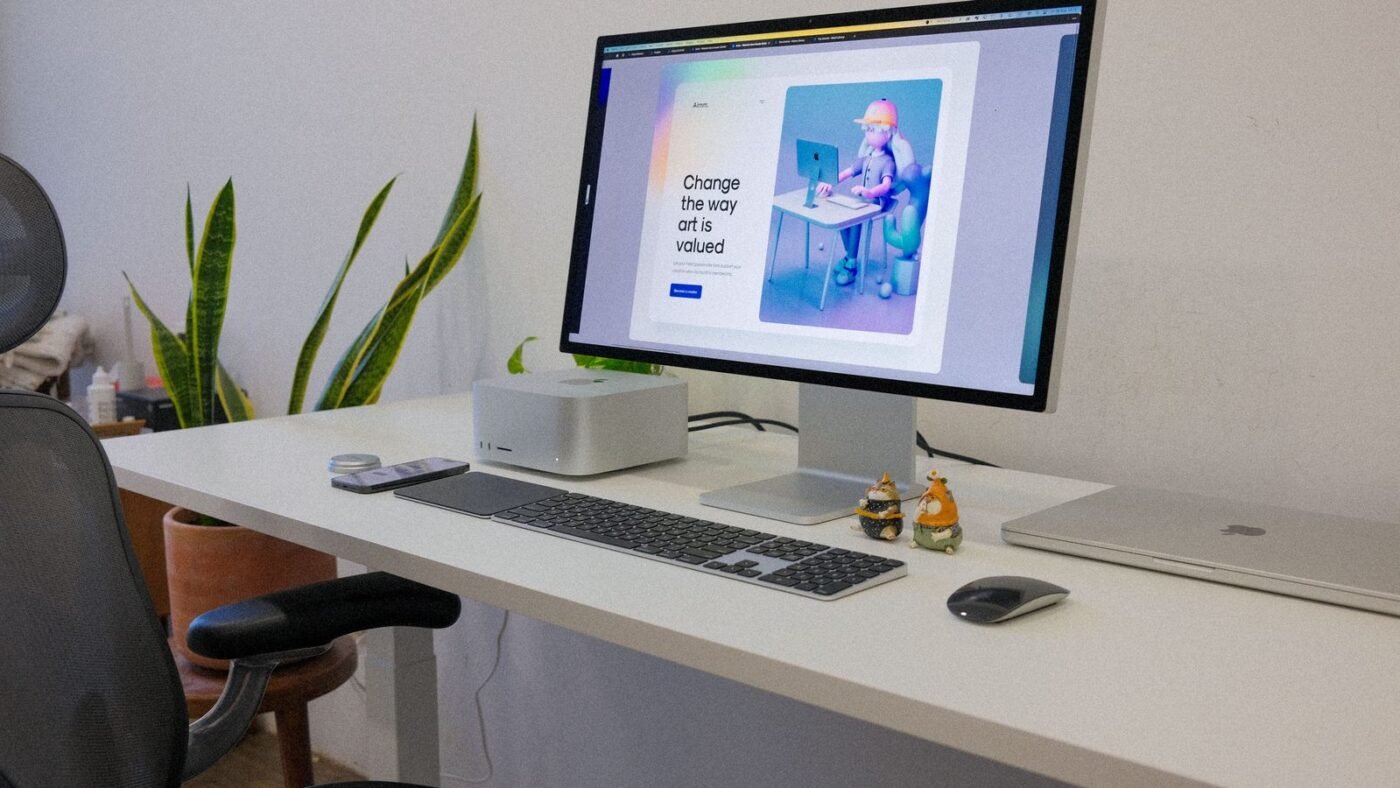
TL;DR: Meta has released Muse Spark Open, an open-weight AI model with 816 billion total parameters (42 billion active per token) and a 1-million-token context window. Meta worked with Apple so the model can run locally on two M5 Ultra Mac Studios with 512GB of memory each, or four with 256GB each. Apple says four Macs generate more than 36 tokens per second. The catch: the 512GB Mac Studio isn’t on sale yet, and a single 256GB M5 Ultra Mac Studio already costs at least $10,799, according to CNBC.
Meta’s Muse Spark Open is the company’s new open-weight model, and it arrived on October 15 with an unusual partner on stage: Apple. In its launch post, Meta calls it “the most capable US open-weight model to date” and says it is “the first model in its class to run on your desktop using two Apple M5 Ultra Mac Studios.” The same day, Apple published its own benchmarks and released a new version of its MLX machine learning framework. Here’s what the model is, what it takes to run it at home, and why the Meta-Apple pairing matters.
What Meta released
Muse Spark Open is a mixture-of-experts (MoE) model, meaning only a fraction of its parameters work on each token. Meta describes it as natively multimodal and “built for coding and agentic work,” saying it excels at long-horizon tasks, complex software engineering and multi-step reasoning. If you’re new to the term, our explainer on what agentic AI means covers why “long-horizon” tasks are the new battleground.
| Spec | Muse Spark Open (per Meta) |
|---|---|
| Total parameters | 816 billion |
| Active parameters per token | 42 billion |
| Context window | 1 million tokens |
| Input types | Natively multimodal |
| License | Muse Model License, with “limited commercial terms” |
| Hosted APIs | Baseten, Fireworks AI, Groq, Modal, Nebius, OpenRouter, Together AI |
| Weight downloads | Hugging Face, Amazon SageMaker AI, Google Cloud Model Garden, Microsoft Foundry Models |
Meta says the model runs on inference engines including SGLang, vLLM, TensorRT-LLM, Hugging Face Transformers, Apple MLX, llama.cpp and Unsloth. It also says the release carries “additional safety post-training” because open weights bring their own risks, and that it met the thresholds of its Meta Superintelligence Scaling Framework. A full evaluation report is promised “soon.”
This is a different product from the proprietary model Meta launched earlier in the week. We covered that one in Meta’s Muse Wonder launch. CNBC reports that Meta AI chief Alexandr Wang was upfront about the gap: “These aren’t the most capable models that we’ve developed or released,” he said, adding that Meta expects developers to tinker with it at small scale and then scale up their usage.
What it takes to run Muse Spark Open on a Mac
The headline claim is local inference on Apple hardware. Meta’s hardware platforms page lists the supported Apple setup as Mac Studio with M5 Ultra in one of two configurations, using the NVFP4 (4-bit) checkpoint and MLX:
- Two Mac Studios with 512GB of unified memory each, or
- Four Mac Studios with 256GB each.
MLX splits the model across the Macs over RDMA on Thunderbolt 5, which needs macOS 26.2 or later and a direct link between every pair of Macs. Apple’s machine learning research post explains why one machine isn’t enough: in its native BF16 precision, the model would need more than 1.6TB of memory for its parameters alone. In NVFP4 the footprint drops to about 493GB, but once you add the memory needed during inference, “the model cannot fit on a single machine.”
How fast is it?
Apple tested three ways of splitting the model across M5 Ultra Mac Studios. At a context size of 8,192 tokens, it reported these decode speeds:
| Setup (Apple’s test) | Decode speed | Time to first token |
|---|---|---|
| 2 Macs, pipeline parallel | 15.74 tokens/sec | 8.4 sec |
| 2 Macs, tensor parallel | 24.99 tokens/sec | 8.2 sec |
| 4 Macs, tensor parallel | 36.73 tokens/sec | 4.8 sec |
Apple describes the four-Mac result as “well above average human reading speed.” It also says it connected each pair of Macs with two Thunderbolt cables to double link bandwidth. In one extra test with four Macs and a 65,536-token context, two cables cut time to first token from about 50.5 seconds to 40.6 seconds. Treat all of these as vendor numbers from Apple’s own lab.
The price problem
Meta’s headline setup is two 512GB machines, but you can’t buy that today. MacRumors notes Apple hasn’t released the 512GB Mac Studio yet; it’s supposed to arrive later this month. According to CNBC, a Mac Studio with the required M5 Ultra and 256GB of memory costs at least $10,799. Do the math on the four-Mac route and you’re at a minimum of $43,196 for the computers alone, before cables or extra storage.
So for most people “running it at home” really means “running it through an API.” Meta lists seven hosted providers on day one, which is the practical way for developers to try the model without buying a small cluster.
Why the Meta-Apple partnership is the bigger story
The two companies have spent years at odds. CNBC points out that the relationship “hit rock bottom” after Apple’s 2021 privacy changes limited ad targeting, which Meta estimated would cut its 2022 revenue by $10 billion. Now, with John Ternus running Apple, the tone has changed. Mark Zuckerberg wrote on X that the model “runs great on new Mac Studios thanks to work with @johnternus and Apple.” Ternus replied: “Congrats to the team! Amazing to run a model of Muse Spark Open’s caliber and scale this efficiently, right from your desk.”
Both companies get something here. Meta gets a high-profile showcase for its rebooted open-weight effort. Apple gets proof that its unified-memory desktops can host a frontier-class model, which CNBC frames as a possible signal of Apple’s growing strength in AI chips against Nvidia. Representatives from both companies declined to say whether this is the start of a deeper relationship.
Who should care
- Developers building coding agents who want an open-weight model they can host on their own hardware or pick from several API providers.
- Privacy-sensitive teams, since CNBC reports the companies pitch local execution as adding a layer of security and saving users money.
- Mac power users already eyeing an M5 Ultra Mac Studio. For lighter local AI on your own machine, see our guide to local AI image generators.
The bottom line
Muse Spark Open is a serious open-weight release on paper: 816B parameters, a 1M-token context window, broad runtime support and a big-name hardware partner. Independent benchmarks and Meta’s full evaluation report are still to come, and the most talked-about setup depends on a Mac Studio you can’t order yet. Watch for real-world agent and coding tests over the next few weeks, and for Apple’s pricing on the 512GB model, which will decide whether “two Macs on your desk” is a real option or just a demo.

The Teck Hustlers Editorial Team covers technology, business, finance and gaming news for readers who want the story behind the headline. Every article is researched, written and edited by our in-house team, checked against company announcements, filings and reputable reporting, and updated when new facts emerge. We focus on what each development means for founders, professionals, investors and everyday users. Have a tip or a correction? Reach us through our contact page.