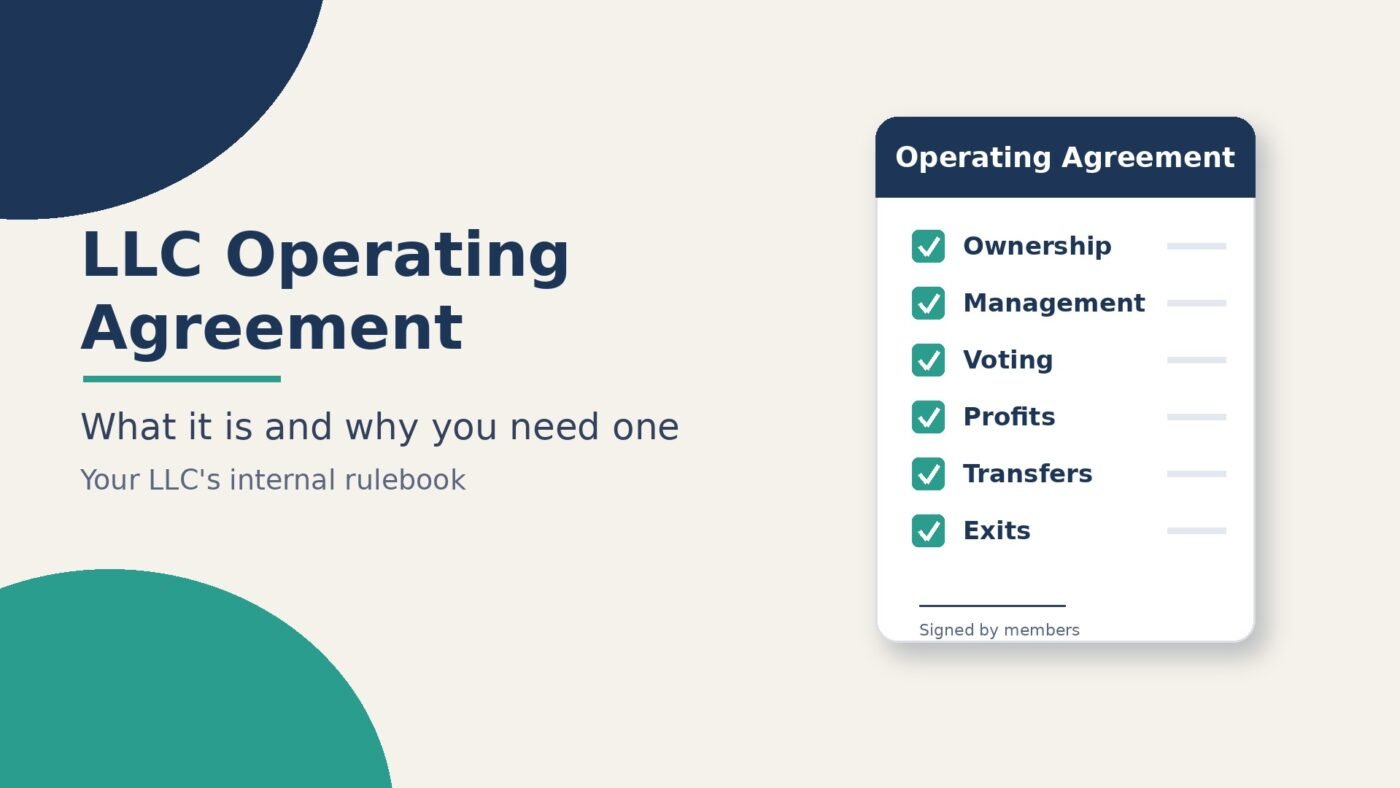
An LLC operating agreement is the internal rulebook for your limited liability company. It says who owns what, who makes decisions, how profits are split, and what happens if an owner leaves, dies or wants to sell. You don’t file it with the state; you sign it and keep it with your records. Most states don’t force you to have one, but a few do, and the SBA says it’s widely recommended even where it isn’t required. Without one, your state’s default LLC rules decide those questions for you.
This guide explains what an operating agreement is, how it differs from your articles of organization, whether your state requires one, what to put in it, and how to write one for a single-member or multi-member LLC.
Not legal advice: this is general information based on SBA and IRS guidance and the state statutes linked below. LLC law varies by state, so check your state’s rules and consider having an attorney review your agreement.
What is an LLC operating agreement?
The SBA describes an operating agreement as a document that describes the structure of your company’s financial and functional decisions: how key business decisions are made, and each member’s duties, powers and responsibilities. “Members” is simply the word for the LLC’s owners.
Think of it as a contract between the owners, and between the owners and the company. It covers the things your state filing doesn’t: who put in how much money, who gets what share of profits, who can sign contracts, and how to handle a disagreement or an exit. In Delaware, for example, the statute defines the agreement as any agreement of the members “as to the affairs of a limited liability company and the conduct of its business”, whatever it’s called.
Operating agreement vs articles of organization
People often mix these up. The articles of organization (called a certificate of formation in some states) are what you file with the state to create the LLC. The operating agreement is what you write afterward, or at the same time, to run it.
| Articles of organization | Operating agreement | |
|---|---|---|
| Purpose | Creates the LLC with the state | Sets the internal rules for running it |
| Filed with the state? | Yes | Usually no; you keep it on file |
| Public? | Generally a public record | Usually private between members |
| Typical contents | Name, address, members, registered agent | Ownership, voting, profits, management, transfers, exits |
| Length | Short form | A few pages to dozens, depending on complexity |
The SBA lists the articles of organization as a simple document that describes the basics of your LLC, including the company name, address, member names and the registered agent. If you haven’t filed yours yet, start with our guide on how to start an LLC.
Do you need an LLC operating agreement?
Practically, yes. Legally, it depends on your state, and “required” doesn’t mean the same thing everywhere. Here are three real examples from state law:
- New York is strict. Its LLC law says the members “shall adopt a written operating agreement”, and it can be entered into before, at the time of, or within ninety days after filing the articles of organization.
- Delaware is flexible. Its statute says the agreement can be “written, oral or implied”, and a one-member agreement isn’t unenforceable just because only one person signed it.
- California is similar. Its code defines an operating agreement as the agreement of all members, “whether oral, in a record, implied, or in any combination thereof”, and it expressly includes a sole member.
So in some states your LLC may technically have an “agreement” even if nobody wrote anything down. That’s not much comfort if you ever need to prove what was agreed. A written, signed document is the only version you can hand to a bank, a partner or a judge.
Many states don’t require an operating agreement at all. Even there, the SBA’s advice is the same: it’s widely recommended to create one to protect yourself and your business, even if your state doesn’t mandate it.
Why it matters, even for a one-person LLC
If you’re the only owner, an operating agreement can feel like paperwork for its own sake. It isn’t. Here’s what it does for you.
It replaces your state’s default rules
Every state’s LLC statute has fallback rules that apply when the members haven’t agreed otherwise. You can see this in the wording of the laws themselves; Delaware’s rules on members lending to or doing business with the LLC, for example, start with “Except as provided in a limited liability company agreement”. Default rules are written to be generic. They may not match how you and your partners actually want to split profits, vote, or handle a departure.
It helps keep the LLC separate from you
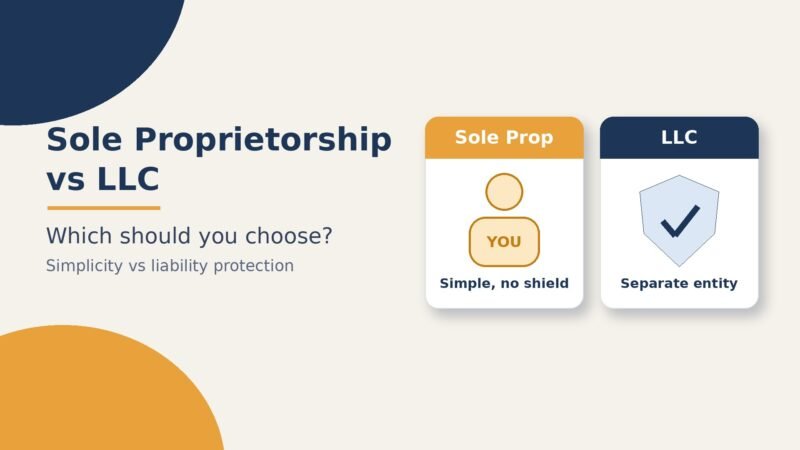
The main reason to form an LLC is that it protects you from personal liability in most instances. That protection works best when the LLC clearly operates as its own business: its own bank account, its own records, and its own rules. An operating agreement is part of that paper trail. If you’re still weighing whether the protection is worth it, our sole proprietorship vs LLC guide covers where the shield stops.
Banks and partners may ask for it
When you open a business bank account, the SBA notes banks commonly ask for your business’s formation documents and ownership agreements, along with your EIN. An operating agreement shows who owns the LLC and who can sign for it. You’ll also need an EIN for the account; here’s how to apply for an EIN online for free.
It plans for the day something changes
The SBA warns that when a member joins or leaves, some states may require the LLC to be dissolved and re-formed unless there’s already an agreement covering buying, selling and transferring ownership. For a single owner, the agreement is also where you can say who takes over or what happens to the business if you become unable to run it.
What to include in an LLC operating agreement
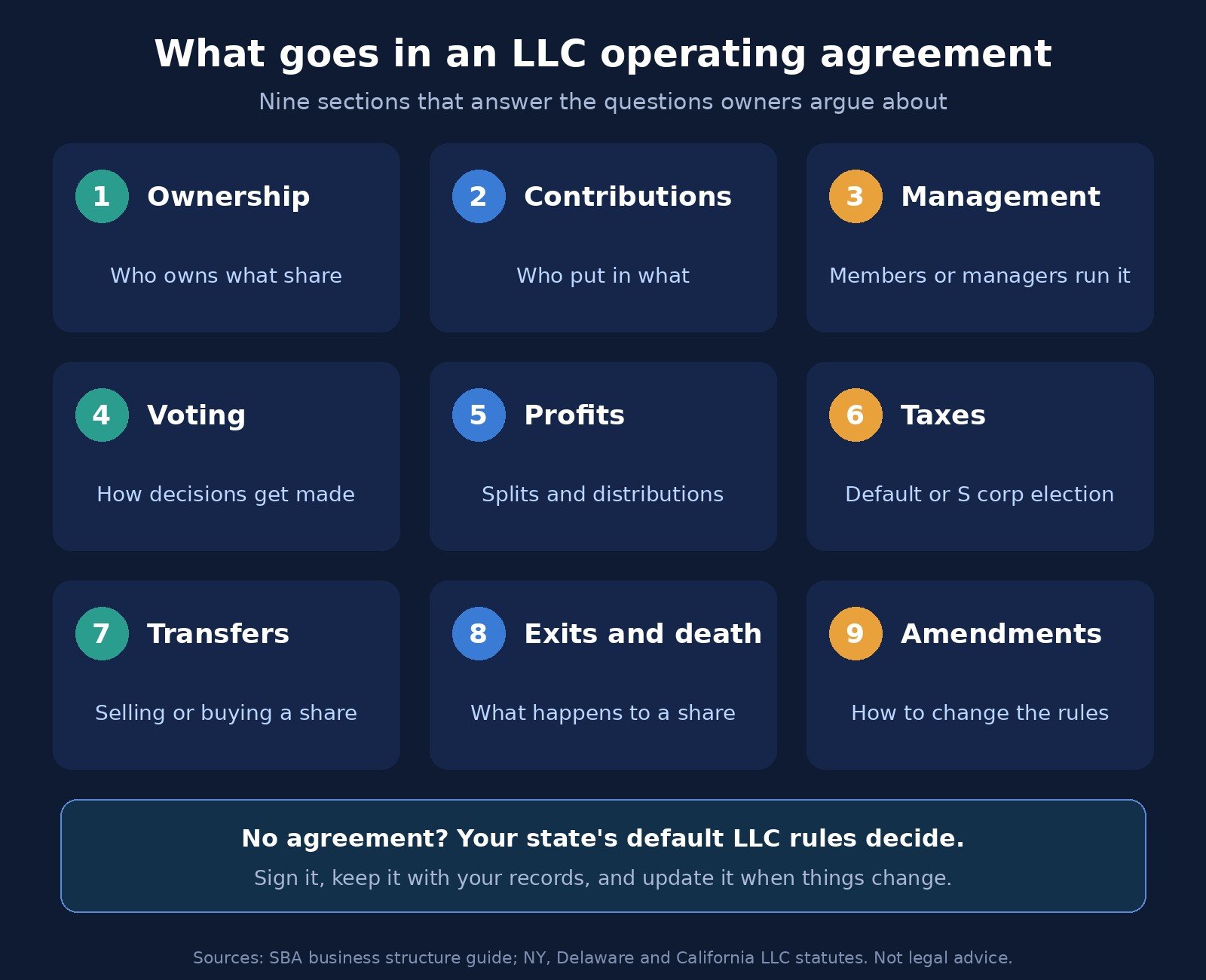
There’s no single required format, but most agreements answer the same set of questions. Use this as a checklist.
| Section | The question it answers |
|---|---|
| Basics | What’s the LLC’s legal name, principal address, registered agent and purpose? When was it formed, and in which state? |
| Members and ownership | Who are the owners, and what percentage does each hold? |
| Capital contributions | What did each member put in (cash, equipment, work)? Will anyone have to contribute more later? |
| Management | Is the LLC run by all members, or by one or more managers? Who can sign contracts and open accounts? |
| Voting and decisions | Do votes follow ownership percentage or one person, one vote? Which big decisions need everyone’s approval? |
| Profits, losses and distributions | How are profits and losses split, and when is money paid out to members? |
| Taxes | How is the LLC taxed, and who handles the returns? Will you elect S corp status? |
| Transfers and buyouts | Can a member sell their share to an outsider? Do the other members get first refusal? How is a share valued? |
| Death, disability or exit | What happens to a member’s share if they die, become disabled or quit? |
| Disputes | How will disagreements be settled (for example, mediation before court)? |
| Dissolution | What triggers closing the LLC, and how are assets divided after debts are paid? |
| Amendments | How can the agreement itself be changed, and who has to agree? |
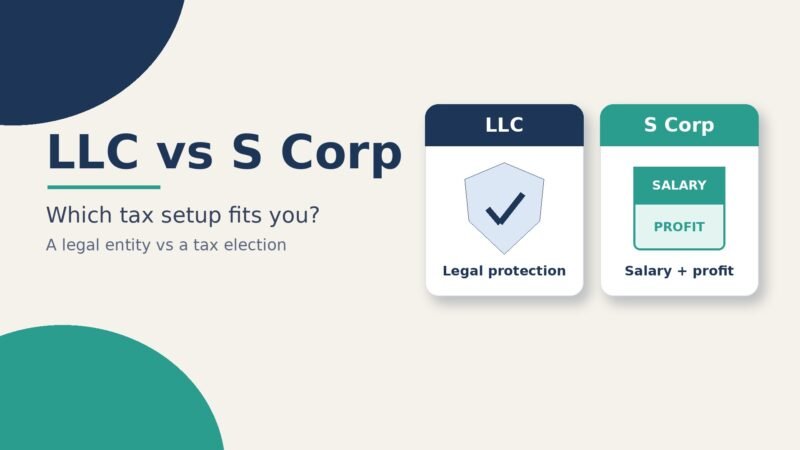
The tax section deserves a note. By default the IRS treats a one-member LLC as a disregarded entity and an LLC with two or more members as a partnership, unless it elects to be treated as a corporation. If you’re thinking about that election, our LLC vs S corp guide walks through when it can pay off, and our guide to estimated taxes for the self-employed covers the quarterly payments most LLC owners make.
Single-member vs multi-member operating agreements
The structure is the same, but the focus changes.
Single-member LLC
A single-member agreement is usually short. Its main jobs are to show that the LLC is a separate business you own 100%, to state how it’s managed (usually by you), to record what you contributed, and to plan for succession: who can step in or inherit your interest if something happens to you. Both Delaware and California law say plainly that a one-member agreement is still enforceable.
Multi-member LLC
With partners, the agreement does much more work. The sections on contributions, profit splits, voting, buyouts and exits are where most real disputes start, so spell them out. Decide now what happens if a partner stops contributing, wants out, or wants to bring in their own investor. It’s far easier to agree on those rules while everyone gets along.
Member-managed vs manager-managed
Your agreement should say which model you use:
- Member-managed: all owners take part in running the business and can usually act on its behalf. This is the common choice for small LLCs and single-member LLCs.
- Manager-managed: the owners appoint one or more managers (who may or may not be members) to run day-to-day operations, while other members act more like passive investors.
Your state’s articles of organization form may also ask which management type you chose, so make sure the two documents match.
How to create an LLC operating agreement
- Check your state’s rules. Look up your state’s LLC statute or Secretary of State guidance to see whether a written agreement is required and whether there’s a deadline, like New York’s ninety-day window.
- Gather the basics. You’ll need the LLC’s legal name, formation date, registered agent, and each member’s name, contribution and ownership percentage.
- Decide the big questions. Management model, voting rules, profit splits, distributions, and what happens on a transfer, death or exit. Use the checklist table above.
- Write it down. A template can be a starting point for a simple single-member LLC, but edit it to fit your state and your actual arrangement. With partners or outside investors, an attorney’s review is worth considering.
- Have every member sign and date it. Give each member a copy.
- Store it with your LLC records. Keep it with your articles of organization, EIN letter and other formation documents. You usually don’t file it with the state.
- Update it when things change. New member, ownership change, tax election, or a change in who manages the business? Amend the agreement in writing, following its own amendment rules.
Common mistakes to avoid
- Skipping it because you’re the only owner. A one-person LLC still benefits from a written record of ownership, management and succession.
- Using a template without reading it. Generic forms may include clauses that don’t fit your state or your deal, or leave out the ones you need.
- Letting it contradict your articles. If your filing says manager-managed and your agreement says member-managed, you’ve created confusion.
- Never updating it. An agreement that lists a partner who left two years ago is a problem waiting to happen.
- Relying on a handshake. Even where oral agreements count, proving one is hard. Put it in writing.
- Mixing personal and business money anyway. An operating agreement doesn’t help much if the LLC’s money and yours run through the same account.
FAQ
What is an LLC operating agreement in simple terms?
It’s the written rulebook for your LLC. It records who owns the company, how decisions are made, how profits are shared, and what happens if an owner leaves or the business closes. It’s an internal document signed by the members, not something you usually file with the state.
Is an operating agreement legally required for an LLC?
It depends on the state. New York’s LLC law says members shall adopt a written operating agreement. Other states, including Delaware and California, recognize oral or implied agreements, and many states don’t require one at all. The SBA recommends having one either way.
Does a single-member LLC need an operating agreement?
It’s strongly recommended. A single-member agreement shows the LLC is a separate business, records your ownership and management, and plans for succession. Delaware and California law both state that a one-member agreement is enforceable.
Do I file my operating agreement with the state?
Usually not. You file articles of organization (or a certificate of formation) with the state to create the LLC, and you keep the operating agreement with your company records. Check your state’s rules to be sure.
What happens if my LLC doesn’t have an operating agreement?
Your state’s default LLC rules fill the gaps on things like voting, profit splits and member departures. Those rules are generic and may not match what you and your partners intended, and in some states a member leaving could even force the LLC to dissolve and re-form, according to the SBA.
Can I write my own LLC operating agreement?
Yes. There’s no rule that a lawyer must write it, and many single-member owners start from a template and customize it. For multi-member LLCs, outside investors or unusual profit splits, having an attorney review it is a sensible step.
Can I change my operating agreement later?
Yes. Most agreements include an amendment section that explains how to change them, usually with the written consent of some or all members. Amend it whenever ownership, management or tax treatment changes.
The bottom line
An LLC operating agreement is the document that turns your LLC from a state filing into a business with clear rules. It sets out ownership, decisions, money and exits, and it takes your state’s generic defaults out of the driver’s seat. A few states require one, and in New York it must be written, but the SBA recommends one for every LLC. Whether you’re a one-person side hustle or a three-partner startup, write it, sign it, store it with your records, and update it when things change. This article is general information, not legal advice.

The Teck Hustlers Editorial Team covers technology, business, finance and gaming news for readers who want the story behind the headline. Every article is researched, written and edited by our in-house team, checked against company announcements, filings and reputable reporting, and updated when new facts emerge. We focus on what each development means for founders, professionals, investors and everyday users. Have a tip or a correction? Reach us through our contact page.