We review and update this article regularly as new information becomes available.
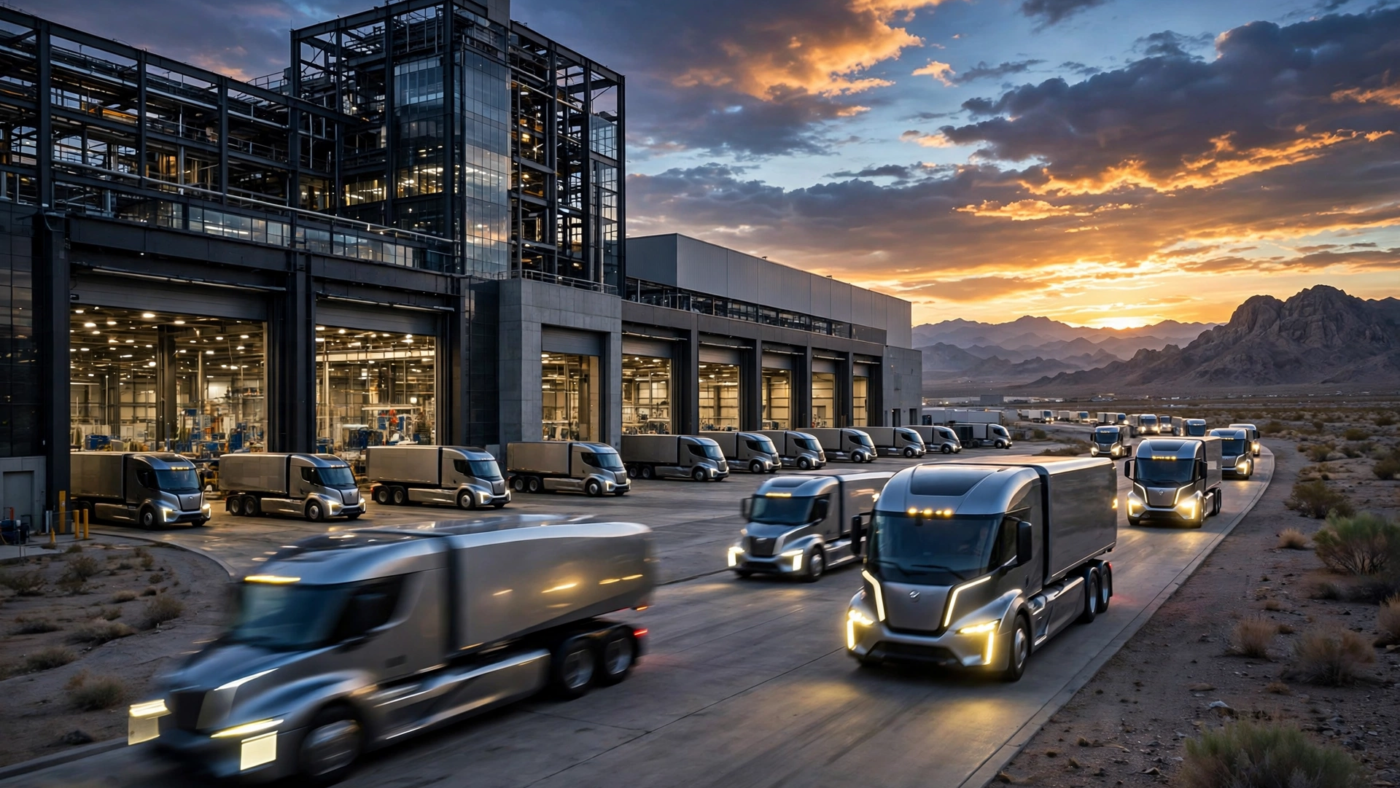
Eight years. That is how long it took Tesla to go from unveiling the Semi to opening an actual factory to build it at scale. The plant just opened next to Tesla’s Reno Gigafactory, and the company says it can eventually turn out up to 50,000 trucks a year, roughly 1,000 a week, while adding around 3,000 local jobs.

TL;DR: Tesla’s most capable Semi variant now offers more than 500 miles of range on a full charge and starts just under $300,000 before incentives, with shorter-range versions also planned. The truck is roughly 1,000 pounds lighter than the 2017 concept. Production was originally slated for 2019, and blew past that date thanks to the pandemic, chip shortages, and Tesla redesigning parts of the truck based on feedback from early pilot customers.
Heavy trucks are a small slice of the vehicles on the road but a disproportionately large source of pollution, and Tesla’s own team has been blunt about the stakes and about their own missteps along the way.
“We fully admit we were wrong about the windows,” said Dan Priestley, head of the Semi program, who also noted that heavy trucks account for “16% of emissions despite making up just 1% of vehicles.”
Lars Moravy, who leads Tesla’s engineering, added that the company “occasionally we get a little too far out there” when it comes to overly bespoke design choices, a rare bit of self-aware humility from a company not usually known for admitting its concept vehicles overshot practicality. Whatever the exact windows story was, the willingness to say it plainly out loud is unusual, and probably earned.
Buyers can technically take delivery whenever they are ready, which sounds great until you consider the actual bottleneck: charging infrastructure for heavy electric trucks barely exists outside of a handful of depots. Tesla can build 1,000 trucks a week, but that number means very little if there is nowhere for those trucks to reliably recharge on long hauls. Building the factory was, in some ways, the easier problem to solve.
None of this delay is unique to Tesla. Every serious attempt at electrifying heavy-duty trucking, from Nikola’s collapse to Daimler’s slower, steadier rollout, has run into the same wall: batteries good enough to move 80,000 pounds hundreds of miles are hard to engineer and even harder to manufacture at any real volume. Tesla just happens to be the company that talked about it loudest starting in 2017, which is exactly why an eight-year gap between announcement and factory ribbon-cutting stands out as much as it does.
Bottom Line: A factory that can build 1,000 trucks a week is a genuine milestone, not a paper promise. But the trucking industry runs on infrastructure Tesla does not control, and until fast charging for heavy trucks catches up, this factory’s real ceiling is set by depots and corridors that do not exist yet.

The Teck Hustlers Editorial Team covers technology, business, finance and gaming news for readers who want the story behind the headline. Every article is researched, written and edited by our in-house team, checked against company announcements, filings and reputable reporting, and updated when new facts emerge. We focus on what each development means for founders, professionals, investors and everyday users. Have a tip or a correction? Reach us through our contact page.