Published: October 2, 2026 · Last updated: October 2, 2026
TL;DR: Samsung raised the price of every Galaxy S26 model by $100 in the US, citing rising memory chip costs. Micron says the RAM shortage behind it will get worse through 2027 and 2028, and warns that humanoid robots could eventually need over 200GB of memory each.
Blame the robots. Seriously.
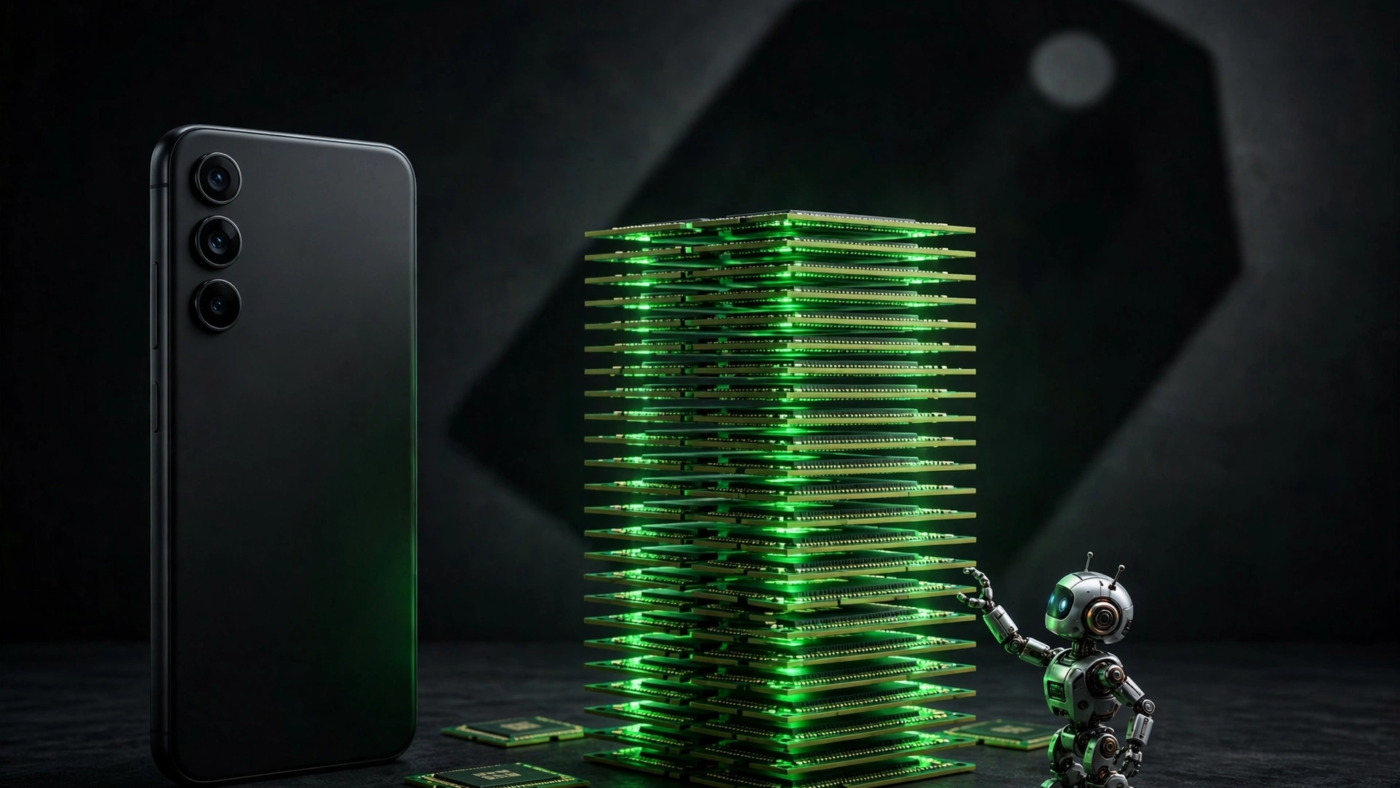
Samsung quietly raised US prices across its entire Galaxy S26 lineup by $100 per model this week, with an equivalent hike of roughly 150,000 won applied in South Korea. The company attributed the increase to rising memory chip costs, which is corporate shorthand for a problem that’s been building across the entire electronics industry for most of the year: there isn’t enough RAM to go around, and the companies that make it don’t expect that to change anytime soon.
Micron, one of the world’s largest memory manufacturers, said this week that the current shortage will likely intensify through 2027 and 2028 before any real relief arrives. The company’s reasoning connects two trends that don’t usually get mentioned in the same sentence as your phone upgrade: AI data centers consuming memory at a scale that didn’t exist a few years ago, and a longer-term shift toward what the industry calls physical AI, meaning robots. Micron’s own estimate puts potential memory demand for a single humanoid robot at more than 200GB by 2030, which is a genuinely staggering number next to the 8 or 12GB sitting in your phone right now.
Here’s the mechanism in plain terms. Memory chip factories take years to build and can’t simply scale output on demand. When AI data center operators started buying memory in volumes nobody fully planned for, factories that were already running near capacity got squeezed. Phone makers, laptop makers, and every other device manufacturer that needs RAM are now competing with hyperscalers for the same limited supply, and hyperscalers tend to have deeper pockets and longer-term supply contracts than a smartphone division does. The $100 you’re paying extra for a Galaxy S26 is, more or less, the visible edge of a much bigger supply fight happening in factories you’ll never see.
Samsung isn’t likely to be the last to pass this along either. Phone, laptop, and PC manufacturers across the industry source memory from a handful of the same suppliers, Micron among them, and a shortage affecting one affects all of them roughly in proportion to how memory-hungry their products are. If Micron’s 2027-2028 timeline holds, this isn’t a one-quarter blip that corrects itself by the next product cycle. It’s a multi-year pricing environment that device makers will need to plan around, and that buyers will need to budget around.
The humanoid robot angle sounds like science fiction dropped into a hardware earnings call, but it’s the part of Micron’s warning worth paying closest attention to. If physical AI systems really do start shipping at scale with memory requirements an order of magnitude above anything in consumer electronics today, the current squeeze is closer to the opening chapter than the whole story.
Consumers shopping right now are left with an unusual calculation. Waiting a product cycle for prices to come back down has been the default advice for years when a component shortage hits, because shortages have historically been short. Micron’s own guidance suggests that advice doesn’t apply this time. If the squeeze genuinely runs through 2028, holding out for a correction could mean holding out for three years, by which point the phone you were waiting to buy at a lower price has been replaced twice over anyway.
Other manufacturers have stayed quieter about pricing so far, but quiet doesn’t mean immune. Apple, Google, and every PC laptop maker buy from largely the same memory supply chain Samsung does, and a shortage severe enough to move Samsung’s pricing publicly is unlikely to spare everyone else by coincidence. The more honest expectation is that Samsung simply moved first, not that Samsung is uniquely affected.
None of this changes the actual spec sheet on a Galaxy S26. The phone works exactly the same today as it did before the price jump. What changed is what you’re paying to be a device maker competing with a data center for a chip supply that was never built with your margins in mind.
Related: AMD Just Paid $8.2 Billion for Fei-Fei Li’s Lab, and Made Her Chief Scientist and Tesla Will Now Let You Drive Off Mid-Charge, After a Supercharger Station Shooting.
Bottom Line: That extra $100 on your next phone isn’t a Samsung markup. It’s the first visible bill for an AI memory arms race that’s just getting started, and it’s going to show up on a lot more price tags before it’s done.
Follow Teck Hustlers: Facebook · X · Instagram · LinkedIn · TikTok · Pinterest

The Teck Hustlers Editorial Team covers technology, business, finance and gaming news for readers who want the story behind the headline. Every article is researched, written and edited by our in-house team, checked against company announcements, filings and reputable reporting, and updated when new facts emerge. We focus on what each development means for founders, professionals, investors and everyday users. Have a tip or a correction? Reach us through our contact page.