A startup called Physical Superintelligence wants to replace the slow, expensive process of doing physics research with a team of virtual physicists, and it’s already found paying customers before most people have heard the company’s name.
PSI raised $58 million in a seed round led by Breakthrough Energy Ventures, Bill Gates’s climate-focused investment vehicle, back in September. The investor list is unusually eclectic for a seed-stage physics company: Dragon Global, Robot Ventures, Solari, Susa, Ron Conway’s SV Angel, Valkyrie, plus individual checks from Balaji Srinivasan and Anthony Scaramucci, and current or former people from OpenAI, Nvidia, SoftBank Energy, Oracle, and Hugging Face. That’s the kind of investor bench you see when a lot of people in AI believe something is genuinely about to change, not just another model wrapper.
What PSI is actually building
The company’s core platform is called Emmy, named after the physicist Amalie Emmy Noether, and PSI describes it as a team of virtual physicists built on what it calls a sovereign reasoning engine paired with a large, curated inventory of simulations. The stated goal, in the company’s own words, is to discover and commercialize physics breakthroughs at scale, rather than waiting on the traditional academic pipeline of grants, papers, and peer review that can take years to produce a usable result.
PSI founder and CEO Matt Pines, who started the company alongside Alex Klokus and Dr. Alexander Wissner-Gross, draws a sharp line between what makes this hard and what makes large language models comparatively easy to improve. “At the end of the day, physics is different than math because it’s the real world,” Pines has said. “Nature gets a vote in your models of reality.” It’s a useful way to think about why physics has resisted the kind of rapid AI progress that’s shown up in coding and pure mathematics, you can’t just generate more training data when the ground truth is an experiment that hasn’t been run yet.
“At the end of the day, physics is different than math because it’s the real world. Nature gets a vote in your models of reality.” — Matt Pines, CEO and co-founder, PSI
PSI also has a second product, Get Physics Done, an AI copilot for working physicists, which the company is open-sourcing rather than keeping proprietary. That’s a notable choice for a well-funded startup, and it suggests PSI sees more value in becoming the standard tool physicists reach for than in locking the copilot behind a paywall from day one.
Already generating revenue, not just promises
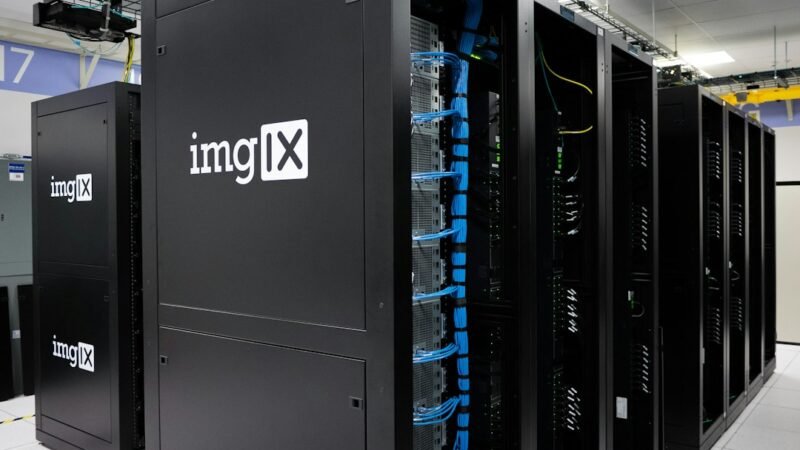
PSI’s first commercial application is AI data center design, handling the genuinely complicated multiphysics problem of power, cooling, network, and compute all interacting inside a single facility, for both terrestrial sites and the more exotic orbital data centers some companies are now exploring. The company says its current revenue comes from exactly this kind of optimization work, simulating heat, power, water, and sound flows for data center operators who need a faster, cheaper answer than a traditional engineering consultancy can provide.
The most eye-catching claim attached to PSI so far involves early access to an unreleased Anthropic model, which the company has referred to internally as Fable 5.2, that it used to solve the Aaronson-Ambainis conjecture, a notable open problem in quantum computing theory. David Turturean, a PSI technical staff member and recent MIT graduate, put the implication for traditional academic publishing bluntly: “In a few months, like, why would you even put out a paper?” That’s a provocative line, and the detail that matters is that PSI is choosing to be transparent about its methods rather than treating them as a trade secret. Jim Halverson, a Northeastern physics professor who advises the company, framed that choice as deliberate: “Best practices are still emerging. We figured that transparency is a good way to go.”
PSI is also the founding technical partner of the Fermi Explorer Mission, a nonprofit describing itself as an AI-planned interstellar mission, which gives a sense of how far the company’s ambitions extend beyond data center cooling, even if that’s where the actual invoices are coming from today.
PSI’s seed round lands amid a broader surge of money flowing into AI-for-science startups, a category that was a relatively quiet niche just a couple of years ago and is now attracting serious venture and strategic capital. Breakthrough Energy Ventures leading the round is itself a signal: the firm typically backs companies working on hard, capital-intensive problems in energy and climate, not quick-turnaround software plays, and its involvement suggests PSI’s pitch extends well beyond data center optimization toward genuinely novel materials and energy research down the line. The mix of individual backers, from crypto-adjacent figures like Balaji Srinivasan to finance veterans like Anthony Scaramucci, also reflects how broadly the appeal of “AI accelerates science” has spread beyond the usual AI-focused venture firms.
A crowded, strange corner of the AI funding map
AI has already reshaped coding and, to a real extent, pure mathematics. Physics has been more stubborn, precisely because reality doesn’t generate synthetic training data on demand. If PSI’s approach, pairing a large simulation inventory with frontier reasoning models, genuinely accelerates physics discovery rather than just producing confident-sounding guesses, it would be one of the more significant applications of AI research to date. The data center revenue is real and modest. The quantum computing conjecture claim is the kind of thing that needs independent verification before anyone treats it as proven. Both are worth tracking as PSI scales.
PSI’s bet also echoes a broader shift happening across robotics and physical AI right now. Serve Robotics made a similar wager this month, deciding the infrastructure underneath a hard physical problem can be worth more as a product than the original application that forced the company to build it.
The bottom line
PSI is making a serious, well-funded bet that the bottleneck in physics research is compute and search, not human insight, and that a well-resourced AI system paired with the right simulation data can move faster than the traditional academic pipeline. The data center business proves there’s at least one paying use case today. Whether Emmy can genuinely do novel physics, rather than very convincingly summarize it, is the question that will determine whether this seed round looks visionary or merely well-timed.

The Teck Hustlers Editorial Team covers technology, business, finance and gaming news for readers who want the story behind the headline. Every article is researched, written and edited by our in-house team, checked against company announcements, filings and reputable reporting, and updated when new facts emerge. We focus on what each development means for founders, professionals, investors and everyday users. Have a tip or a correction? Reach us through our contact page.