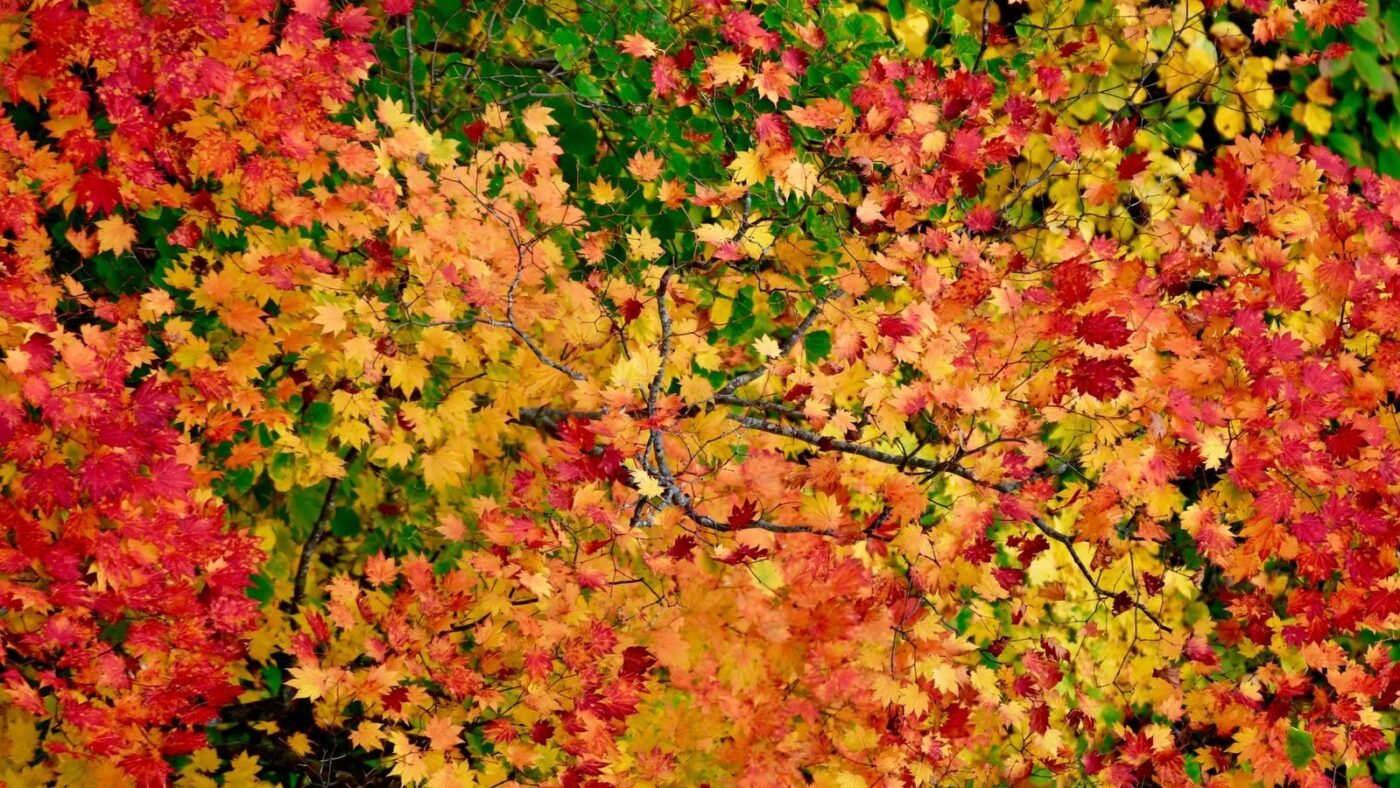
TL;DR: Leaves change color in the fall because trees stop making chlorophyll, the green pigment they use to turn sunlight into food. As the green fades, yellow and orange pigments called carotenoids, which were there all summer, finally show through. Some trees also make new red and purple pigments called anthocyanins in autumn. The main trigger is longer nights, while the weather decides how bright the colors get.
Every autumn, forests that were green all summer turn gold, orange and crimson within a few weeks. It looks like magic, but it’s really chemistry. So why do leaves change color in the fall, and why are some years so much more vivid than others? Here’s the science, explained simply.
Why are leaves green in the first place?
For most of the year, leaves are busy food factories. They contain chlorophyll, a pigment that absorbs sunlight and uses its energy to turn water and carbon dioxide into sugars. This process is photosynthesis.
Chlorophyll absorbs red and blue light and reflects green, which is why leaves look green. During spring and summer, trees keep making fresh chlorophyll as the old supply breaks down. There’s so much of it that it hides every other color in the leaf.
Why do leaves change color in the fall?
As the US Forest Service explains, the change is driven by three groups of pigments. When days shorten and nights lengthen, trees slow down and then stop making chlorophyll. The green fades, and the other colors take over.
| Pigment | Colors | When it’s made | Example trees |
|---|---|---|---|
| Chlorophyll | Green | Spring and summer, breaks down in autumn | All broadleaf trees |
| Carotenoids | Yellow, orange | Present all season, revealed in autumn | Birch, aspen, hickory, ginkgo |
| Anthocyanins | Red, purple, crimson | Made fresh in late summer and autumn | Red maple, sugar maple, dogwood, sumac |
| Tannins | Brown | Left over as other pigments break down | Many oaks |
Yellow and orange: hidden all summer
Carotenoids are the same family of pigments that make carrots orange and corn yellow. They help leaves capture light, and they’re in the leaf all year. You just can’t see them until the chlorophyll is gone. That’s why trees like birches and aspens turn golden yellow quite reliably every year.
Red and purple: made in autumn
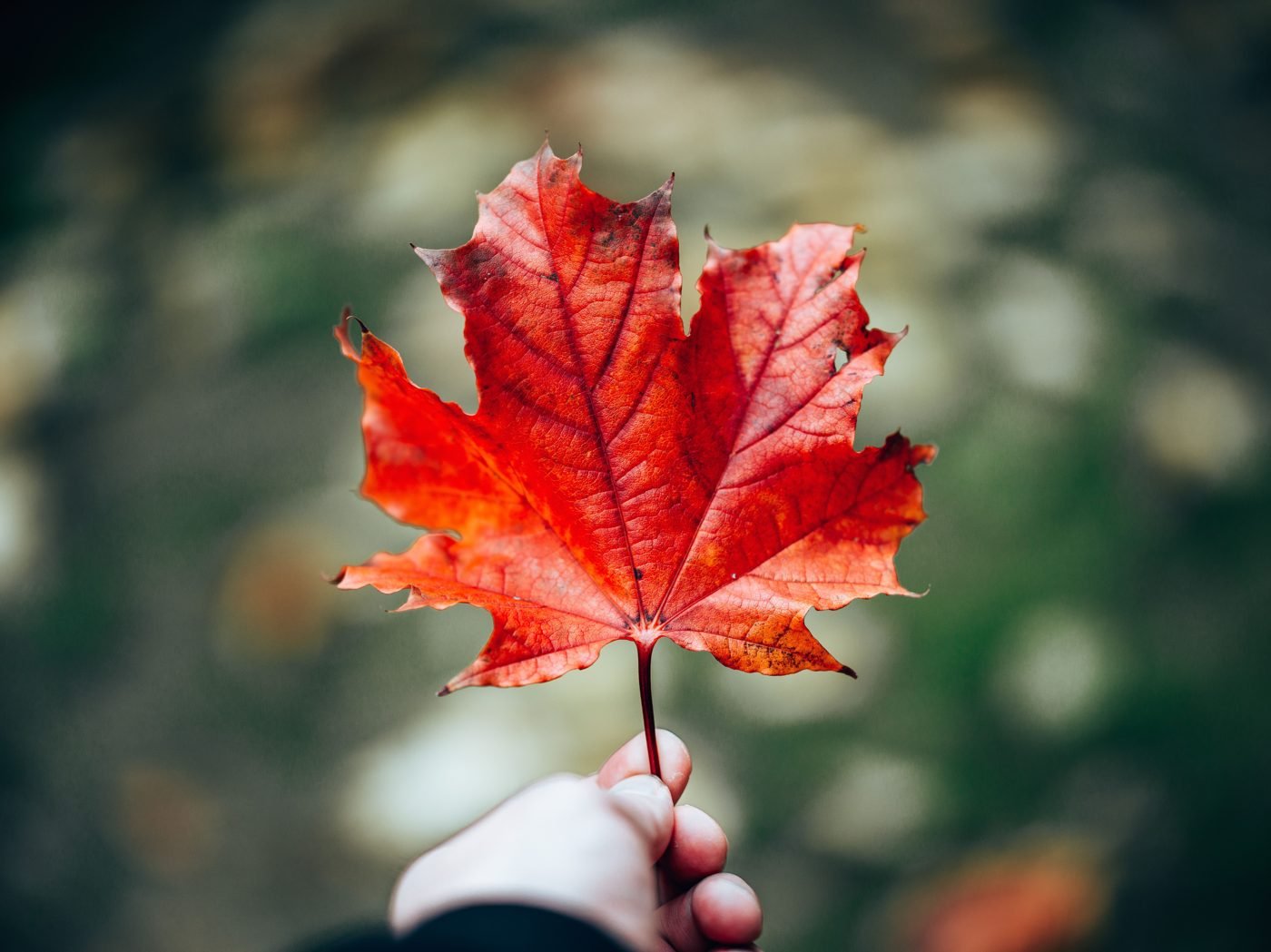
Anthocyanins are different. According to the USDA, most of them are produced in autumn, when bright light and excess sugars trapped in the leaf combine. These are the same kind of pigments found in cranberries, red apples and blueberries. Scientists are still studying exactly why trees spend energy making them right before dropping their leaves. One leading idea is that they act like sunscreen, protecting the leaf while the tree pulls nutrients back out of it.
Why trees drop their leaves at all
For broadleaf trees in cold climates, keeping leaves over winter would be costly. Thin leaves lose water, can be damaged by freezing, and would make very little food on short, dark days. So trees shut them down.
As autumn sets in, a special layer of cells called the abscission layer forms where each leaf stem joins the twig. It slowly cuts off the flow of water and nutrients, which also traps sugars in the leaf and helps the red pigments form. Eventually the leaf breaks off cleanly, leaving a sealed scar behind. Evergreen conifers, like pines and spruces, take a different approach: their tough, waxy needles can survive winter, so most of them stay green all year.
What triggers the color change?
The main signal is night length, not temperature. Trees sense the longer nights of late summer and autumn, and that kicks off the shutdown process. Because night length follows the calendar, leaves change at roughly the same time each year in a given place.
Weather can shift the timing by a week or two, and it has a big effect on how bright the show is.
Why some autumns are more colorful than others
The US Forest Service and SUNY’s College of Environmental Science and Forestry both point to the same conditions for vivid color:
- Warm, sunny autumn days help leaves make lots of sugar.
- Cool nights that stay above freezing help trap those sugars in the leaf, boosting the red pigments.
- A decent amount of soil moisture through the growing season keeps trees healthy.
Things that tend to spoil the colors:
- An early hard frost, which can kill leaves before the reds develop.
- Severe drought, which can delay color or make leaves drop early.
- Long stretches of cloudy, warm, rainy weather, which usually means duller reds.
Yellows and oranges are fairly steady from year to year, since those pigments are always there. The reds are what make a “good” or “bad” foliage season.
Why the same tree can be two colors
You’ll sometimes see a maple that’s red on one side and yellow or green on the other. That’s usually sunlight at work. The side that gets more sun makes more sugar and more anthocyanin, so it turns red first. The shaded side may stay yellow, showing mostly carotenoids.
Fast facts about fall leaves
- The yellow in autumn leaves has been there since spring, hidden by green chlorophyll.
- Red fall color is mostly made new each autumn.
- Brown oak leaves get their color from tannins, which are also found in tea.
- Longer nights, not cold weather, are the main trigger.
- Sunny days and cool, frost-free nights make the brightest reds.
Love this kind of everyday science? Find out why the sky is blue or why the ocean is salty but rivers are not.
FAQ
Do all trees change color in the fall?
No. Most broadleaf trees in temperate climates do, but evergreens like pines, spruces and firs keep their needles, and many tropical trees don’t follow a fall cycle at all.
Why do some leaves turn brown instead of red or yellow?
When the other pigments break down, brown tannins are left behind. Some trees, like many oaks, show a lot of brown, and stressed or frost-damaged leaves often go straight to brown too.

The Teck Hustlers Editorial Team covers technology, business, finance and gaming news for readers who want the story behind the headline. Every article is researched, written and edited by our in-house team, checked against company announcements, filings and reputable reporting, and updated when new facts emerge. We focus on what each development means for founders, professionals, investors and everyday users. Have a tip or a correction? Reach us through our contact page.