Written by Admin Alex · Fact-Checked by M.Ali · Info Verified September 2026
We review and update this article regularly as new information becomes available.
TL;DR: Petlibro’s new Granary 2 lineup uses an onboard AI camera to recognize up to 10 individual cats and can lock the feeder for anyone but the right one. Prices run from $129.99 to $249.99, and a built-in scale tracks how much food actually gets eaten instead of just how much gets dispensed. It launched this month, and advanced health tracking plus camera cloud recording both sit behind separate annual subscriptions.

If you’ve ever owned more than one cat, you already know the exact problem Petlibro is trying to solve. One cat guards the bowl. The other one goes hungry, or worse, the food-motivated one figures out how to open a feeder that was never meant for it in the first place.
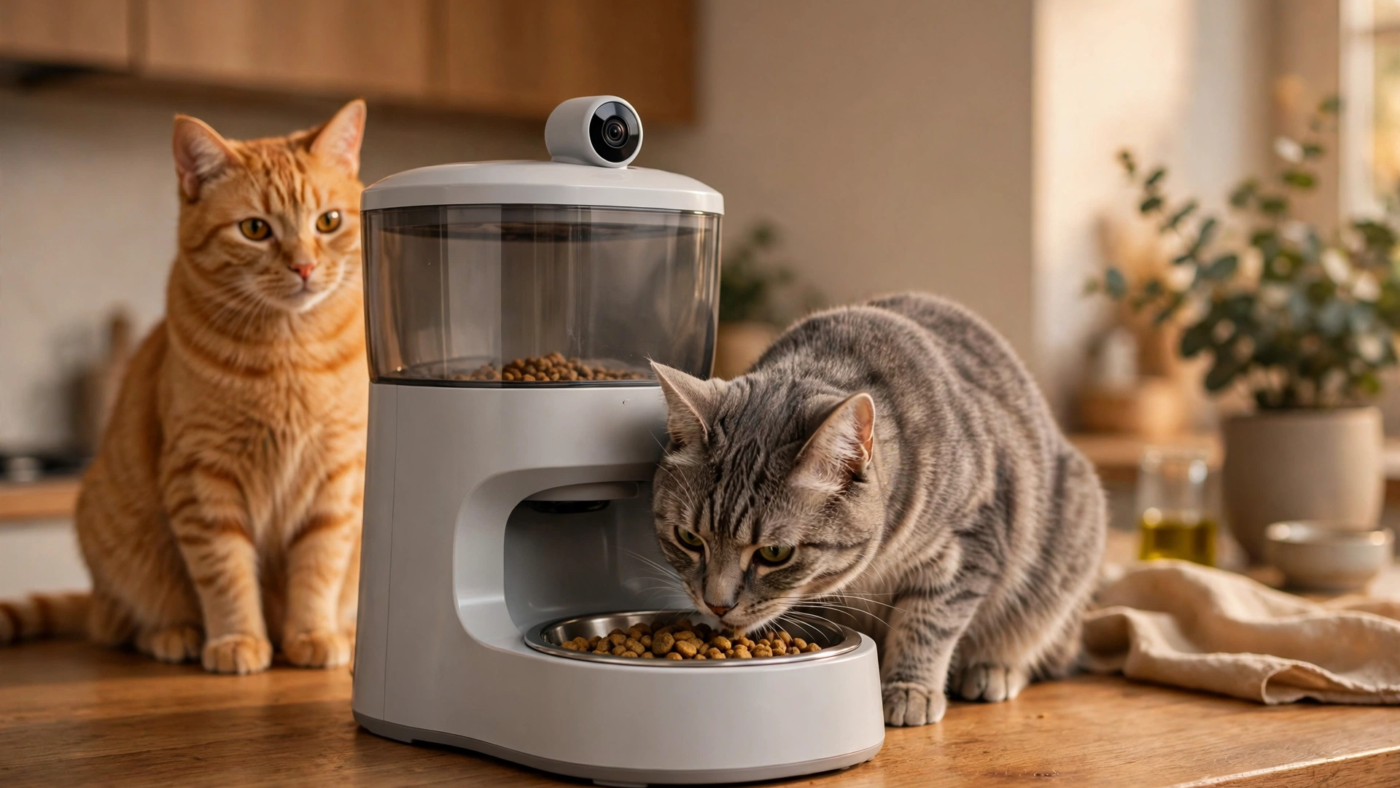
Petlibro’s answer is the new Granary 2 lineup, four models ranging from $129.99 for the base unit up to $249.99 for the top-tier Granary 2 X. The headline feature sits on the Vision and premium models: an onboard camera paired with AI recognition that can tell up to 10 individual cats apart by sight and lock the hopper for anyone who isn’t the assigned pet. No RFID collar tag required, no separate hardware to lose in the couch cushions.
The other meaningful upgrade is a built-in scale inside the feeding tray. Most “smart” feeders track how much food they dispensed, which tells you almost nothing if a second cat wanders over and finishes the bowl the moment your back is turned. Petlibro’s scale measures what’s actually still sitting in the tray, so the app can tell you how much a specific cat really ate, not just how much got poured out.
TechCrunch’s Lauren Forristal, who tested the Vision model ahead of launch, called it “one of the best feeders I’ve tested,” a notable statement given how crowded this product category has gotten over the past two years.
The catch, and there’s always one with connected hardware, sits in the subscriptions. Advanced health tracking requires a Petlibro Care plan at $59.99 a year. If you want the camera’s footage saved to the cloud instead of just used for live recognition, that’s a separate Video Cloud plan at $119.99 a year. Buy the $249.99 model and opt into both add-ons, and you’re looking at north of $300 in year one for a device that, at its core, is still just deciding whose bowl gets to open.
Petlibro isn’t operating in a vacuum here, either. The smart pet tech category has turned into one of the more reliable growth pockets in the broader smart home market, with multi-pet households increasingly willing to pay for hardware that solves a specific daily headache instead of some general-purpose gadget nobody asked for. Feeders, litter robots, and pet cameras have all seen steady iteration over the past two years, and cross-device recognition, the kind that could eventually let a feeder, a water fountain, and a litter box all agree on which cat is which, feels like the logical next step once camera-based ID becomes standard instead of a premium add-on.
Worth it, or a solved problem sold back to you with a subscription
The multi-cat identification problem is real, and camera-based recognition is a genuinely better approach than the RFID tags most competitors still rely on, which cats can dodge by squeezing in sideways or losing the tag off a collar entirely. Cheaper alternatives exist, too. Pawsync sells a $79.99 feeder with its own built-in scale, minus the camera recognition and the subscription layer.
Where you land probably depends on how many cats you’re managing and how much you trust a camera to make the right call at 2 a.m., when the wrong cat is just standing near the feeder rather than actively raiding it.
Bottom Line
Petlibro built the multi-cat feeder that should have existed years ago, and the core hardware sounds like it delivers on the promise. Just go in with your eyes open about the subscription math, because the $129.99 sticker price is not what most multi-cat households will actually end up paying once health tracking and cloud storage get added on.

The Teck Hustlers Editorial Team covers technology, business, finance and gaming news for readers who want the story behind the headline. Every article is researched, written and edited by our in-house team, checked against company announcements, filings and reputable reporting, and updated when new facts emerge. We focus on what each development means for founders, professionals, investors and everyday users. Have a tip or a correction? Reach us through our contact page.