Published: September 25, 2026 · Last updated: September 26, 2026
TL;DR: Oracle quietly filed a force majeure notice on its $165 billion “Project Jupiter” data center in New Mexico, and the culprit isn’t chips or cooling. It’s a natural gas pipeline stuck in permitting purgatory, and the fuel cells the whole site depends on can’t run without it.

Two point four five gigawatts. That’s the power capacity Oracle promised to wire into a stretch of desert in southern New Mexico, enough to light up roughly 1.8 million homes. The price tag attached to it: $165 billion. The deadline: 2028. As of September 24, all three of those numbers are sitting under a legal asterisk.
Oracle sent a force majeure notice to Blue Owl Capital Inc.’s Stack Infrastructure unit, the firm actually building Project Jupiter on Oracle’s behalf. Force majeure is the clause companies reach for when something outside their control makes a deadline impossible to hit. It’s usually invoked to freeze payments and dodge penalties, not to announce a project is dead. Oracle isn’t walking away from Jupiter. It’s buying itself legal cover in case the site doesn’t come online on schedule.
Project Jupiter is one piece of Stargate, the sprawling AI infrastructure push that Oracle, OpenAI and SoftBank Group rolled out with fanfare alongside President Trump. Stargate was pitched as the physical backbone for the next generation of AI models: raw compute at a scale nobody had really tried to build before. Jupiter was supposed to be one of its flagship sites.
A Pipeline That Can’t Keep Up
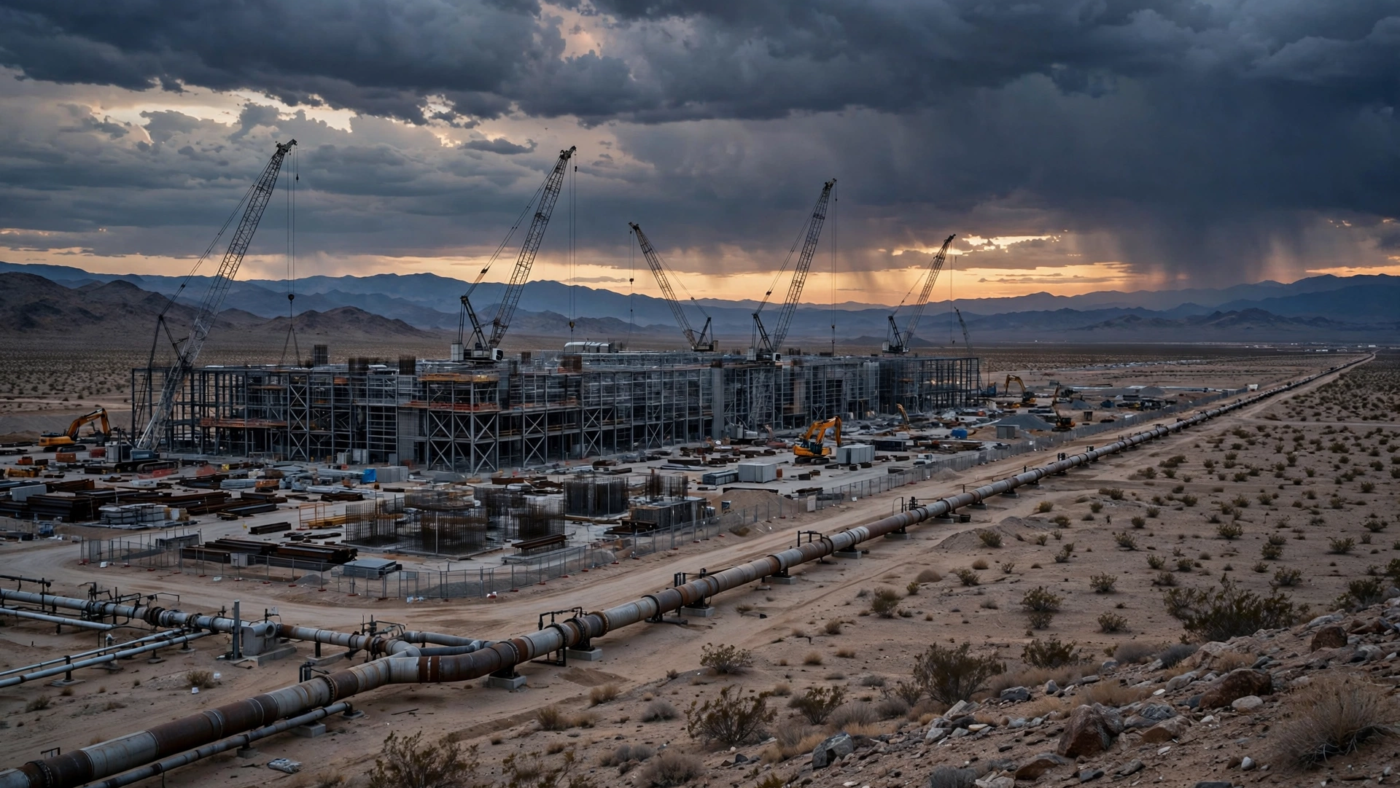
The holdup traces back to something far less glamorous than GPUs: a 17-mile natural gas line called the Green Chile Project. Energy Transfer LP is building it, and it was supposed to be flowing gas by August 2026. It now isn’t expected until February 2027, a six-month slip that lands squarely on top of Jupiter’s own construction timeline.
The delay isn’t a supply chain hiccup or a weather event. It’s regulatory. New Mexico’s State Land Office has repeatedly denied the right-of-way permits Energy Transfer needs to cross state trust lands, after pushback from local environmental groups and objections from the state’s Commissioner of Public Lands, who has pointed to climate risk and resource strain in an already water-stressed region.
That regulatory friction runs straight into a technical choice Oracle made early on. Project Jupiter is built around solid oxide fuel cells from Bloom Energy, chosen specifically because they use far less water than conventional cooling, a real concern in an arid region where a standard setup would draw down local supplies. The tradeoff is that Bloom’s fuel cells need a steady feed of natural gas to run. No pipeline, no gas. No gas, no fuel cells. No fuel cells, no 2.45 gigawatts.
The Market’s Verdict
Wall Street didn’t wait for nuance. Oracle shares dropped 4% the day the notice became public. Blue Owl Capital fell the same amount. Bloom Energy, a step removed from the actual contract dispute but directly exposed through its fuel cell order, took the worst hit at 6%.
Oracle, for its part, is sticking to the script publicly.
“Project Jupiter remains on our planned schedule,” Oracle said in a statement.
Read that line next to the force majeure filing and you get a pretty clear picture of corporate messaging doing two jobs at once. The public line is confidence. The legal paperwork is a hedge against exactly the outcome the public line denies.
Why This Matters Beyond One Site
What makes Jupiter interesting isn’t that a construction project hit a snag. Big infrastructure slips all the time. What makes it interesting is what it slipped on.
This isn’t a chip shortage or a labor dispute. It’s a state land office in New Mexico deciding it isn’t ready to hand over a right-of-way, for reasons that have nothing to do with AI at all. The AI buildout has mostly been described in numbers so far: gigawatts, billions of dollars, chip counts. Jupiter is a reminder that underneath those numbers sits ordinary infrastructure, regulated by ordinary state agencies that don’t answer to Oracle’s product roadmap or Stargate’s ambitions. A land commissioner with climate concerns can, it turns out, put a multi-billion-dollar AI timeline on hold just by saying no.
Whether Jupiter actually misses its 2028 target now depends on how fast New Mexico’s permitting process moves, and on whether Energy Transfer can hit its revised February 2027 date without another slip. Oracle has given itself legal room to wait and see. The rest of the Stargate story is watching the same clock.
More on AI’s power problem: Project Jupiter isn’t an isolated case. Samsung just bet $100 million on Google’s nuclear reactor gamble for the same reason, and Brussels is now forcing data centers to disclose exactly how much water they use.
Bottom Line: Project Jupiter shows that the AI infrastructure race runs through permitting offices and pipeline right-of-ways just as much as it runs through chip fabs, and Oracle’s force majeure notice looks a lot more like a hedge than a vote of confidence.
Follow Teck Hustlers: Facebook · X · Instagram · LinkedIn · TikTok · Pinterest

The Teck Hustlers Editorial Team covers technology, business, finance and gaming news for readers who want the story behind the headline. Every article is researched, written and edited by our in-house team, checked against company announcements, filings and reputable reporting, and updated when new facts emerge. We focus on what each development means for founders, professionals, investors and everyday users. Have a tip or a correction? Reach us through our contact page.