The short answer: you can start a podcast this week for under $100, and the technical part is genuinely easy. Pick a topic, record with a USB microphone, edit in free software, upload to a host that generates an RSS feed, and submit that feed to Apple, Spotify and YouTube. The hard part is what comes after. The median podcast episode gets 27 downloads in its first seven days, and most shows are abandoned before episode ten.
TL;DR
- Realistic cost: $0 to start on a free host with a phone, around $150 for a setup that sounds properly good, and $5 to $19 a month for hosting once you outgrow a free tier.
- 167 million Americans, 58% of the population aged 12 and over, listen to podcasts monthly. The audience is real.
- About 478,000 podcasts released an episode in the last 90 days, against several million feeds that have ever existed. Most shows are dead.
- Median episode: 27 downloads in the first seven days. Top 10%: 407. Top 1%: 4,526. Calibrate your expectations to those numbers, not to Joe Rogan.
- Google Podcasts no longer exists. It was shut down in 2024 and podcasts moved to YouTube Music. Stitcher closed in 2023. Any guide still telling you to submit to them is out of date.
- The US podcast advertising market is on track for $3.0 billion in 2026, but that money concentrates at the top. At median download levels, ad revenue is effectively zero.
Start with the numbers nobody shows you
Most guides open by telling you podcasting is booming. It is, on the listening side. The production side is more brutal, and knowing that before you start is what stops you quitting in month three.
| Downloads in the first 7 days | Where that puts you |
| 27 | Median. Half of all episodes do worse than this. |
| 96 | Top 25% |
| 407 | Top 10% |
| 1,003 | Top 5% |
| 4,526 | Top 1% |
These are Buzzsprout platform figures from August 2026, so they describe podcasts hosted there rather than every show on earth. They are still the clearest public picture available, and the shape is right: the distribution is extremely top-heavy.
Two things follow. First, if your third episode gets 40 downloads, you are doing better than average and should keep going. Second, anyone promising you an audience of thousands in your first months is selling something.
The other number worth knowing: roughly 478,000 podcasts have released an episode in the last 90 days, out of 166 million episodes ever published. The “over four million podcasts” figure you will see quoted counts every feed ever created, most of which are abandoned. The industry calls it podfade, and the most common time to quit is before episode ten. Your real competition is not four million shows. It is the few hundred thousand that are still publishing.
What it actually costs
You can spend nothing or you can spend thousands. Here are three honest tiers.
| Tier | Rough cost | What you get |
| Free start | $0 | Phone or laptop microphone, free editing software, a free hosting tier. Good enough to test whether you will actually keep doing this. |
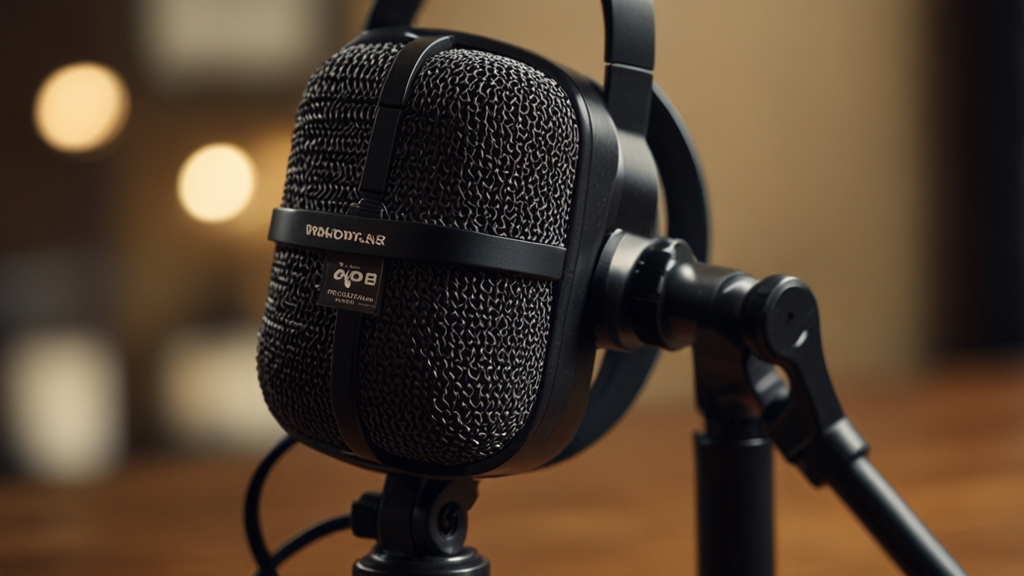
| Sounds properly good | About $150 | A decent USB microphone, closed-back headphones, a pop filter and a stand. This is the tier where listeners stop noticing the audio. |
| Serious setup | $400 and up | A dynamic XLR microphone, an audio interface, treated recording space. Worth it only once you know the show has an audience. |
Audio quality matters more than video, more than cover art, more than anything else you can buy. Listeners will forgive a dull episode and will not forgive one they cannot hear. If you spend money on one thing, spend it on the microphone and on recording somewhere soft and quiet.
Hosting prices in 2026
| Host | Entry price | What the entry plan limits |
| Buzzsprout | $0 | Free tier capped at 3 hours of upload per month |
| Libsyn | $5 per month | Monthly storage allowance, no free tier |
| Podbean | $17 per month | Upload capped, unmetered bandwidth, trial available |
| Transistor | $19 per month | 20,000 downloads per month, 14 day trial |
| Captivate | $19 per month | 30,000 downloads per month on annual billing, 30 day trial |
Prices verified in April 2026 and subject to change. A free tier is genuinely restrictive for a weekly show with long episodes, but it is the right place to start while you find out whether you will stick with it.
Step 1: Pick a topic you can sustain for 50 episodes
The test is not whether the topic interests you. It is whether you can think of fifty episodes without straining. Write down twenty episode titles before you buy anything. If you run dry at eight, the topic is too narrow.
Then pick a format, because it determines how much work each episode is:
- Solo commentary. Lowest coordination cost, highest writing burden. You carry the whole episode.
- Interview. Guests supply the content, but booking, scheduling and no-shows become your job.
- Co-hosted conversation. The easiest to record and the easiest to sustain, provided your co-host stays interested.
- Narrative or documentary. The most compelling to listen to and by far the most expensive in hours. A 30 minute narrative episode can take 40 hours to make.
Most people who quit do so because they chose a format that costs more time than they had. Choose for sustainability, not ambition.
Step 2: Record
The room matters more than the gear. A bedroom with a wardrobe, curtains and a bed absorbs sound far better than a large, hard-surfaced office. Avoid anything with bare walls and a ceiling fan.
Practical rules that fix most beginner audio:
- Speak across the microphone rather than directly into it, about a hand’s width away, and keep that distance consistent.
- Record each speaker on a separate track. Remote recording tools do this, and it makes editing vastly easier.
- Record 30 seconds of silence in the room at the start. That gives your editing software a noise profile to subtract.
- Do not record in a moving car, in a kitchen, or anywhere with a fridge, aircon or a clock.
- Free software is fine. Audacity works on everything and GarageBand is free on Mac.
Step 3: Edit, but not too much
New podcasters over-edit. Cut the dead air, the false starts, the long tangent and any section where you can hear yourself losing interest. Leave the rest. Conversation that has been edited into perfection sounds synthetic.
The order of operations that works: cut for structure first, then fix levels, then add the intro and outro, then export. Aim for consistent loudness across episodes, because listeners reaching for the volume control every week is a reason to unsubscribe.
Step 4: Hosting and the RSS feed
This is the part that confuses people, and it is simpler than it sounds. A podcast host stores your audio files and generates an RSS feed, which is a single web address containing your show’s title, artwork, description and every episode. That one feed is your podcast. Apple, Spotify and every other app read from it.
This means you cannot host a podcast on YouTube or Instagram alone. You need a host that produces a feed. It also means switching hosts later is possible but fiddly, so pick one you can live with.
Before you submit anywhere, get these right, because several are painful to change afterwards:
- Show title. Searchable and descriptive beats clever. A title nobody can spell after hearing it is a problem.
- Cover art. 3000 by 3000 pixels, and it must be readable at thumbnail size. Test it at 100 pixels wide before you commit.
- Description. Say who the show is for in the first sentence.
- Category. Choose the most specific accurate one, not the biggest.
Step 5: Distribution in 2026
The directory landscape changed significantly and most guides have not caught up. Two of the platforms older articles tell you to submit to no longer exist.
| Platform | Status in 2026 | What to do |
| Apple Podcasts | Active, still the reference directory | Submit through Apple Podcasts Connect. Essential. |
| Spotify | Active, very large share of listening | Submit through Spotify for Creators, the service formerly called Anchor. Essential. |
| YouTube and YouTube Music | Active and increasingly important | Where Google Podcasts listeners were moved. Worth doing even for an audio-only show. |
| Amazon Music and Audible | Active | Worth submitting, low effort. |
| Pocket Casts, Overcast, Castbox | Active | Most pull in automatically from Apple. Low priority. |
| Google Podcasts | Shut down in 2024 | Nothing. It no longer exists. Listeners were migrated to YouTube Music. |
| Stitcher | Closed in 2023 | Nothing. |
Submit once, to each directory, using the same RSS feed. After that every new episode appears everywhere automatically. You never submit an individual episode.
Step 6: Launch and grow
Launch with three episodes, not one. A new listener who likes your first episode will usually listen to a second immediately, and having nothing else to offer wastes that moment.
What actually moves the numbers, in rough order of effect:
- Being a guest on other podcasts in your niche. Nothing else puts you in front of an audience that has already proven it listens to podcasts about your subject.
- Publishing on a schedule you can keep. Every two weeks forever beats weekly for a month.
- Episode titles that describe a benefit or a question. “Episode 14” tells a browsing listener nothing.
- Show notes with a transcript. This is the only part of a podcast that search engines can read, so it is where search traffic comes from.
- Asking directly for reviews and shares. Uncomfortable and effective.
What generally does not work in the early months: paid social ads for a show with no audience, posting clips to an account nobody follows, and buying downloads.
Can you make money from it?
Eventually, and later than most people expect. The US podcast advertising market is on track to reach $3.0 billion in 2026, growing 17.6% year over year. That is a genuinely large market, and it concentrates heavily at the top.
Work it through for a median show. At 27 downloads per episode, a typical podcast advertising rate in the $18 to $25 per thousand downloads range produces well under one dollar per episode. That arithmetic is ours rather than a published figure, and it is why sponsorship is not a plan for a new show. Most sponsors want a few thousand downloads per episode before the conversation is worth having.
The routes that work earlier:
- Selling your own thing. A service, a course, a consultancy. Fifty of the right listeners can be worth more than fifty thousand of the wrong ones.
- Listener support. Patreon and similar. Works at small scale if the audience is committed.
- Affiliate arrangements. Modest, but available from day one.
- The podcast as a business development channel. For B2B, interviewing your ideal clients is a sales activity with a media product attached.
Key terms in one line each
- RSS feed: the single web address containing your show’s details and every episode, which every podcast app reads.
- Podcast host: the service that stores your audio and generates that feed.
- Directory: an app or platform that lists podcasts, such as Apple Podcasts or Spotify. You submit your feed once.
- Download: the standard unit of podcast measurement, counted when an app retrieves an episode file.
- CPM: cost per thousand downloads, the basis on which podcast advertising is sold.
- Podfade: the industry term for abandoning a podcast, most commonly before episode ten.
- Show notes: the written summary published with each episode, and the part search engines can index.
- Dynamic ad insertion: technology that places ads into episodes at download time rather than baking them into the audio.
- XLR: the professional microphone connector, requiring an audio interface, as opposed to a USB microphone that plugs straight into a computer.
- Loudness normalization: matching the perceived volume of episodes so listeners are not adjusting the dial.
Frequently asked questions
How much does it cost to start a podcast?
Nothing, if you use a phone, free editing software and a free hosting tier. About $150 buys a setup that sounds properly good. Hosting runs from free to roughly $19 a month.
How many downloads is good for a new podcast?
The median episode gets 27 downloads in its first seven days. Ninety-six puts you in the top quarter and 407 in the top ten percent. If you are getting dozens rather than thousands early on, that is normal.
How do I get my podcast on Google Podcasts?
You cannot. Google Podcasts was shut down in 2024 and its listeners were moved to YouTube Music. Submit to YouTube Music instead, alongside Apple Podcasts and Spotify.
Do I need expensive equipment?
No. A USB microphone in the $70 to $120 range, used in a soft, quiet room, sounds better than an expensive microphone in a room with hard walls. Fix the room before upgrading the gear.
How long should episodes be?
As long as the material genuinely holds up and no longer. Consistency matters more than duration, because listeners plan around a show they can predict.
How often should I publish?
Pick the most frequent schedule you are confident you can hold for a year, then publish slightly less often than that. Disappearing for a month costs more than publishing fortnightly ever would.
Can I start a podcast for free?
Yes. Buzzsprout has a free tier capped at three hours of upload a month, and Spotify for Creators is free. Both are workable for testing whether you will keep going.
Do I need video?
Not to start. YouTube has become a major podcast platform, so a static-image video version is a cheap way to be present there. Full video production is a separate job, so add it once the audio show is stable.
When can I get sponsors?
Realistically once you are consistently above a few thousand downloads per episode, which is roughly the top 1% to 5% of shows. Before that, selling your own product or service to a small, well-matched audience earns far more.
The bottom line
Starting a podcast is easy and cheap. Microphone, free software, a host that makes an RSS feed, three directories. You could do the whole technical setup in an afternoon for under $150.
Continuing a podcast is the difficult part, and it is where nearly everyone fails. Choose a topic with fifty episodes in it, choose a format you can actually sustain, publish on a schedule you can hold, and judge yourself against a median of 27 downloads rather than against the shows you already listen to. Do that for a year and you will be in a small minority of podcasts that still exist.
Want help launching?
Teck Hustlers runs a hands-on podcast program covering setup, launch and promotion. Email Hi@teckhustlers.com with the subject “podcast course” for details.
Sources
- Buzzsprout global podcast stats, August 2026, for the download percentile figures.
- Libsyn, podcast statistics 2026, citing Podcast Index for active show and episode counts, Edison Research for listener numbers and IAB for ad spend.
- Edison Research, The Infinite Dial 2026, for US listening figures.
- YouTube Blog, migrating your podcast shows from Google Podcasts.
- StackScored, podcast hosting pricing comparison, verified April 2026.
Figures were checked against the sources above in September 2026. Download percentiles come from one hosting platform’s data rather than a census of all podcasts, and the revenue example is our own arithmetic from published rate ranges rather than a reported figure. Hosting prices and platform rules change often, so confirm current pricing before signing up.