Published: October 3, 2026 · Last updated: October 3, 2026
TL;DR: Google’s Project Suncatcher put a prototype satellite carrying a Tensor Processing Unit into orbit on October 1, testing whether its AI chips can survive launch, radiation, and space before anyone talks seriously about orbital data centers.

Somewhere in low Earth orbit right now, a Google-built satellite is carrying a chip whose entire job on the ground is to sit in an air-conditioned room.
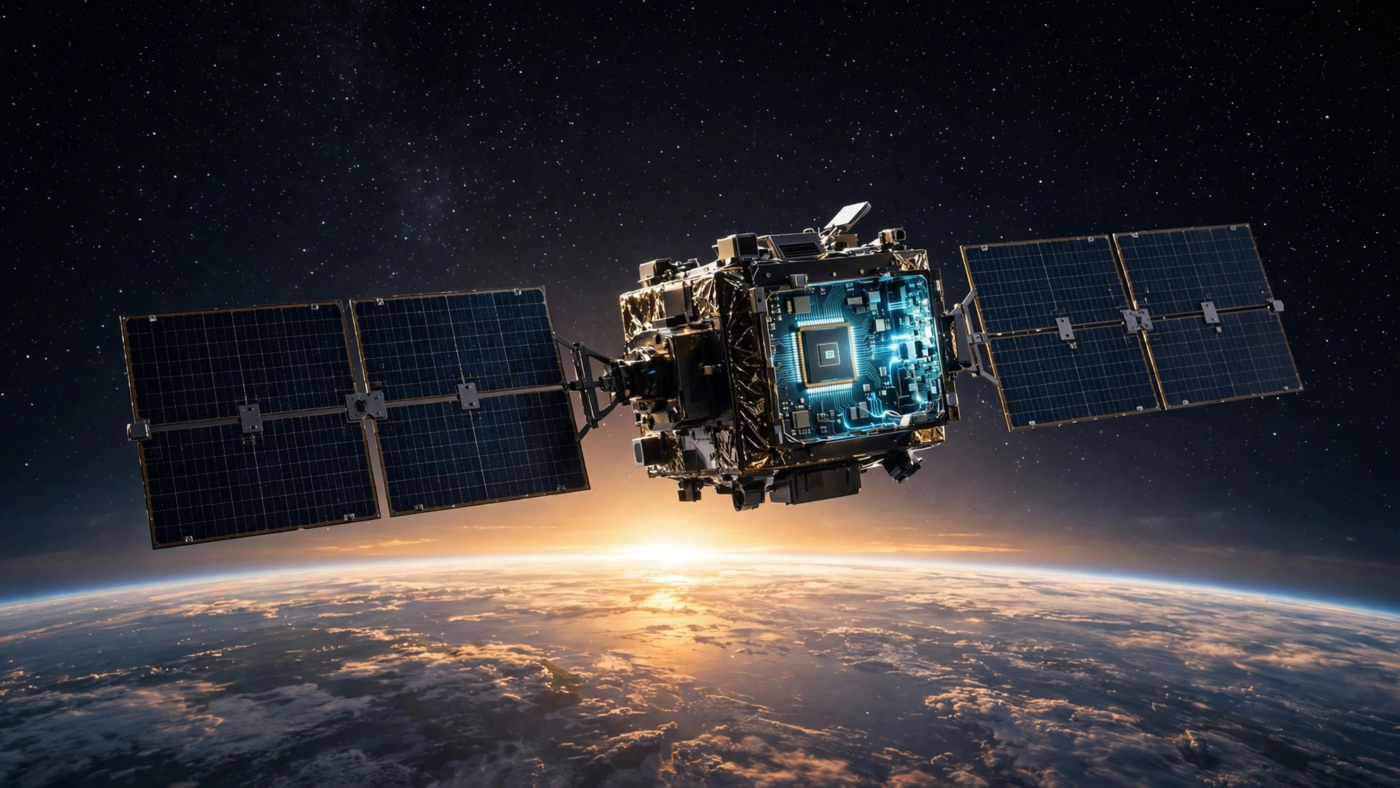
Project Suncatcher, Google’s effort to test whether its Tensor Processing Units can function in space, put its first prototype satellite into orbit on October 1. The spacecraft launched aboard SpaceX’s Transporter-18 rideshare mission and was built in partnership with the satellite company Planet. Google confirmed it has established contact with the satellite and that it’s “operating as expected,” which is the kind of understated line engineers use when a very complicated thing has, so far, not broken.
The mission exists to answer a narrow, practical question: can a TPU, the custom chip Google designs to train and run its own AI models, survive the forces of launch, the radiation of orbit, and temperature swings far outside anything a terrestrial data center ever experiences. Google published the technical details of this work in the peer-reviewed journal Joule, which is a notably academic way to announce something that sounds, on its face, like science fiction. The company has been careful to frame Suncatcher as a research experiment rather than an announcement of commercial orbital data centers. There’s no claim here that Google is about to start training Gemini models in space.
The logic behind even asking the question is straightforward once you think about what a data center actually needs: power and cooling, in enormous quantities, delivered reliably for years. Space offers a theoretically endless supply of one of those two things. Solar panels in orbit can capture sunlight without atmosphere, clouds, or nighttime cutting into the supply, and the vacuum of space is, in some configurations, easier to manage thermally than a packed server room on the ground. None of that matters if the chips themselves can’t take the trip or survive the environment once they arrive, which is exactly the gap this satellite is meant to measure.
It’s worth separating the ambition from the step actually taken here. One satellite carrying test hardware is a long way from an orbital data center doing real AI workloads at scale. Getting hardware into orbit and keeping contact with it is the easy part of this particular experiment; the harder part, measuring radiation effects on the silicon over months and comparing performance against ground-based benchmarks, is still ahead. Google hasn’t published a timeline for when it expects to know whether the approach is viable, let alone when any of it might inform real infrastructure decisions.
The timing lands in the middle of a broader fight over how much power AI infrastructure is allowed to consume. Data centers on Earth are running into real constraints: electricity costs, water use, local opposition to new builds, and grid capacity that utilities are struggling to expand fast enough. An AI chip that could, even partially, run on power nobody has to generate or transmit through a strained grid is the kind of long-shot bet that becomes a lot more interesting the longer those terrestrial constraints stay binding. Suncatcher won’t resolve the power debate. It just quietly started collecting the data that would matter if the debate keeps getting worse.
Related: Amazon Wants Investors to Buy Its Nvidia Chips So It Can Keep Using Them and Google’s AI Mode Will Now Watch the Web for You, Whether You Pay for It or Not.
Bottom Line: This is a research satellite, not a roadmap. But the fact that Google thought testing TPUs in orbit was worth a peer-reviewed paper tells you the company is taking the power problem seriously enough to look well past the easy answers.
Follow Teck Hustlers: Facebook · X · Instagram · LinkedIn · TikTok · Pinterest

The Teck Hustlers Editorial Team covers technology, business, finance and gaming news for readers who want the story behind the headline. Every article is researched, written and edited by our in-house team, checked against company announcements, filings and reputable reporting, and updated when new facts emerge. We focus on what each development means for founders, professionals, investors and everyday users. Have a tip or a correction? Reach us through our contact page.