Published: October 7, 2026 · Last updated: October 7, 2026
TL;DR: Finland’s environmental authority ordered Google to stop construction at two data center sites in Muhos and Kajaani after the company cleared roughly 300 hectares of forest, close to 500 football fields, before finishing the environmental impact assessment the law requires. Google has until October 23 to submit to a full review before work can resume. The halt lands weeks after Google pledged roughly 13 billion euros to build out AI infrastructure across Finland through 2028.

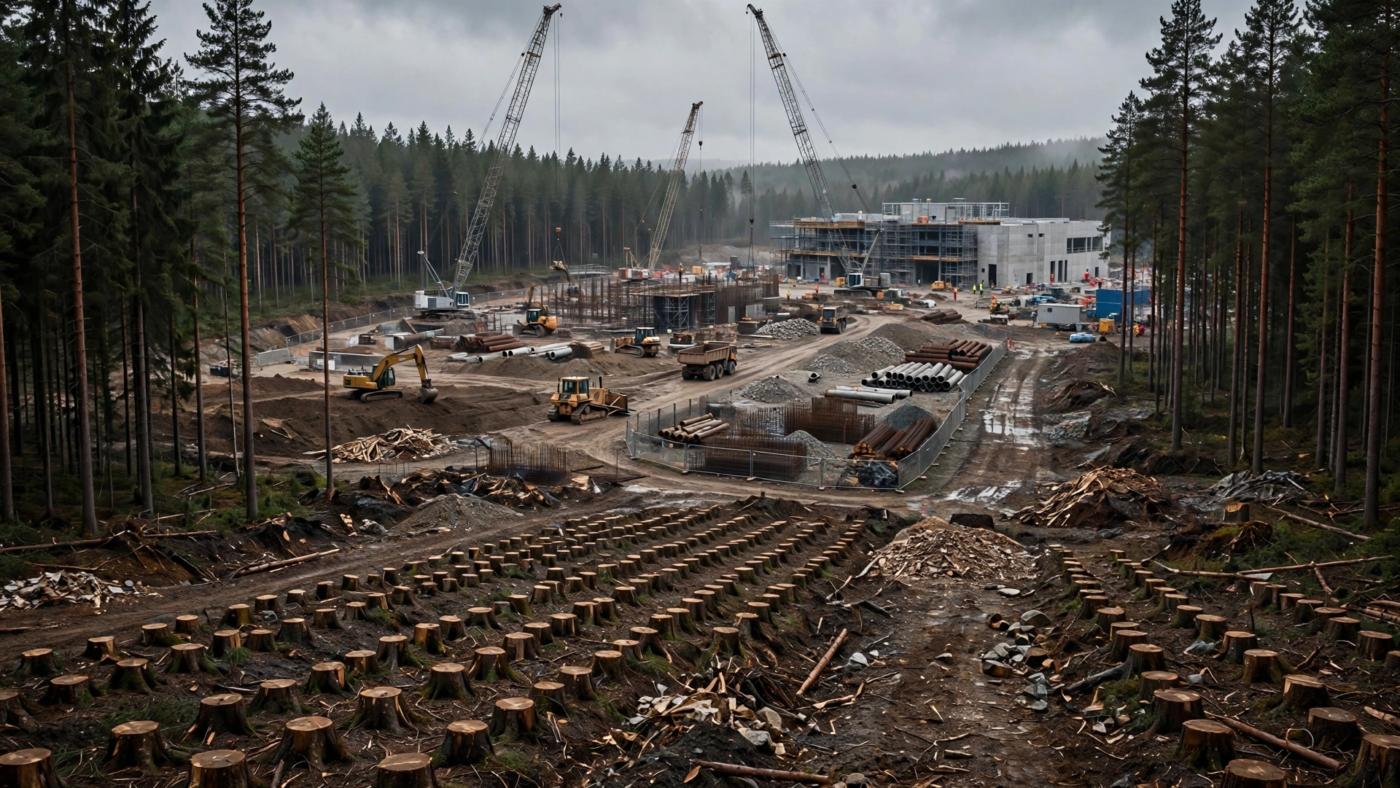
Finland’s environmental regulator just told Google to put down the chainsaws. The order covers two data center sites in the towns of Muhos and Kajaani, and it stops construction cold until Google finishes an environmental impact assessment it apparently got ahead of. Regulators say the company had already cleared close to 300 hectares of forest, something close to 500 football fields, before that review was done. Google now has until October 23 to get right with the process, and nothing moves at either site until it does.
The order comes from Finland’s Centre for Economic Development, Transport and the Environment, known locally as the ELY Centre, the regional body responsible for signing off on projects like this before ground gets broken. Finnish law requires a completed environmental impact assessment for projects of this size, the kind of process meant to catch exactly what’s at stake here: large-scale forest clearing, changes to water drainage, and effects on wildlife corridors. The entity building these sites is Tuike Finland Oy, a Google subsidiary set up specifically for its Finnish data center push. Regulators aren’t accusing Google of an environmental crime here. They’re saying the company moved faster than the paperwork allowed.
It’s easy to see why Google wanted to move fast. Northern Finland has quietly become one of the most sought-after addresses in the world for AI infrastructure, enough that people in the industry have started calling the Kainuu and Oulu region the “Texas of Europe” for data centers. The pitch is simple: a cold climate that cuts cooling costs for free for much of the year, a power grid that leans heavily on wind and hydro, and land that’s cheap and available in a country eager for the jobs and tax revenue. Google leaned all the way in, pledging roughly 13 billion euros toward Finnish AI infrastructure through 2028 when it announced the expansion in September. This halt order landed less than a month later.
Finland isn’t an isolated case. Google paused a planned data center in Chile earlier this year after local pushback over water use, and in the US, Amazon has its own mess with employees who publicly backed Seattle’s new limits on AI data centers, three of whom say the company opened an internal investigation into them for speaking up. The pattern is the same everywhere: the AI buildout has moved so fast that the regulatory and community processes meant to slow projects like this down are only now catching up, right as the companies building this stuff are under the most pressure to hit their own infrastructure deadlines.
What happens at Muhos and Kajaani next depends entirely on how fast that review moves. If Google clears the October 23 deadline cleanly, construction likely resumes with minimal damage to its broader Finnish timeline. If the ELY Centre finds more than a paperwork problem, the two sites could sit idle for months while a fuller assessment runs its course, the kind of delay that never shows up on an earnings call but matters enormously to a company racing competitors for every megawatt of AI compute it can get online.
Related: Google’s Finland trouble comes the same week as its stranger answer to the data center land problem, Project Suncatcher putting an actual TPU satellite in orbit to test AI compute in space, and it follows a similar fight closer to home for Amazon, which is investigating employees who testified against its own data centers.
Bottom Line: Google didn’t get caught dumping anything in a river here. It got caught cutting corners on paperwork while racing to build faster than anyone else in an industry that treats land, power, and local patience as renewable resources. Finland just proved they’re not. If regulators elsewhere start reading this as a playbook instead of a one-off, the AI data center boom is about to get slower and more expensive, and that’s a better outcome for the towns these things get built next to than any 13 billion euro pledge promises on its own.
Follow Teck Hustlers: Facebook · X · Instagram · LinkedIn · TikTok · Pinterest

The Teck Hustlers Editorial Team covers technology, business, finance and gaming news for readers who want the story behind the headline. Every article is researched, written and edited by our in-house team, checked against company announcements, filings and reputable reporting, and updated when new facts emerge. We focus on what each development means for founders, professionals, investors and everyday users. Have a tip or a correction? Reach us through our contact page.