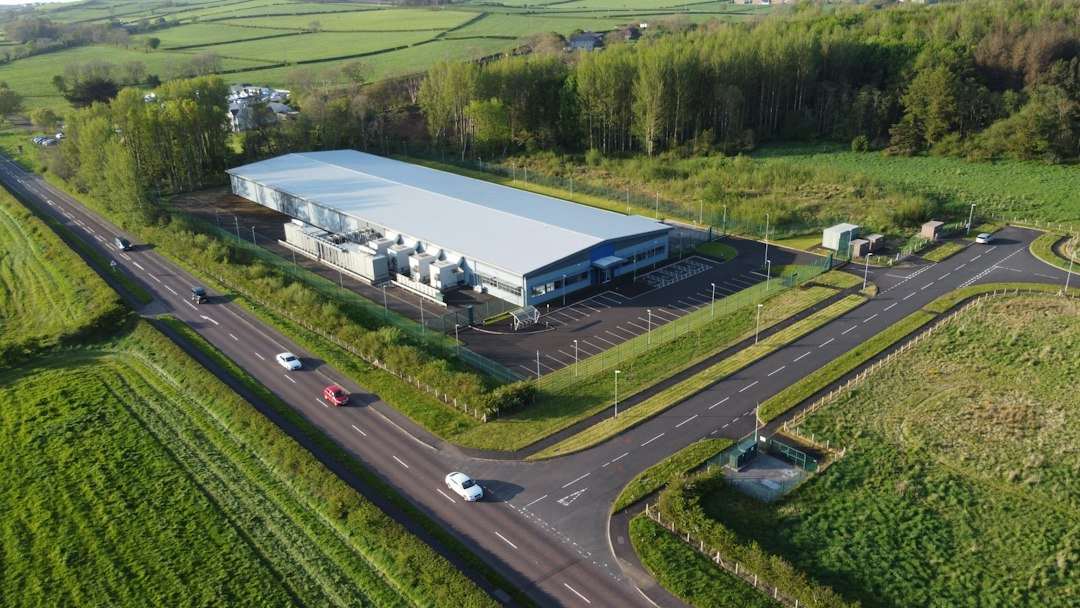
TL;DR: Crusoe just handed Google an unfinished data center campus in Wyoming that was supposed to scale to 10 gigawatts of AI computing power. The quiet sale, confirmed Friday, is less a tidy success story and more a case study in how brutal it has become to actually build the infrastructure the AI boom keeps promising.
Crusoe announced the sale in a company newsroom post on Friday, and the framing was careful. This was not a company in trouble selling off assets to stay afloat. It was, in Crusoe’s telling, a strategic handoff of a single project that had grown too complicated under its original plan.
Here’s the part that got less emphasis in that post: Google tried to become a customer at this site and walked away. Reports since have pointed to concerns inside Google about how long the project was taking and what it was going to cost under Crusoe’s management. Rather than simply pulling out, Google is now taking the whole thing over.
A campus that outgrew its own ambitions
The Wyoming project dates back to 2025, when Crusoe announced it alongside Tallgrass, the Blackstone-backed infrastructure company. The pitch was enormous even by AI data center standards: a buildout designed to eventually reach 10 gigawatts of capacity. For comparison, a single gigawatt is roughly what a mid-sized American city consumes.
Bloomberg first reported that the project was being sold back in June, months before either company said a word publicly. That gap between the leak and the confirmation tells its own story about how these megaprojects get managed. Neither side wanted to be first to admit the original plan wasn’t holding together.
Neither Crusoe nor Google has said what changed hands in dollar terms. Google has said it plans to put $17 billion into developing the campus going forward, a figure that gives some sense of how much work is left and how seriously Google intends to finish what Crusoe started.
Crusoe isn’t exactly struggling
It would be easy to read this as a company retreating. The numbers argue otherwise. Crusoe raised $3.9 billion in September, pushing its valuation to $30.9 billion, and the Wyoming sale didn’t slow that round down one bit. The company is still building a separate data center for Google near Amarillo, Texas, so this isn’t a breakup between the two companies. It’s a redrawing of who’s responsible for what.
Crusoe’s business model is worth understanding here, because it explains why losing one project doesn’t sink the company. It leases space to customers who bring their own GPUs, rents out its own hardware, and sells raw compute for running AI models. That’s three separate revenue streams layered on top of each other, which is a more resilient structure than betting everything on one type of deal.
The company’s roots are stranger than most AI infrastructure players. Founders Chase Lochmiller and Cully Cavness started Crusoe as a cryptocurrency mining operation that ran on natural gas that would otherwise have been flared off and wasted. That origin story matters less for what it says about crypto and more for what it says about the founders’ comfort with messy, capital-intensive energy problems, which is exactly what AI data centers have become.
In September, alongside the funding round, Crusoe added three board members, including JB Straubel, the Redwood Materials founder and Tesla board member. Straubel first invested in Crusoe back in 2021, and Crusoe later became the first customer of his battery recycling business. That’s a tight, almost incestuous web of relationships, but it’s also how a lot of the AI infrastructure world actually works right now.
The other projects tell the bigger story
Crusoe’s Abilene, Texas campus, built for Oracle and OpenAI, is being developed in phases. Right next door, the company is building a separate 900 megawatt campus for Microsoft, with the first building expected to come online sometime in mid-2027. Bloomberg has also reported that Jane Street signed a cloud deal with Crusoe worth something in the neighborhood of $13 billion over five years.
Stack all of that against the Wyoming stumble and a pattern emerges. Crusoe isn’t failing at building data centers. It’s failing, occasionally, at building the single biggest and most ambitious ones on the first try. Nobody in this industry has fully solved that problem yet, including the hyperscalers who supposedly have deeper pockets and more construction experience.
That’s the uncomfortable truth sitting underneath every AI infrastructure announcement this year. The chips get cheaper and more powerful on a predictable schedule. The land, the power contracts, the cooling systems, and the local permitting fights do not follow any predictable schedule at all, as even our coverage of Anthropic’s own revenue growth made clear when it comes to just how much capital this race is consuming industry-wide.
Why hyperscalers keep absorbing these messes
Google isn’t the only hyperscaler that’s had to step in and clean up a data center project that got away from its original developer. The pattern keeps repeating across the industry: a well-funded infrastructure startup announces an ambitious multi-gigawatt campus, signs a marquee customer or two, and then runs into the unglamorous realities of utility interconnection queues, turbine and transformer lead times measured in years rather than months, and local communities that have gotten a lot more organized about fighting new industrial development in their backyards.
What makes Google’s position here interesting is that it had already walked away once. Trying to become a customer, getting cold feet about the cost and schedule, and then coming back later as the owner is a more expensive and more involved path than simply signing a long-term lease would have been. It suggests Google looked at the alternative, probably shopping for yet another site and starting the permitting clock over from zero, and decided that finishing someone else’s half-built project was still the faster route to the capacity it needs.
That calculation only makes sense if you accept just how tight the supply of viable, shovel-ready data center sites has become. Power availability, water rights for cooling, and willing local governments are all scarcer than the chip supply everyone talks about. A half-finished campus with existing permits and partial infrastructure, even one with a troubled history, can be worth more to a buyer in a hurry than an empty plot with a clean slate.
The bottom line
Google getting a half-built data center is not a disaster for anyone involved, and it’s probably the right outcome given where things stood. But treat this one as a signal, not a one-off. When a company with Crusoe’s funding and experience still has to hand off its most ambitious project to the customer who almost walked away, that says something about how far the gap has grown between what AI companies want to build and what anyone can reliably deliver on time.

The Teck Hustlers Editorial Team covers technology, business, finance and gaming news for readers who want the story behind the headline. Every article is researched, written and edited by our in-house team, checked against company announcements, filings and reputable reporting, and updated when new facts emerge. We focus on what each development means for founders, professionals, investors and everyday users. Have a tip or a correction? Reach us through our contact page.