Published: October 5, 2026 · Last updated: October 5, 2026
TL;DR: Field AI, a robotics startup that builds foundation models designed to run on almost any kind of robot body, is reportedly in talks to raise $700 million, according to SiliconANGLE. The company raised $405 million about a year ago at a $2 billion valuation, with backers including Nvidia and investment vehicles tied to Bill Gates and Jeff Bezos.
Most robotics startups build a robot and then figure out the software. Field AI is betting the software is the part worth owning.

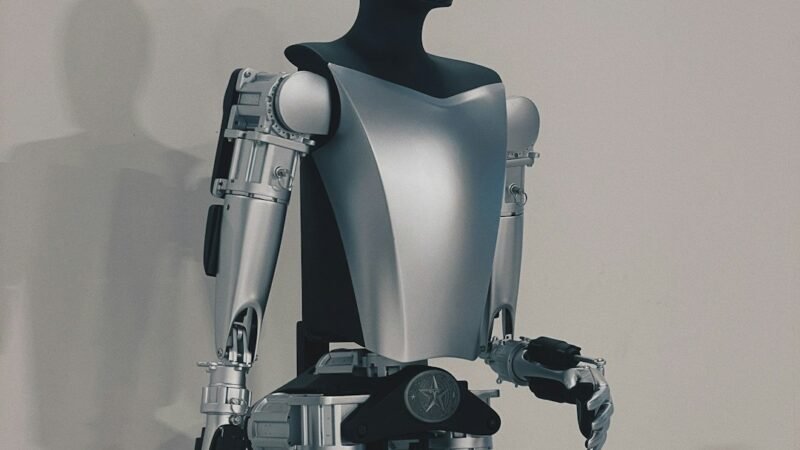
Field AI’s core idea is that the “brain” controlling a robot should be mostly separable from the specific hardware it’s running on. Instead of building bespoke control software for one warehouse robot or one humanoid design, the company develops foundation models meant to generalize across different robot bodies and tasks, from industrial arms to legged robots to drones. If that works the way Field AI pitches it, it changes robotics economics the same way a shared operating system changed personal computing: hardware makers compete on the machine, and the intelligence layer becomes something you license rather than build from scratch every time.
That pitch has attracted serious money and serious names. GeekWire reported last year that Field AI’s backers include Nvidia, along with investment vehicles connected to Bill Gates and Jeff Bezos, as the company closed a $405 million round that pushed its valuation to roughly $2 billion. Now, according to SiliconANGLE’s reporting on the new talks, Field AI is in discussions to raise as much as $700 million in a fresh round, which would mark a significant step up from its last known valuation if it closes anywhere near that figure.
Field AI has not confirmed the new round publicly, and reports describing it as a work in progress should be read with the usual caveat that funding talks can change size, lead investors, or collapse entirely before a deal is announced. Still, the direction of travel fits a broader pattern in robotics funding this year: investors are increasingly willing to pay a premium for companies that look like they could become the default “intelligence” layer across an entire category of hardware, rather than betting on any single robot design winning outright.
The bet carries real technical risk. Building a model that genuinely generalizes well across different robot bodies, each with their own sensors, actuators, and failure modes, is a much harder problem than it sounds, and the robotics industry has a long history of software that works beautifully in a demo and struggles the moment it meets a messy real-world environment. Field AI’s claim to have solved that generalization problem at scale is still being tested in actual deployments, not just pitch decks.
If the $700 million round closes anywhere close to what’s being reported, it would put Field AI among the better-funded robotics-focused AI companies outside the handful of firms building humanoid robots directly, and it would be a strong signal that investors see the “universal robot brain” thesis as one of the more durable bets in a very crowded AI funding market.
Related: EliseAI Just Hit a $4 Billion Valuation Running Apartment Leasing on Autopilot and Meta Told the IRS Its AI Data Centers Are “Experimental.” It’s Saving Billions.
Bottom Line: A $700 million round for a company that doesn’t make a single robot of its own tells you where smart money thinks the real value in robotics is going to sit, and it’s not in the hardware.
Follow Teck Hustlers: Facebook · X · Instagram · LinkedIn · TikTok · Pinterest

The Teck Hustlers Editorial Team covers technology, business, finance and gaming news for readers who want the story behind the headline. Every article is researched, written and edited by our in-house team, checked against company announcements, filings and reputable reporting, and updated when new facts emerge. We focus on what each development means for founders, professionals, investors and everyday users. Have a tip or a correction? Reach us through our contact page.