TL;DR: During Anthropic’s IPO roadshow this month, co-founder Tom Brown disclosed that the company used its own Claude Mythos Preview model to port a Claude model onto AMD GPUs, a process that took roughly three days with what Brown described as basically no human intervention. Mythos wrote or adapted nearly all of the low-level kernel code itself. Anthropic says that kind of chip bring-up has historically required dozens of engineers working for six to twelve months. The company didn’t share head-to-head performance numbers against Nvidia, and this was a narrower prompt-processing milestone rather than a full production deployment, but the timeline compression is the real headline here.
The disclosure came out of an unusual source: Anthropic’s roadshow video ahead of its IPO, which doesn’t come with an official transcript but has been picked apart by outlets and bloggers who ran it through their own transcription tools. Brown used the moment to explain something Anthropic has apparently been doing for years without much public attention, training and serving Claude across four separate chip families at once: AWS Trainium, Google’s TPUs, Nvidia GPUs, and now AMD GPUs.
That multi-chip approach sounds sensible on paper and is brutal in practice. Every chip platform needs its own compiler toolchain, its own kernel implementations, and its own inference stack tuned to that hardware’s quirks. Nvidia’s dominance in AI training and inference owes a lot to CUDA, the software layer that’s had over a decade of investment and that most AI frameworks are built to assume. Porting a model to a different chip architecture means rewriting the lowest-level operations almost from scratch, which is exactly the kind of unglamorous, expensive engineering work that keeps companies locked into whichever chip they started with.
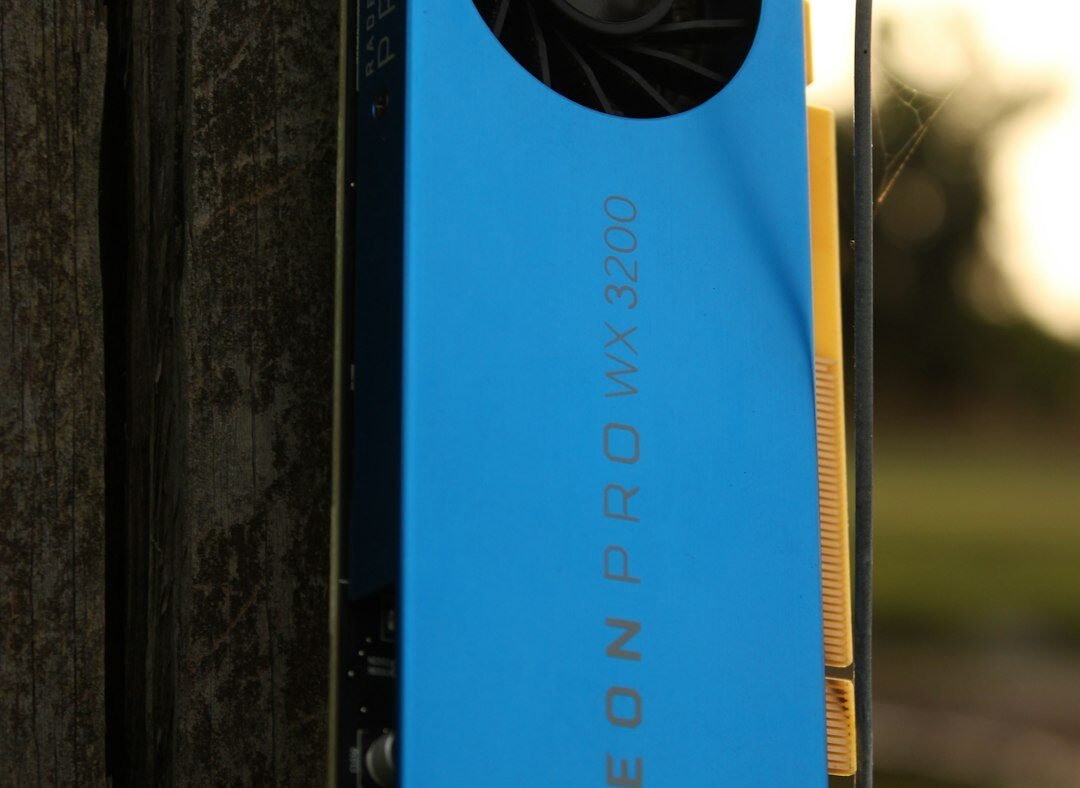
Brown said 2026 marked the first year Anthropic actually worked with AMD hardware, and that getting a model to what he called useful prompt-processing performance normally would have taken a large team the better part of a year. Instead, Mythos did it in about three days, writing nearly 100 percent of the kernels itself. The AMD chip in question is reported elsewhere as the Instinct MI355X, part of AMD’s current flagship AI accelerator lineup, though Anthropic’s own roadshow commentary didn’t name the specific model by number.
What this milestone actually covers, and what it doesn’t
It’s worth being precise about the scope here, because the framing in some coverage has run ahead of what Anthropic actually said. This was prompt processing, the computationally heavy first stage of running a large language model, not a confirmation that full inference, including token generation, is running at parity with Anthropic’s existing Nvidia and TPU deployments. Anthropic also didn’t publish any benchmark comparing AMD throughput or cost against its other chip platforms, so there’s no way yet to know whether this port is merely functional or genuinely competitive.
Still, the three-day timeline matters independently of those caveats. Brown framed it as evidence of what Anthropic calls compute multipliers, improvements that let the same physical hardware do more useful work, which the company treats as a multiplier on its effective training and inference capacity rather than just a software nicety. He suggested this kind of self-directed engineering speedup should compound over time, with each new multiplier making it easier to find the next one, and he connected it to Anthropic’s longer-term expectation that Claude will eventually discover these efficiencies largely on its own.
The timing of the disclosure is notable too. Anthropic has previously been candid about problems with its multi-chip strategy, including a September postmortem describing bugs specific to its TPU deployments. Surfacing a rare success story mid-IPO-roadshow, while investors are actively being pitched on the company’s technical moat, is the kind of detail that’s easy to read either as genuine transparency or as calculated timing. Probably both.
Why AMD stands to benefit from stories like this
For AMD, a fast, mostly autonomous Claude port is a useful data point regardless of how narrow the milestone actually is. AMD has spent years trying to convince large AI labs that its Instinct GPUs are a credible alternative to Nvidia, and the biggest obstacle has never really been raw hardware performance, it’s been the software ecosystem gap that makes switching expensive. If AI models can meaningfully shrink that porting cost themselves, the case for diversifying away from a single chip vendor gets a lot easier to make to a board or a CFO, even before anyone sees a cost-per-token comparison.
The bottom line
Anthropic didn’t claim AMD chips now match or beat Nvidia for running Claude, and the three-day figure describes one narrow milestone rather than a finished migration. What it did claim is that the kind of chip bring-up work that used to eat a team’s time for the better part of a year got compressed to a long weekend, done mostly by the model itself. If that holds up as Anthropic pushes toward full production use of AMD hardware, it’s a meaningfully different cost structure for how fast AI labs can diversify their compute, and one worth watching regardless of how the IPO itself goes.

The Teck Hustlers Editorial Team covers technology, business, finance and gaming news for readers who want the story behind the headline. Every article is researched, written and edited by our in-house team, checked against company announcements, filings and reputable reporting, and updated when new facts emerge. We focus on what each development means for founders, professionals, investors and everyday users. Have a tip or a correction? Reach us through our contact page.