TL;DR: China’s antitrust regulator has blocked SoftBank’s roughly $5.4 billion deal to buy ABB’s robotics division, marking one of the rare times Beijing has used merger review to stop a major industrial acquisition by a foreign buyer.

SoftBank wanted ABB’s robotics unit badly enough to put up more than $5 billion for it. China’s State Administration for Market Regulation, the body that signs off on mergers large enough to affect its domestic market, said no.
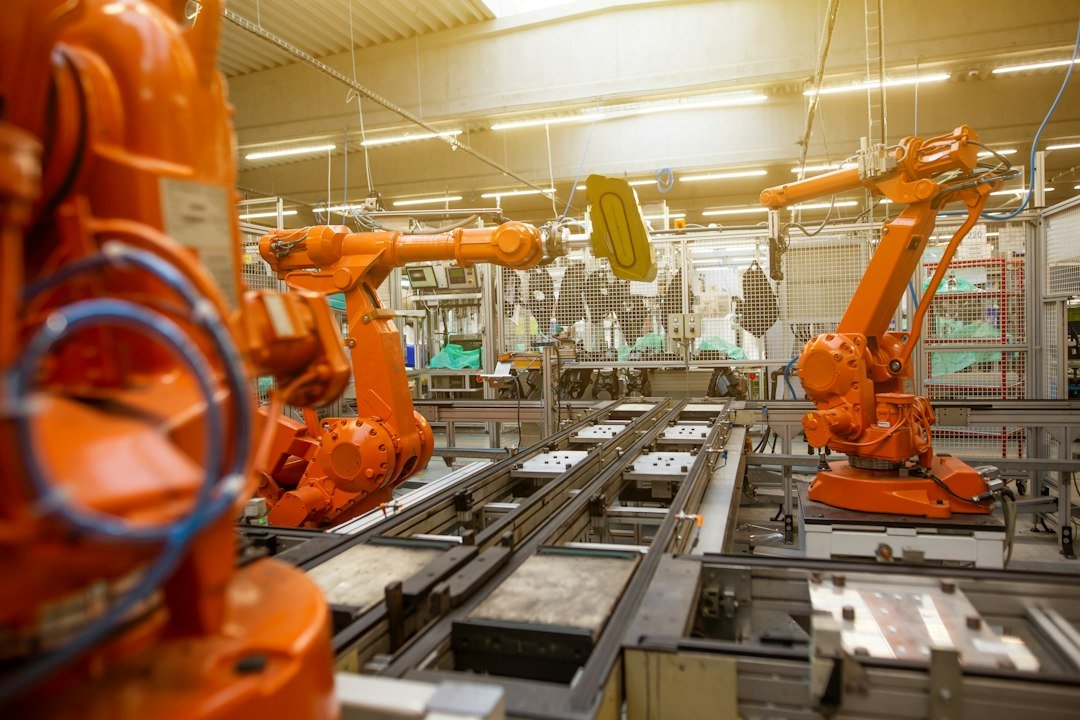
The deal would have handed SoftBank, already a major investor in robotics and AI through its Vision Fund bets, one of the most established industrial robot makers on the planet. ABB’s robotics division builds the arms and automation systems that show up on car assembly lines and electronics factories worldwide, with a particularly deep footprint in China, which is both its biggest market and the place SoftBank’s deal just hit a wall.
Why Beijing said no
Regulators don’t always explain their reasoning in detail, and this case is no exception so far, but the shape of the objection lines up with a pattern that’s become familiar in Chinese merger review over the past few years: concern that combining SoftBank’s AI and software reach with ABB’s hardware and market position would concentrate too much control over a strategically important industry in the hands of one company.Robotics sits near the top of China’s own industrial policy priorities. The country has spent the last decade trying to build domestic champions in exactly this space, and a foreign-controlled entity absorbing one of the most capable existing players is the kind of outcome that policy is specifically designed to prevent.
There’s also a geopolitical backdrop that’s hard to ignore. Merger review has increasingly become a lever countries pull when they want leverage in broader trade or technology disputes, not just a narrow competition-law exercise. Both the United States and the European Union have blocked or delayed Chinese acquisitions on national-security grounds in recent years, including Washington’s own tightened chip export rules affecting data centers in Malaysia, and this decision reads, at least in part, like the reverse version of that same dynamic.
What this means for SoftBank
For SoftBank, this is a real setback, not just a procedural delay. The company has been trying to pivot hard into physical AI, the idea that AI’s next major leap comes from pairing software intelligence with robots and machines that can act in the physical world rather than just generate text or images. ABB’s robotics arm would have given SoftBank immediate scale and manufacturing relationships it would otherwise have to build from scratch.Without it, SoftBank is left with its existing robotics bets, most notably Boston Dynamics, which it already owns, plus smaller stakes in companies like humanoid robotics maker Agility Robotics, and a scattering of other investments across the Vision Fund portfolio. None of those come close to matching the industrial scale ABB’s division operates at.
ABB, for its part, now has to figure out what to do with a division it had already signaled it wanted to offload. Divisions put up for sale and then pulled back off the market don’t always stay fully committed to their parent company’s long-term plans, and investors will be watching for whether ABB tries to find another buyer, spins the unit off independently, or quietly folds it back into core operations.
A warning sign for cross-border robotics and AI deals
The bigger story here is what this means for other companies eyeing similar deals. Robotics and industrial automation sit at the intersection of manufacturing policy, AI competition, and national security concerns in a way that few other sectors do, which makes them an obvious target for exactly this kind of regulatory intervention.Any company, American, European, or otherwise, that’s been eyeing a Chinese robotics asset, or hoping to sell a Western robotics asset into a deal that touches the Chinese market, now has a concrete, recent example of a transaction getting killed rather than just slow-walked. That changes the calculus for how these deals get structured and how much regulatory risk gets priced in from the start.
How ABB got here
ABB’s decision to shop its robotics division in the first place reflected a broader trend among diversified industrial conglomerates: a push to shed non-core businesses and concentrate capital on higher-growth segments like electrification and automation software, where margins and growth rates have generally outpaced traditional robotics hardware. Robotics had been a solid, mature business for ABB, but not necessarily one that excited investors the way a leaner, more focused portfolio might.Selling to SoftBank made obvious strategic sense on paper, SoftBank’s capital and AI ambitions paired with ABB’s manufacturing scale and existing customer relationships looked like a complementary fit that could have accelerated both companies’ positions in industrial AI. That the deal got this far, through due diligence, pricing, and a formal agreement, before running into a regulatory wall in China specifically underscores how much harder cross-border deals touching strategic technology have become to close cleanly, even when both private parties are fully aligned.
Whether ABB ultimately finds another buyer willing to navigate the same regulatory terrain, spins the division off as an independent public company, or simply keeps it as part of its core portfolio going forward remains an open question investors and industry watchers will be tracking closely over the coming months.
The bottom line
A $5.4 billion deal getting blocked isn’t just a loss for SoftBank’s balance sheet, it’s a signal that the era of relatively frictionless cross-border robotics and AI acquisitions may be ending. As more countries start treating robotics the way they’ve long treated semiconductors, as a strategic asset too important to let slip into foreign hands, expect more deals like this one to get stopped before they close, not just scrutinized after the fact.

The Teck Hustlers Editorial Team covers technology, business, finance and gaming news for readers who want the story behind the headline. Every article is researched, written and edited by our in-house team, checked against company announcements, filings and reputable reporting, and updated when new facts emerge. We focus on what each development means for founders, professionals, investors and everyday users. Have a tip or a correction? Reach us through our contact page.