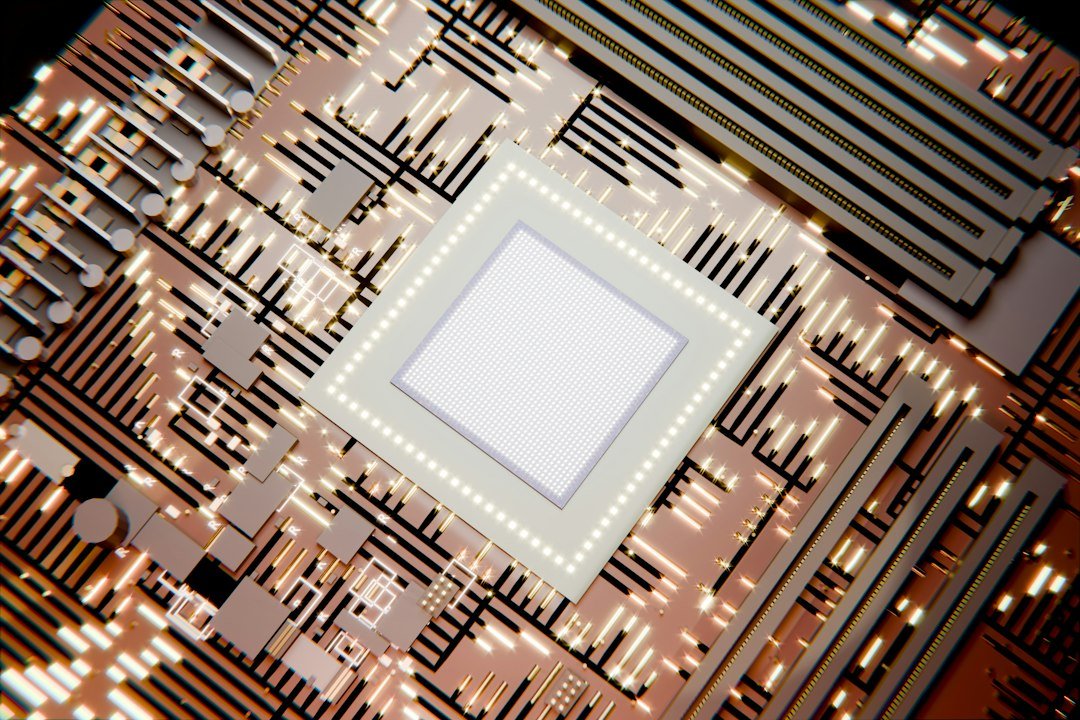
TL;DR: AMD has started shipping its 6th Gen EPYC server chips, built on the new Zen 6 architecture and aimed squarely at the agentic AI boom. The flagship EPYC 9996 claims up to 3.7 times the performance of Nvidia’s Vera CPU, and Meta is already validating the platform ahead of a wider rollout.
Chips rarely get a sales pitch this specific. AMD is not just saying the new EPYC lineup is faster. It is saying exactly how much faster, against exactly which competitor, for exactly which job.
The 6th Gen AMD EPYC server SP7 processors are now shipping from major server makers, with cloud instances coming soon from Microsoft Azure and Oracle Cloud Infrastructure. Built on AMD’s new “Zen 6” architecture, the lineup is pitched as the backbone for what AMD calls agentic AI infrastructure, which the company breaks into three distinct jobs: general-purpose enterprise services, CPUs that host GPU clusters, and dedicated sandboxes where AI agents actually run their code.
“AI is significantly expanding the role of the CPU across every layer of the data center,” said Dan McNamara, senior vice president and general manager of compute and enterprise AI at AMD. “With 6th Gen AMD EPYC, customers can standardize on the proven x86 foundation while choosing a workload-optimized solution to run more agents, keep accelerated infrastructure fed, and power the business-critical applications they depend on.”
The headline chip is the EPYC 9996, which AMD is calling the world’s best general-purpose processor. The company’s own benchmarks claim it delivers up to 3.7 times more performance than a system built on Nvidia’s Vera CPU, and up to 2.2 times the performance, at twice the performance per dollar, of an Intel Xeon 6980P system. Those are AMD’s numbers, not an independent lab’s, so treat the specific multiples as a marketing ceiling rather than a guaranteed result in any one customer’s workload. Still, the direction of the claim lines up with what AMD has delivered across its last several EPYC generations, each of which genuinely extended its lead over Intel on raw server throughput.
For the agent sandbox role specifically, where an AI agent’s code actually executes, AMD claims its high density EPYC chips deliver roughly 3.3 times the agents-per-watt of Nvidia’s Vera and 2.5 times that of Intel’s Xeon 6980P. In plain terms, that is a bet that running thousands of lightweight agent processes efficiently is a fundamentally different engineering problem than training a giant model, and that AMD’s chip design is tuned for the former in a way GPU-centric competitors are not.
High frequency variants of the chip, running up to 5.3 GHz, are built for hosting roles that sit next to GPU clusters and claim up to 1.8 times the large language model output throughput of the previous EPYC generation. AMD also says a rack built around the EPYC 9996, running inside a standard 35 kilowatt power envelope, can support roughly 18 percent more agents than the same rack running with default power settings.
Beyond the individual chip, AMD is extending its reach into full rack-scale systems under the Helion brand. Customers get three configurations to choose from depending on how their data center is built: Helion Liquid, designed to pair with AMD’s existing Helios rack-scale system for maximum agent density in liquid-cooled facilities; Helion Air, for adding agent capacity to data centers that still rely on air cooling; and Helion Air Inference, which combines CPU execution with local GPU inference in a single rack. Some configurations reportedly pack up to 73,728 threads into a single rack, which AMD is calling the highest agent density available in one rack today.
Meta is the lead customer named in the announcement, already validating platforms built on the new chips ahead of broader deployment, which carries real weight given Meta’s scale and its history of pushing custom silicon hard before committing to volume orders. Microsoft Azure is rolling the chips into three distinct offerings: Azure HDv2 in preview for AI data processing and high performance computing, Azure HXv2 for electronic design automation and technical computing, and Azure ND MI455X v7 for production-scale AI inference, the last of which is built on AMD’s Helios rack system rather than EPYC alone. Oracle Cloud Infrastructure is bringing the chips into its OCI Compute E7 instances for enterprise and AI-adjacent workloads.
Alongside the server launch, AMD rolled out the EPYC Embedded 9006 Series, aimed at a less glamorous but steady market: semiconductor test equipment, network security appliances, and enterprise storage systems that need serious compute density without the marketing spotlight the AI chips get.
Pricing for the new lineup has not been published in any detail beyond the per-dollar performance comparisons baked into AMD’s own benchmarks, which is typical for a server chip launch aimed at enterprise procurement rather than retail buyers. Actual costs will depend heavily on which configuration a customer picks, how many sockets a given deployment needs, and which cloud partner’s instance pricing a business ends up comparing against on-premises hardware. For IT buyers used to Intel’s roadmap cadence, the practical question is less about the raw benchmark numbers and more about how quickly Azure, Oracle, and other partners actually get capacity into production regions that customers can book.
Why the CPU still matters when everyone is talking about GPUs
It is easy to assume the AI hardware race is purely a GPU story, and AMD’s own Instinct GPU line gets plenty of separate attention for that reason. But a modern AI workflow is rarely just a model doing inference in isolation. It runs agents, calls other models, retrieves data from a database, executes code, and talks to whatever enterprise software the company already has running, and every one of those steps leans on a CPU rather than a GPU. AMD’s argument, echoed in its own comparison to a reference piece Teck Hustlers has covered on the practical differences between TPUs and GPUs, is that treating the CPU as an afterthought in AI infrastructure planning leaves real performance and real money on the table.
The bottom line
AMD’s 6th Gen EPYC launch is a confident, numbers-first pitch at exactly the moment enterprises are trying to figure out what agentic AI infrastructure actually costs to run at scale. The benchmarks come from AMD itself and deserve the usual grain of salt reserved for vendor comparisons, but the real signal here is Meta’s early validation and the breadth of cloud partners already committing capacity. If agent workloads keep growing the way every major AI lab currently expects, the CPU underneath them is about to matter a lot more than most IT budgets have planned for.

The Teck Hustlers Editorial Team covers technology, business, finance and gaming news for readers who want the story behind the headline. Every article is researched, written and edited by our in-house team, checked against company announcements, filings and reputable reporting, and updated when new facts emerge. We focus on what each development means for founders, professionals, investors and everyday users. Have a tip or a correction? Reach us through our contact page.