Unitree wants its humanoid robots to rewrite and improve their own code, while Tesla just admitted its Optimus line still can’t finish varied tasks without a human stepping in.
TL;DR: Unitree founder Wang Xingxing announced a project called Unitree Rehearsal that aims to let the company’s robots write their own training code and simulations with less human engineering input, with a loose goal of having robots handle chores like cleaning “as early as next year.” Separately, Tesla’s third-quarter shareholder update says Optimus production in Fremont could scale to 20,000 units a week by 2027, but Elon Musk himself said that target depends on engineering work that isn’t finished, including safety and reliability fixes.
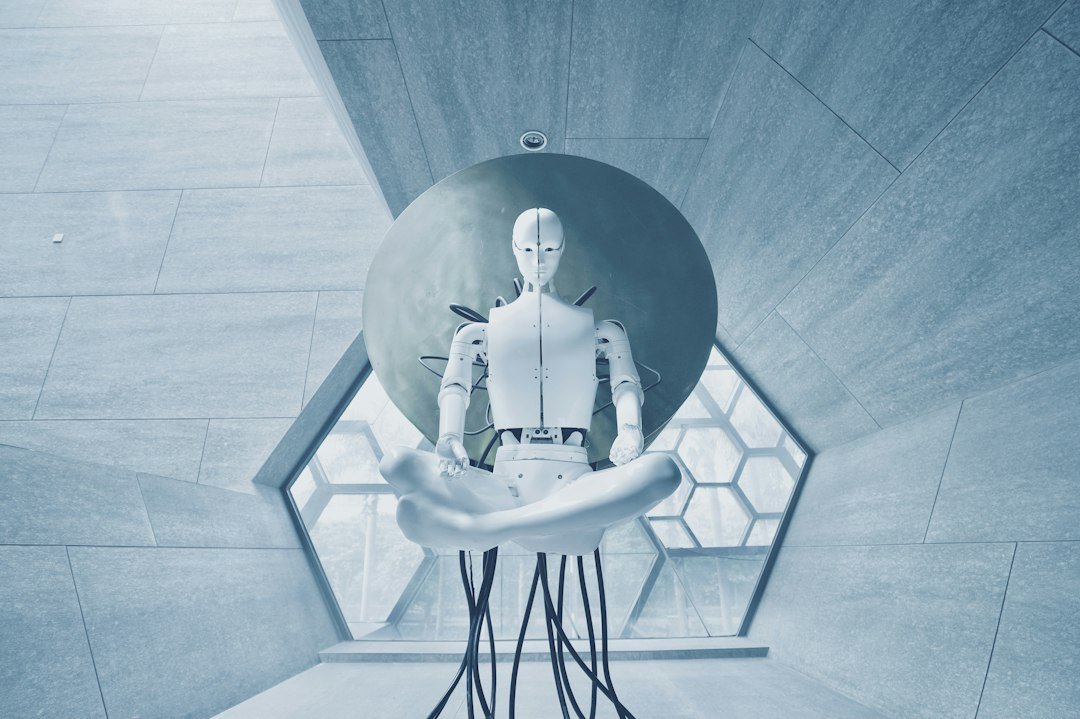
Two humanoid robot companies put out very different kinds of news this week, and the contrast says more about where this industry actually stands than either story does on its own.
Unitree wants robots that improve themselves
Speaking at a company AI conference, Wang described a shift away from the current model, where robotics engineers manually write and debug code for every behavior a robot needs to learn. “In the past, every robotics engineer had to write code and debug manually, which is relatively inefficient,” he said. The pitch behind Unitree Rehearsal, first reported by the South China Morning Post, is a feedback loop where the robots generate their own code and run their own simulations, with engineers reviewing results rather than writing every line themselves.
“As AI models improve, we expect them to take on more of the planning and iteration, reducing the need for human intervention,” Wang said.
That’s a meaningfully different claim than “our robot can clean your kitchen.” It’s a bet on automating the slow part of robotics development, the endless cycle of training, testing, and retraining that currently eats up engineering time. If it works the way Wang describes, it could speed up how fast any given robot learns new tasks, not just how well it performs the ones it already knows.
The timeline attached to it is vague on purpose. Wang said Unitree robots could be handling cleaning tasks “as early as next year,” which is the kind of soft prediction that’s easy to make and hard to hold a company to. No benchmark numbers, no demo footage of the self-coding loop in action, and no detail on how much human oversight actually remains in the process made it into the announcement.
Tesla’s number comes with an asterisk Musk didn’t hide
Tesla’s framing couldn’t be more different. In the company’s third-quarter 2026 shareholder update, Musk said Optimus production lines running out of a repurposed EV factory in Fremont could eventually scale to around 20,000 robots per week, but he attached a condition to it: that figure is contingent on further engineering work, and it’s a 2027 target, not a current production rate.
He also acknowledged, in the same update, that Optimus still struggles to complete varied tasks on its own and that the design needs continued work on safety and reliability.
That’s an unusually candid admission from a company not known for underselling its robotics ambitions. Tesla also left out a current weekly output figure, specifics on which tasks Optimus can or can’t handle reliably, and any benchmark comparison to rivals like Unitree or Figure.
Why the gap between the two announcements matters
Unitree is selling a research direction. Tesla is selling a manufacturing target. Neither company is claiming its robots can operate independently in a home or workplace today, and that’s the part easy to miss in headlines that compress both stories into “robots are coming.” The self-coding loop Unitree describes, if it pans out, speeds up how robots get better. The production scale Tesla is chasing determines how many robots exist to get better in the first place. Both are preconditions for a useful humanoid robot, not announcements of one.
Figure, the third major player in this space, held an all-hands around the same time, though no major news came out of it. The humanoid robotics field right now looks less like a product race and more like three companies trying to solve different bottlenecks at the same time.
The money keeps showing up before the robots do
None of this is stopping investment. Capital keeps flowing into humanoid robotics faster than any single company has shipped a robot that can do general-purpose work without close supervision. Unitree itself has drawn outside investor attention off the back of demos rather than deployed products, which is a pattern that shows up across this entire sector right now. Tesla’s Fremont retrofit and Unitree’s self-coding pitch are both, in their own way, attempts to answer the question investors keep asking: when does this actually ship at scale.
Wang’s framing leans on automation of the engineering process itself, essentially betting that faster iteration cycles solve the capability problem before a competitor’s hardware does. Musk’s framing leans on manufacturing scale, betting that once the robot is good enough, having 20,000 of them a week matters more than having the smartest training pipeline. Both bets could be right. They’re just betting on different parts of the same unsolved problem, and neither company has shown the finished product that would settle which approach wins.
Related: Nvidia’s Jensen Huang was in Kazakhstan backing robotics investments through TCV and Higgsfield just two days before this, underscoring how much capital is chasing the humanoid robot bet right now. Nvidia also shows up on the lighter end of that bet, in the $399 robot duck that just crossed 20,000 preorders.
The bottom line
Unitree’s self-coding ambitions and Tesla’s production target are both forward-looking claims with real conditions attached, not finished products. Wang’s version has the more interesting technical premise, automating the development loop itself, but it also has the least evidence behind it so far. Musk’s number is bigger and scarier sounding, yet he undercut it in the same breath by admitting the robot still can’t reliably do varied work. Watch for actual demos and shipped units over the next two quarters. That’s where this story either gets real or quietly disappears, like a lot of robotics promises before it.

The Teck Hustlers Editorial Team covers technology, business, finance and gaming news for readers who want the story behind the headline. Every article is researched, written and edited by our in-house team, checked against company announcements, filings and reputable reporting, and updated when new facts emerge. We focus on what each development means for founders, professionals, investors and everyday users. Have a tip or a correction? Reach us through our contact page.