Nvidia’s CEO spent part of his GTC Berlin keynote making a $399 robot duck somersault on command, and the company behind it says preorders are about to cross 20,000 units.
TL;DR: Hugging Face’s robotics arm Pollen Robotics showed off Microduck, a 25-centimeter open-source robot that walks, naps on command, and somersaults when asked, with Jensen Huang demoing it live on stage. Hugging Face co-founder Clem Delangue said on social media that preorders were on track to pass 20,000 units, which he suggested could make it the best-selling robot of 2026. Shipping is targeted before Christmas in North America, Europe, and the UK, with no firm date yet for other regions.

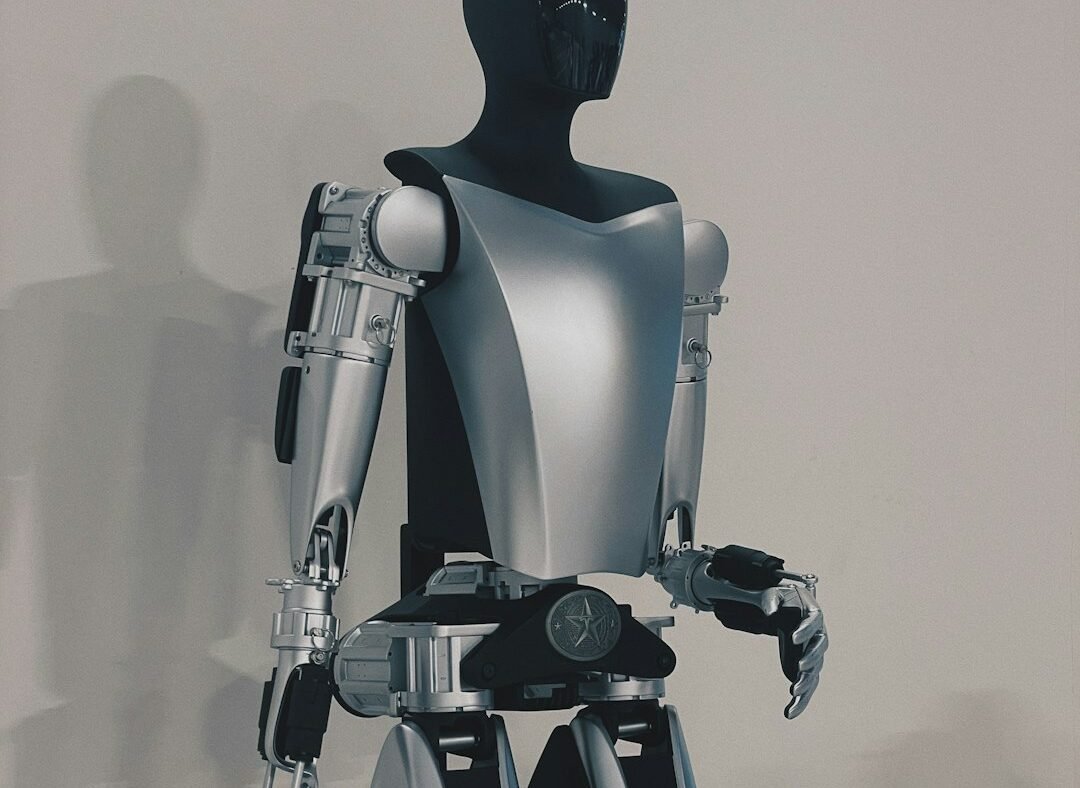
Microduck isn’t trying to be a humanoid labor substitute like Tesla’s Optimus or Unitree’s latest robots. It’s a toy-sized research platform that happens to be cute enough to go viral, which turned out to matter more than its spec sheet, even though the spec sheet is genuinely more capable than most people expect from something this size and this price.
What’s actually inside a $399 robot
The duck weighs under 800 grams, stands about 25 centimeters tall, and packs 15 motors along with a camera, a small depth sensor, two motion sensors, and a speaker that produces R2-D2-style chirps. It’s controlled with a standard gamepad, which means setting it up doesn’t require writing any code. Swap its feet out for an optional wheel attachment and it roller-skates, including chasing a laser dot around a room.
The entire software stack, including the training kit, the simulator, and the reinforcement learning pipeline behind its movement, sits on GitHub under an Apache 2.0 license. That’s the detail that separates Microduck from a typical toy: anyone can pull the code, modify how it walks or reacts, and retrain its behavior rather than being stuck with whatever ships in the box.
Huang’s demo covered the range of what the duck can do: waddling, chirping, sitting, flopping over for a scripted nap, and somersaulting on voice command. An account tied to Nvidia’s RTX Spark line summed up the moment afterward: “When @jensenhuang asks for a somersault, you deliver.” Nvidia used the appearance to point back at its own hardware too, with engineers reportedly using Nvidia’s simulation stack to train the duck’s movements before any unit reached a customer.
This isn’t the first time a small, friendly robot has stolen attention from a tech CEO’s bigger, more serious pitch. Huang himself worked a pair of Star Wars-style droids into an Nvidia keynote earlier this year, well before Microduck existed, suggesting the company has figured out that a charming robot sidekick does more to hold a crowd’s attention than another slide of benchmark charts. The difference this time is that the duck isn’t a prop borrowed for a stage moment. It’s a shipping, buyable product with real specs and a real price, which is a much bigger commitment than renting a few droids for an afternoon.
Cute robots keep doing marketing’s job for free
The entire price category Microduck competes in has historically meant either a cheap toy with scripted, non-programmable movement, or an expensive hobbyist robotics kit that needs real engineering skill to get working. Microduck threads a narrower gap: real sensors, a real open-source training pipeline, and a price under $400, aimed at people who want to tinker with actual robotics code without first learning how to solder or write a motor control driver from scratch.
That’s a specific audience, students, hobbyists, and robotics researchers who want a cheap physical testbed, rather than the mass holiday market the “hottest toy for Christmas” framing implies. Whether Pollen Robotics can actually manufacture and ship 20,000 units through a factory sized for a far smaller niche product is its own open question, separate from how many people want one. Scaling a hardware production line from a few hundred units a month to tens of thousands in a matter of weeks is a logistics problem that has sunk plenty of viral gadgets before, no matter how strong the demand looked on the day of the announcement.
Delangue’s preorder claim traveled fast online, but it’s worth separating what’s confirmed from what’s a forecast. His post said preorders were “going to cross 20,000+ total pre-orders probably tomorrow,” which is a prediction, not a final tally, and it comes from one executive’s social post rather than an audited sales figure. A preorder also isn’t a completed sale. None of that makes the number fake. It just means “20,000 sold” and “20,000 preordered, pending shipment” are different claims, and most of the coverage racing around this story blurred the two.
Nvidia’s connection to the moment goes beyond a CEO cameo. Hugging Face, which owns Pollen Robotics, was reportedly acquired by Nvidia in September, a detail that’s been reported but not independently confirmed by Nvidia itself in anything official tied to this story. If accurate, it explains why Nvidia’s CEO was the one on stage putting a Hugging Face product through its paces rather than a Hugging Face executive doing the demo solo.
Related: Nvidia’s robotics bets keep multiplying this month, between Jensen Huang’s Kazakhstan trip backing Higgsfield and the very different scale of ambition behind Unitree and Tesla’s humanoid programs. Hugging Face itself has been busy on the open-source side too, following its recent Carbon-X genomics model release.
The bottom line
Microduck worked as a stunt because it’s genuinely well-built and genuinely open source, not despite those things. A $399 price, a real spec sheet, and code anyone can modify is a rare combination in consumer robotics, where most “affordable” options turn out to be locked-down toys with a thin AI veneer. Just hold the 20,000 number loosely until someone publishes an actual shipped-units count, because right now it’s one founder’s optimistic forecast dressed up as a milestone.

The Teck Hustlers Editorial Team covers technology, business, finance and gaming news for readers who want the story behind the headline. Every article is researched, written and edited by our in-house team, checked against company announcements, filings and reputable reporting, and updated when new facts emerge. We focus on what each development means for founders, professionals, investors and everyday users. Have a tip or a correction? Reach us through our contact page.