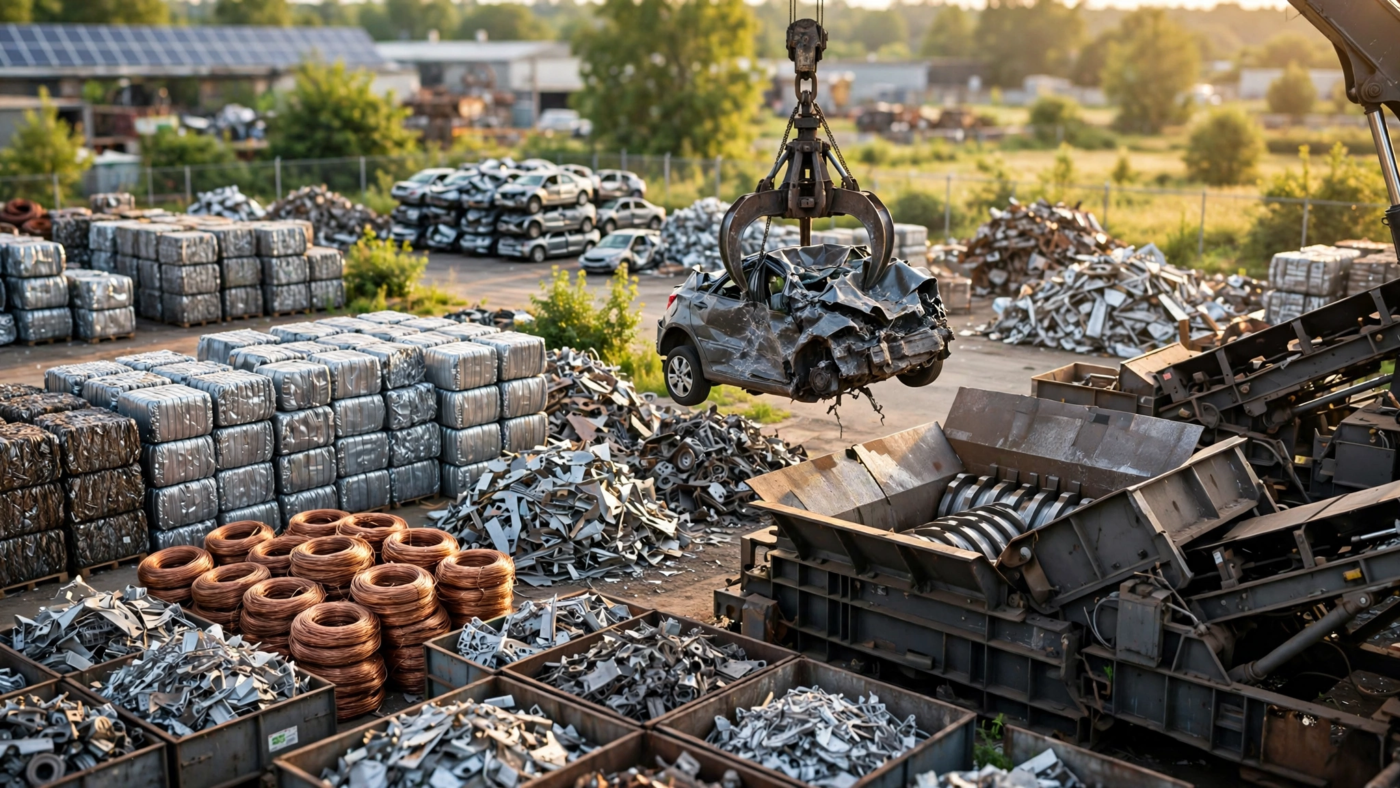
Discover the art of responsible automotive farewell! Learn how to scrap a car with our comprehensive guide, ensuring eco-friendly practices and a hassle-free process.
In today’s eco-conscious world, understanding how to scrap a car responsibly is crucial. Whether you’re upgrading to a new vehicle or dealing with an old, non-functional car, the process of car scrapping involves more than just disposing of metal. This comprehensive guide will walk you through the essential steps to ensure an environmentally friendly and legally compliant scrapping experience.
Scrapping your car has some great benefits. It helps the environment by recycling valuable materials, preventing them from going to landfills. Plus, it supports the car industry’s circular economy, where parts are reused, reducing the need for new materials. Our “How to scrap a car“ guide will take you through each step of the scrapping process.
From understanding local regulations and choosing a reputable scrapyard to preparing your vehicle for scrapping and handling the paperwork, we’ve got you covered. Empower yourself with knowledge on how to scrap a car efficiently, contributing to a sustainable and eco-friendly automotive industry.
How to scrap a car?
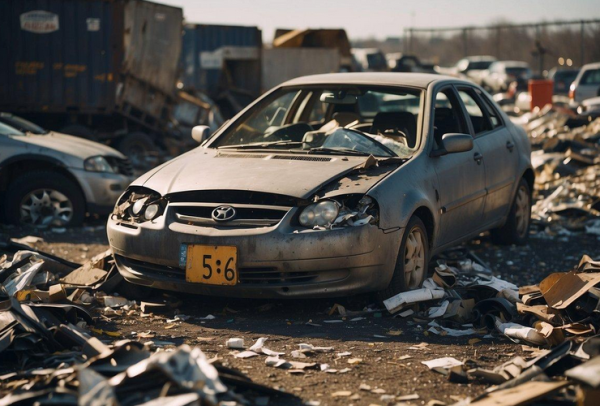
When the time comes to bid farewell to your trusty old car, you might be wondering about the most responsible and environmentally friendly way to dispose of it. One option that not only helps you get rid of your vehicle but also contributes to recycling and reducing environmental impact is car scrapping.
In this comprehensive guide, we will explore the step-by-step process of scrapping a car, highlighting the importance of responsible disposal and sharing tips on maximizing the benefits of recycling.
- Evaluate Your Decision to Scrap
- Research Local Regulations
- Remove Personal Belongings
- Prepare the Necessary Documents
- Choose a Reputable Scrapyard
- Get Multiple Quotes
- Arrange for Towing or Delivery
- Confirm Data Removal
- Receive a Certificate of Destruction
- Environmental Impact and Recycling
- Recovering Valuable Materials
- Reducing Carbon Footprint
- Rebuilding and Repurposing
Evaluate your decision to scrap:
Before diving into the scrapping process, it’s essential to assess whether scrapping is the right choice for your vehicle. Consider factors such as repair costs, safety issues, and the overall condition of the car. If the expenses of fixing the car outweigh its market value and it’s no longer safe to drive, scrapping might be the most sensible option.
Research local regulations:
Car scrapping is subject to various regulations that vary by location. Before initiating the process, familiarize yourself with local laws and requirements for scrapping a vehicle. Some regions have specific procedures for vehicle disposal, including documentation and notification to relevant authorities.
Remove personal belongings:
Before handing over your car for scrapping, ensure that you remove all personal belongings. Check the glove compartment, trunk, and any other storage areas. This simple step helps prevent the loss of valuable items and ensures a smooth transition during the scrapping process.
Prepare the necessary documents:
Most countries and states require specific paperwork for scrapping a car. Common documents include the vehicle title, registration, and a release of liability form. Make sure you have all the necessary paperwork in order before contacting a scrapyard or recycling center. File the release-of-liability or notice of transfer with your DMV as soon as the car changes hands — many states now let you do this online, and it protects you if the vehicle is later abandoned or resold instead of scrapped. And if you were planning to pull the catalytic converter off to sell separately, know that many states now require sellers to prove they own the vehicle, so the smoothest path is selling the car whole with the converter attached.
Choose a reputable scrapyard:
Selecting a reputable scrapyard is crucial to ensuring that your vehicle is scrapped responsibly. Look for facilities that follow environmentally friendly practices and have the required certifications. Check online reviews, ask for recommendations, and verify the scrapyard’s compliance with local regulations.
Get multiple quotes:
It’s a good practice to obtain quotes from multiple scrapyards before making a decision. This allows you to compare prices and choose the option that offers the best value for your car. Keep in mind that factors such as the car’s weight, condition, and current market prices for scrap metal can influence the quotes you receive.
Arrange for towing or delivery:
Once you’ve selected a scrapyard, coordinate with them to arrange for the towing or delivery of your vehicle. Many scrapyards provide towing services as part of their package. Ensure that you provide accurate information about your vehicle’s location and accessibility to facilitate a smooth pickup process.
Confirm data removal:
If your vehicle is equipped with advanced technology or features that store personal data, such as GPS systems or Bluetooth connectivity, ensure that these systems are wiped clean before scrapping. This step protects your privacy and prevents any potential misuse of your personal information.
Receive a certificate of destruction:
After your car has been scrapped, request a Certificate of Destruction from the scrapyard. This document is essential for notifying relevant authorities that your vehicle is no longer in operation. It also serves as proof that you have responsibly disposed of your car.
Environmental impact and recycling:
Scrapping a car isn’t just about getting rid of an old vehicle; it’s also a contribution to environmental sustainability. Many components of a car, including metal, glass, and plastic, can be recycled. The recycling process helps conserve resources and reduces the need for new raw materials, ultimately lessening the environmental impact of manufacturing.
Recovering valuable materials:
Scrapyards carefully dismantle vehicles to recover valuable materials. Metals, such as steel and aluminum, are separated and sent to recycling facilities. Fluids like oil, transmission fluid, and coolant are drained and disposed of properly to prevent environmental contamination. Even components like batteries and tires can be recycled or repurposed.
Electric and hybrid vehicles need extra care. Their lithium-ion battery packs are hazardous if mishandled — they can catch fire or explode if punctured, crushed, or dismantled by untrained hands, so never remove a traction battery yourself. Reputable recyclers now route EV batteries through dedicated, trained processes: the EU’s Battery Regulation made producer responsibility for EV batteries mandatory from January 2026 with a 65% recycling efficiency target for lithium-based batteries, and in June 2026 Colorado passed the first U.S. law requiring automakers to collect and recycle EV battery packs that reach the junkyard. When scrapping an EV, confirm up front that your scrapyard is equipped and certified to handle traction batteries.
Reducing carbon footprint:
By scrapping your car, you are indirectly contributing to the reduction of carbon emissions. The recycling of materials requires less energy compared to the extraction and processing of raw materials. Additionally, reusing recycled materials in manufacturing reduces the demand for energy-intensive production processes.
Rebuilding and repurposing:
Some parts of your car may still be in good condition and can be repurposed or resold. Consider salvaging valuable components like the engine, transmission, or electronic systems. There is a market for used car parts, and selling these items can offset some of the costs associated with scrapping.
Scrapping a car is a process that goes beyond simply getting rid of an old vehicle. It’s an opportunity to contribute to environmental sustainability, recycle valuable materials, and make responsible choices for the future. By following the steps outlined in this guide, you can ensure that your car is scrapped in an environmentally friendly manner, minimizing its impact on landfills and helping to build a more sustainable automotive industry
Unleashing the Cash: A Guide to Scrap Car Values and Making Bank
So, you’ve got an old clunker sitting in the driveway, and you’re wondering if there’s a way to turn that rusty relic into some cold, hard cash. Well, you’re in luck! In this blog, we’re diving into the world of scrap car values, the gold mines hiding in your old jalopy, and the secret sauce to make the most money out of scrapping. Buckle up – we’re about to transform that eyesore into a pocketful of cash! We will explore the following:
- Scrap car value calculator
- Most valuable scrap on cars
- What parts of a car can be recycled for money?
- How to make the most money scrapping
Crack the code: Scrap car value calculator
First things first, let’s talk about the magic wand of the scrap car world – the scrap car value calculator. It’s like the Sorting Hat for your vehicle, but instead of Gryffindor or Slytherin, it tells you the moolah your car could fetch. These calculators consider factors like your car’s make, model, age, condition, and sometimes even the alignment of the stars (just kidding about the stars, but you get the idea). Websites like Kelley Blue Book or local scrap yards often have these calculators, so plug in those details and watch the numbers roll in.
Treasure hunt: Most valuable scrap on cars
Now, let’s get into the nitty-gritty – what parts of your ride are pure gold? Well, not literally, but close enough. The MVP (Most Valuable Parts) award still goes to the catalytic converter. It’s that thingamajig in your exhaust system that cleans up the nasty stuff, and it’s coated with platinum-group precious metals — platinum, palladium, and rhodium — whose prices can swing 20–30% in a single quarter. After crashing for several years, rhodium roared back in 2026, reportedly topping $11,000 per ounce in March before easing toward $8,500 by May (per CARFAX), after sitting around $5,000 through most of 2024 and 2025. With that rebound, theft came roaring back too: more than 137,000 catalytic converters were stolen nationwide in 2025, down from the 2023 peak but rising again.
That’s why, if you’re scrapping, your converter is your ticket to a better payday — but do not remove it yourself before selling. Yards price complete cars, and the attached converter is part of how they calculate a full-car offer, so DIY removal almost always costs you money. It’s also legally risky: between 2021 and 2024, 31 U.S. states passed laws targeting converter theft, most now requiring scrap dealers to verify seller ID and the vehicle’s VIN; Ohio passed tougher ownership-proof rules in 2026 that also make converter theft a felony; and a federal bill, the PART Act (H.R.5221), would make catalytic converter theft a federal crime punishable by up to five years in prison. Sell the car whole, converter attached.
For a sense of scale, a factory (OEM) converter on a V6 SUV or truck can be worth roughly $400–$1,400 on its own, economy-car converters around $80–$250, and aftermarket units far less. Hybrids, with their especially large OEM converters, sit at the top of the value range.
Cash in the Trunk: Parts to recycle for money
It’s not just the catalytic converter that can pad your wallet. Your old ride is like a scrap metal treasure chest. Start with the basics: aluminum rims, batteries, and even the steel from the body can fetch you some dough. And don’t forget about the engine and transmission – they’re like the rockstars of the car recycling world. Scrap yards gobble them up, and you can bet they’ll toss a few bills your way.
The non-ferrous metals add up, too. At 2026 prices, aluminum runs roughly $0.35–$0.55 per pound and copper $3.50–$4.20 per pound, so your radiator, wiring harness, and aluminum engine components can add $40–$90 of value beyond the steel shell — closer to $150 on a diesel pickup with a big aluminum block.
The art of scrapping: How to make the most money
Now, let’s talk strategy. You want to maximize that profit, right? Well, it’s time to channel your inner negotiator. Shop around different scrapyards, get quotes, and play them against each other. It’s a scrapyard showdown, and you’re the sheriff. Also, consider selling valuable parts separately – it might take a bit more effort, but the extra cash is worth it.
Remember, timing is everything. Keep an eye on scrap metal prices; they can be as unpredictable as your ex’s mood swings. When prices are up, strike while the iron is hot – or in this case, while the scrap metal is valuable.
In closing, turning your old clunker into cash is a bit like turning lemons into lemonade – it takes a bit of effort, but the reward is oh-so-sweet. So, fire up that scrap car value calculator, start unscrewing those nuts and bolts, and get ready to turn your rusty four-wheeler into a stack of bills.
FAQs: How to scrap a car?
What is the cost to scrap a car in America?
- Cost: In America, scrapping a car might not directly cost you anything. In fact, you’re likely to receive money from the scrapyard based on the weight and value of the metal and other components. However, the amount can vary widely.
- Factors Affecting Price: The make, model, condition of the car, and current metal prices can influence how much you’ll receive. As of 2026, most junk cars fetch roughly $100 to $600, with scrap metal rates around $120–$200 per ton and the national average centered near $150 per ton — heavier trucks and SUVs command the top of the range. Complete cars with the catalytic converter attached consistently get the best offers.
- Additional Costs: Consider potential costs for towing the vehicle to the scrapyard if the service isn’t offered for free.
What is the cost to scrap a car in Europe?
- Cost: Similar to America, scrapping a car in Europe often involves receiving payment rather than paying a fee, depending on the car’s condition and market demand for scrap materials.
- Regulation update: The EU’s new End-of-Life Vehicles Regulation — Regulation (EU) 2026/1738, adopted June 2026 and in force since August 2026 — now makes vehicle producers responsible for the free take-back and proper treatment of scrap cars, tightens traceability so scrapped vehicles can’t be illegally exported or resold as used cars, and sets rising recycled-content targets for new vehicles. Use an authorised treatment facility, which is now the only legal route for scrapping a car in the EU.
- Variability Across Countries: The amount you receive can vary significantly between countries in Europe due to differing regulations, metal prices, and demand for parts.
- Average Payment: Owners can expect to receive from €50 to €300, although this range can be broader based on specific circumstances.
- Towing Costs: Like in America, if the car cannot be driven to the facility, there might be additional towing fees unless covered by the scrapyard.
What determines a car’s limit for scrapping?
- Age and Condition: Cars that are very old, significantly damaged, or costly to repair beyond their value are prime candidates for scrapping.
- Legislation: Certain environmental or safety regulations may dictate when a car must be scrapped, especially if it no longer meets emission standards or is deemed unsafe. In the EU, the 2026 End-of-Life Vehicles Regulation also bans exporting vehicles that are no longer roadworthy, so a car that can’t legally be resold abroad is now more likely to head straight for an authorised treatment facility.
- Economic Viability: When the cost of repairs exceeds the value of the car or it’s no longer economically viable to keep it running, scrapping becomes a preferred option.
- Market Demand: The demand for scrap metal and used car parts can also influence the decision to scrap a vehicle. High demand may offer more incentive to scrap older or damaged cars.
Scrapping a car involves various considerations, including the potential to receive payment from scrapyards in both America and Europe. The decision to scrap is often influenced by the vehicle’s condition, legal requirements, and the economic viability of repairs versus the value obtained from scrapping.
How can I maximize the value of my scrapped car?
Get quotes from several scrapyards, time the sale when scrap metal prices are strong, and sell the car complete — especially with the catalytic converter attached, since removing it yourself reduces the offer and can run afoul of state proof-of-ownership laws. Valuable parts like batteries, wheels, and electronics can be sold separately if you’re comfortable doing the legwork.
Is there an environmentally friendly way to scrap a car?
Yes, choose scrapyards that prioritize environmentally friendly practices, recycling materials, and disposing of fluids responsibly.
What happens to the fluids in my car during scrapping?
Responsible scrapyards properly drain and dispose of fluids such as oil, coolant, and brake fluid to prevent environmental contamination.
Can I sell a scrapped car for parts?
Absolutely. Salvageable parts can be sold separately, potentially yielding more value than scrapping the entire vehicle.
Are there tax benefits to scrapping a car?
In some regions, there might be tax incentives for scrapping a car, especially if it encourages environmentally friendly practices. Check with local authorities.
Conclusion
Mastering how to scrap a car is not just about saying farewell to an old vehicle; it’s a commitment to environmental responsibility. By following our comprehensive guide, you’ve not only navigated the intricacies of the scrapping process but also contributed to the sustainable reuse of automotive materials. Embrace the opportunity to make a positive impact on both your wallet and the planet as you bid adieu to your car through the eco-friendly practice of responsible scrapping.

The Teck Hustlers editor oversees publishing, fact-checking and corrections across Teck Hustlers, making sure every story on technology, business, finance and gaming meets our editorial standards before it goes live.