Intel stock dropped about 28% in a single day after the company gave a weak fourth-quarter outlook, wiping roughly $12 billion off the value of the US government’s 10% stake in the company. The culprit, according to Intel’s own CEO, is the same memory price spike that’s been hitting PC buyers all year.
Friday was one of the worst trading days in Intel’s history, and the company’s own numbers explain why. Fourth-quarter revenue guidance came in at $15 billion to $16 billion, well short of the roughly $17 billion analysts were expecting. Gross margin is projected to fall from 43% to 37%, and Intel told investors not to expect positive cash flow this quarter at all.
CEO Lip-Bu Tan laid out the core problem on the earnings call in plain terms. “Our customers began signaling a PC slowdown based on the memory prices and availability,” he said, adding that system and endpoint prices have risen significantly this year, squeezing already tight IT budgets across the board. That’s a notable admission from the head of a chipmaker: the thing dragging down Intel’s near-term outlook isn’t a problem with Intel’s own chips, it’s the price of memory everyone needs to put around those chips.
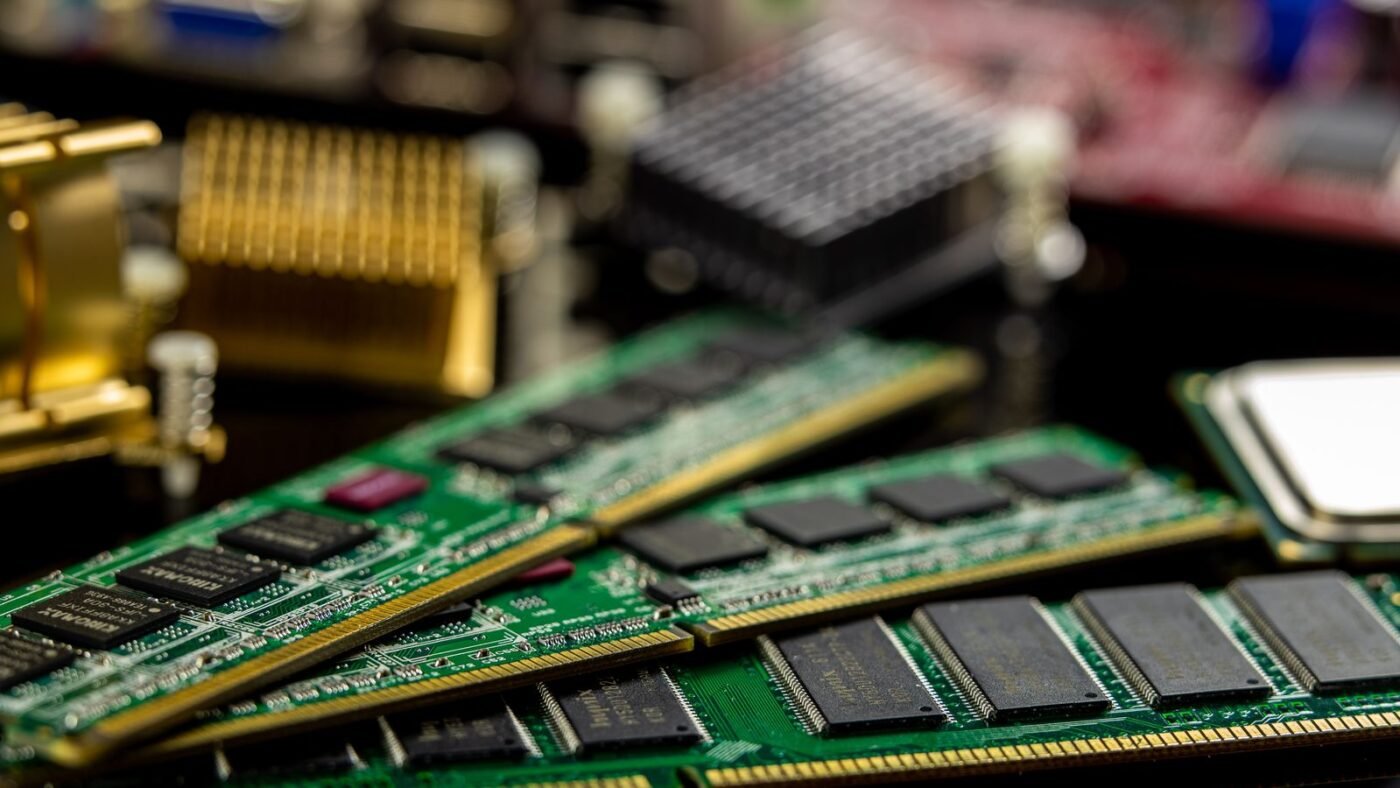
It’s the latest and largest sign yet of how badly the AI-driven memory shortage is spilling into the broader PC market. Data centers have been absorbing an outsized share of global memory production all year to feed AI training and inference, and that scarcity has pushed prices up across the board, for data centers and consumer PCs alike. Intel, which sells chips into both markets, is now watching the PC side of that equation slow down as buyers balk at higher prices.
“Our customers began signaling a PC slowdown based on the memory prices and availability,” Tan told analysts on the call.
Not every part of Intel’s business is struggling. Data center revenue actually grew 78% year over year, a huge number on its own, but the company says that growth is capped by how much manufacturing capacity it can bring online. Intel has one fab operational in Arizona, with the next one not expected to come online until 2028. That’s a long runway for a company trying to capitalize on AI demand right now.
The government angle adds a political layer to an already messy earnings story. The Trump administration directed the US government to buy a 10% stake in Intel over a year ago, a highly unusual move for Washington to take in a private semiconductor company, even one as strategically important as Intel. Friday’s 28% drop cut roughly $12 billion off the value of that stake in a single session. The position is still profitable overall, up more than 70% for the year even after the drop, just well below where it stood at its summer highs. Nvidia, which took its own stake in Intel back in 2025, saw its shares dip somewhat on the same day too, though nowhere near as sharply.
There’s an irony buried in this story that’s worth sitting with. The same AI boom that has been inflating valuations across the chip sector, with companies like Nvidia backstopping tens of billions of dollars in AI infrastructure deals, is also the direct cause of the memory shortage now dragging down Intel’s PC business. AI demand is simultaneously the industry’s biggest tailwind and, for companies exposed to consumer hardware, a real headwind.
For consumers, the practical upshot has already been visible for months in the form of rising PC and laptop prices. Intel’s earnings call is really just the clearest institutional confirmation yet that the memory crunch isn’t a temporary blip; it’s reshaping demand patterns across the entire PC supply chain, from component makers all the way down to the chipmaker that sits at the center of it.
Whether Intel’s data center growth can outrun the PC slowdown over the next year is now the central question for the company, and for the government stake riding along with it. A fab that doesn’t come online until 2028 means Intel is stuck growing its AI-exposed business at whatever pace its existing capacity allows, while the consumer side absorbs the brunt of pricing pressure in the meantime.
The fab timeline is arguably the most important detail buried in Intel’s earnings call, because it defines the ceiling on how fast the company’s best-performing segment can actually grow. Data center revenue jumping 78% year over year is an enormous number in isolation, but Intel itself is saying that growth is constrained by manufacturing capacity rather than demand. With the Arizona fab already running and the next one not expected until 2028, Intel is in the unusual position of turning away growth it could otherwise capture, simply because it doesn’t have anywhere to make the chips. That’s a very different problem than a demand shortfall, and it’s one that takes years of capital investment to fix rather than a single good quarter.
For PC makers and retailers further down the supply chain, Intel’s comments are a useful, if unwelcome, confirmation of what they’ve likely already been seeing in their own order books. When the chipmaker at the center of the PC ecosystem says customers are pulling back specifically because of memory costs, that’s a signal the slowdown isn’t isolated to one brand or one price tier. It suggests the entire PC replacement cycle, the steady churn of people and businesses buying new laptops and desktops every few years, is stretching out as buyers wait for prices to normalize rather than paying the current premium.
Whether that normalization happens anytime soon is an open question, and not one Intel’s earnings call could answer. Memory manufacturers have their own capacity constraints and their own incentive to keep prices elevated while data center demand remains insatiable. Until that calculus shifts, either through new fab capacity coming online somewhere in the industry or AI demand cooling off, Intel and every other company selling into the PC market is likely to keep navigating the same squeeze that just cost Intel’s government stake $12 billion in a single trading session.
The bottom line
Intel’s rough quarter is really a memory shortage story wearing a semiconductor earnings report as a disguise. The chip business is fine. The problem is that everything built around the chip got dramatically more expensive this year, and buyers are finally pulling back. That dynamic isn’t unique to Intel, but Intel, straddling both PCs and data centers, is where the tension between AI-driven demand and consumer affordability is showing up first and showing up loudest.

The Teck Hustlers Editorial Team covers technology, business, finance and gaming news for readers who want the story behind the headline. Every article is researched, written and edited by our in-house team, checked against company announcements, filings and reputable reporting, and updated when new facts emerge. We focus on what each development means for founders, professionals, investors and everyday users. Have a tip or a correction? Reach us through our contact page.