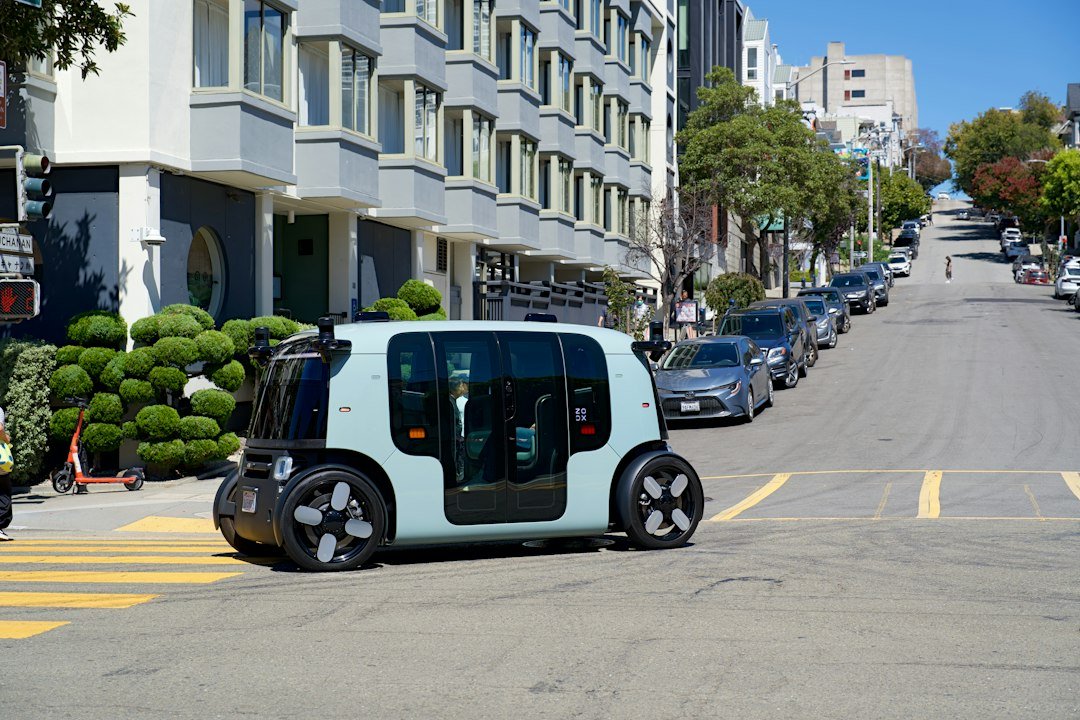
Ride-hailing app inDrive wants to run robotaxis in Central Asia by 2027, and it’s teaming up with Pony.ai for the vehicles and Nvidia for the compute to try to get there. That’s the short version. The longer version says a lot about where the next wave of autonomous vehicle expansion is actually headed, and it isn’t San Francisco or Phoenix.

inDrive, a ride-hailing competitor to Uber that’s built most of its growth in markets Uber has underpriced or ignored, including large parts of Central Asia, Latin America and Africa, announced plans to test Pony.ai’s autonomous vehicles on its platform in Central Asian markets starting in 2027. Pony.ai, a Chinese autonomous driving company that’s been racing to triple its robotaxi fleet globally by the end of 2026, supplies the vehicles and the self-driving stack. Nvidia supplies the compute underneath it, continuing a pattern where the chipmaker shows up as the infrastructure layer behind nearly every serious robotaxi push regardless of which auto or ride-hailing brand is on the car.
Why Central Asia, and why now? The region doesn’t have the regulatory gridlock that’s slowed robotaxi rollouts in parts of the US and Europe, where city-by-city permitting fights have dragged timelines out for years. It also doesn’t have Waymo or Tesla’s Cybercab establishing first-mover advantage the way they have in American markets. For Pony.ai specifically, expanding into a region with comparatively light regulatory friction and limited existing robotaxi competition is a faster path to fleet scale than fighting for permits in markets where incumbents are already entrenched.
For inDrive, the strategic logic is different but complementary. The company has built its business on being the cheaper, more flexible alternative to Uber in markets Uber treats as secondary. Autonomous vehicles, once the technology and regulatory pieces are in place, strip out the single largest cost in ride-hailing: the driver. A ride-hailing company that gets meaningfully ahead on robotaxi deployment in markets its larger competitors haven’t prioritized could end up with a durable cost advantage that’s much harder to replicate than inDrive’s current pricing edge, which Uber could theoretically match if it wanted to absorb the margin hit.
“We’re not trying to out-spend Uber in markets where they’re already strong,” an inDrive executive said of the broader regional strategy behind the partnership. “We’re trying to get to the next phase of the business before they decide this market is worth their attention.”
The 2027 timeline should be read with appropriate skepticism. Autonomous vehicle companies have a long, well-documented history of announcing ambitious regional expansion timelines that slip by a year or more once the harder parts, mapping unfamiliar road conditions, securing local regulatory sign-off, handling weather and infrastructure variables that differ wildly from the testing grounds in Silicon Valley or Guangzhou, actually show up. Pony.ai’s own public targets for fleet growth in its home market of China have already required revision more than once. A genuinely new region, with its own road rules, driving norms and infrastructure quirks, is a harder lift than scaling within a market the company already understands.
That said, the partnership structure here is worth taking seriously even if the 2027 date slips. Nvidia’s involvement as the compute layer, rather than just a chip vendor selling hardware at arm’s length, mirrors the pattern we’re seeing across the AI industry this year of the chipmaker taking a more hands-on infrastructure and sometimes equity role in the companies building on top of its hardware. That’s the same dynamic behind Nvidia’s broader strategy of backing the companies that spend the most on its GPUs, just applied to autonomous driving instead of AI video generation.
There’s also a geopolitical dimension that’s easy to miss if you’re only looking at the robotaxi angle. Central Asia has become a genuine contested space for AI and compute infrastructure investment this year, with multiple countries in the region courting Nvidia, Chinese AI firms and Gulf-backed investment funds simultaneously. A Chinese autonomous driving company partnering with a ride-hailing app that’s popular across the region, backed by American chip infrastructure, is itself a small data point about how the region is trying to avoid picking a single geopolitical lane on AI and instead work with whichever partners offer the best terms.
Pony.ai has not said how many vehicles it plans to deploy in the initial Central Asian pilot, what cities are first in line, or what regulatory approvals are still outstanding. inDrive has similarly kept early details light, which is typical for a partnership announcement this far ahead of actual deployment. Expect more concrete specifics, vehicle counts, specific city names, pricing structure, closer to 2027 as the companies move from announcement to actual pilot testing.
Worth comparing this to how Waymo has approached expansion in its home market. Waymo has been methodical to the point of slowness, rolling out city by city in the US with extensive mapping and safety validation before opening rides to the public, a strategy that’s produced a strong safety record but a correspondingly slow expansion pace, now reaching into roughly ten major US markets after years of work. Pony.ai’s approach in markets like Central Asia looks set to move faster, partly because the regulatory bar it has to clear is lower and partly because the company has more operational experience to draw on from its home market deployments in China, where it’s already targeting a tripled fleet by the end of 2026. Whether faster-but-less-mapped turns out to be the right tradeoff is exactly the kind of question that only gets answered once vehicles are actually on unfamiliar roads with real pedestrians and real weather, not in a press release.
The bottom line: inDrive is betting that Central Asia’s lighter regulatory environment and lack of entrenched robotaxi competition give it a faster path to autonomous vehicles than fighting Uber and Waymo head-on in markets where they’re already dug in. The 2027 timeline is ambitious by the industry’s usual track record, but the underlying strategic logic, go where the giants aren’t looking yet, is sound regardless of exactly when it lands.

The Teck Hustlers Editorial Team covers technology, business, finance and gaming news for readers who want the story behind the headline. Every article is researched, written and edited by our in-house team, checked against company announcements, filings and reputable reporting, and updated when new facts emerge. We focus on what each development means for founders, professionals, investors and everyday users. Have a tip or a correction? Reach us through our contact page.