Apple’s first touchscreen MacBook Pro has been in reviewers’ hands for two weeks now, and the verdict is split right down the middle: the touch experience itself works better than almost anyone expected, but Apple is charging an eye-watering amount to get it.
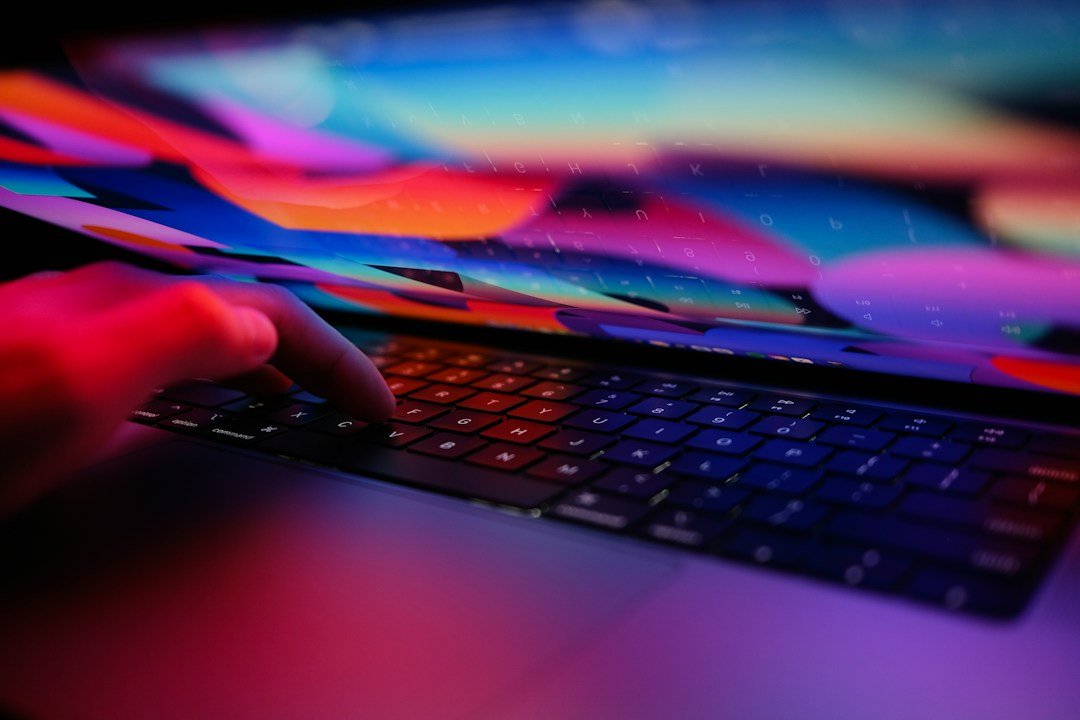
The 14-inch and 16-inch models went up for preorder on October 28 and started shipping November 6, ending more than a decade of Apple insisting that touch belonged on the iPad and nowhere near a MacBook. Both sizes use a tandem OLED panel Apple is branding PROLED XDR, two OLED layers stacked on top of each other to push brightness higher while keeping blacks deep, without needing the thicker backlight that a single-layer panel would require. The 14-inch weighs three pounds, the 16-inch four, and both are available with M5 Pro or M5 Max chips, the latter maxing out at an 18-core CPU and 40-core GPU.
Pricing is where things get uncomfortable. The 14-inch starts at $2,899 and the 16-inch at $3,399, several hundred dollars above the previous non-touch generation. Push every configuration slider to the right, 16TB of storage, 128GB of memory, nano-texture glass, and the total climbs to $14,249 for the 14-inch and $14,549 for the 16-inch. For comparison, the last 16-inch MacBook Pro topped out at $10,149 fully loaded. Apple has pointed to the ongoing memory shortage as part of the reason, but even the base configurations cost more than before.
Reviewers say the touch actually feels right
That’s the part that’s surprising people. Early hands-on reviews, including a detailed one from TechRadar’s Lance Ulanoff, describe the touch interaction as unexpectedly natural rather than bolted on. “It felt totally natural to tap, swipe, gesture with three fingers, pinch, zoom, and more on a MacBook Pro display,” Ulanoff wrote, adding that he never hesitated or had to think through how to perform a gesture. He also noted his arm never got tired resting against the display during use, which has been a recurring complaint about touchscreen laptops going back to the Windows 8 era.
“At no moment did I hesitate and wonder how I did this or that thing. It never felt uncomfortable, and my arm never got tired.” — Lance Ulanoff, TechRadar
That’s a real shift from how Apple has talked about touch on laptops for years. Steve Jobs famously argued that a vertical touchscreen made no ergonomic sense, and Apple executives repeated versions of that logic as recently as a few years ago. The fact that the company spent this long getting the gesture set right, and that it apparently landed, says something about how cautious Apple was about shipping this feature at all.
What’s missing compared to the competition
Windows laptop makers have offered touchscreens for well over a decade, and most of their 2-in-1 and convertible designs let the screen fold flat or flip all the way around. Apple’s version doesn’t do either. The hinge still only opens to a normal laptop angle, which Ulanoff, a longtime Microsoft Surface user, called a missed opportunity. There’s also no Apple Pencil support on the new MacBook Pro, so anyone hoping to sketch or annotate directly on the big OLED panel is out of luck for now. The Dynamic Island cutout, carried over from recent MacBook Pro generations, doesn’t do much of anything useful with the new touch layer either.
Apple still ships three Thunderbolt 5 ports, a USB-4 port, HDMI, an SD card slot, and a headphone jack, so the connectivity story hasn’t changed. What has changed is the calculus for anyone deciding between a MacBook Pro and a high-end Windows convertible. If you want a screen that folds back into a tablet, you’re still looking at Microsoft’s hardware lineup rather than Apple’s.
The memory shortage is making everything worse
Apple’s pricing didn’t happen in a vacuum. The entire PC and phone industry has been dealing with a memory chip shortage for most of this year, as AI data center buildouts have soaked up an enormous share of global DRAM and NAND flash production. Component suppliers have been able to charge more for memory chips than at almost any point in the past decade, and that cost eventually shows up somewhere in a finished product’s price tag. Apple rarely explains its pricing in public, but industry analysts have pointed to memory costs as a real contributor here, not just an excuse. It doesn’t fully explain a jump of several hundred dollars at the entry level, but it’s part of the picture, and it means other laptop makers raising prices around the same time aren’t doing it in a coincidence.
That context matters for anyone trying to decide whether to buy now or wait. If memory prices ease next year as new fab capacity comes online, there’s a real chance this generation’s pricing looks like a temporary peak rather than the new normal. If they don’t ease, and some analysts think the AI-driven demand for memory chips isn’t going away anytime soon, this could just be what premium laptops cost from here on out.
Why this matters beyond one product cycle
Apple rarely ships a feature this visible without planning to build on it. A touch layer on macOS opens the door to new gesture-based window management, closer integration with iPad-style apps, and eventually, if Apple ever reconsiders, stylus support. For now, this is a first-generation implementation sold at a first-generation premium, aimed at the buyers who were always going to upgrade their MacBook Pro regardless of price. Everyone else is being asked to pay a four-figure premium for a feature Apple spent a decade saying nobody needed. It’s a similarly split reaction to the one Apple got when reviewers weighed in on the iPhone Duo earlier this year, another late-arriving Apple hardware bet that impressed on execution while leaving plenty of buyers unconvinced on price.
The bottom line
The touchscreen itself isn’t the gimmick skeptics expected, reviewers who’ve spent real time with it keep saying the gestures feel considered rather than tacked on. But Apple built this generation for people who were already going to buy a new MacBook Pro no matter what it cost. If you’re on the fence, the lack of a flip-back hinge and Pencil support means you’re not getting the full convertible experience Windows users have had for years, just a very polished, very expensive first step.

The Teck Hustlers Editorial Team covers technology, business, finance and gaming news for readers who want the story behind the headline. Every article is researched, written and edited by our in-house team, checked against company announcements, filings and reputable reporting, and updated when new facts emerge. We focus on what each development means for founders, professionals, investors and everyday users. Have a tip or a correction? Reach us through our contact page.