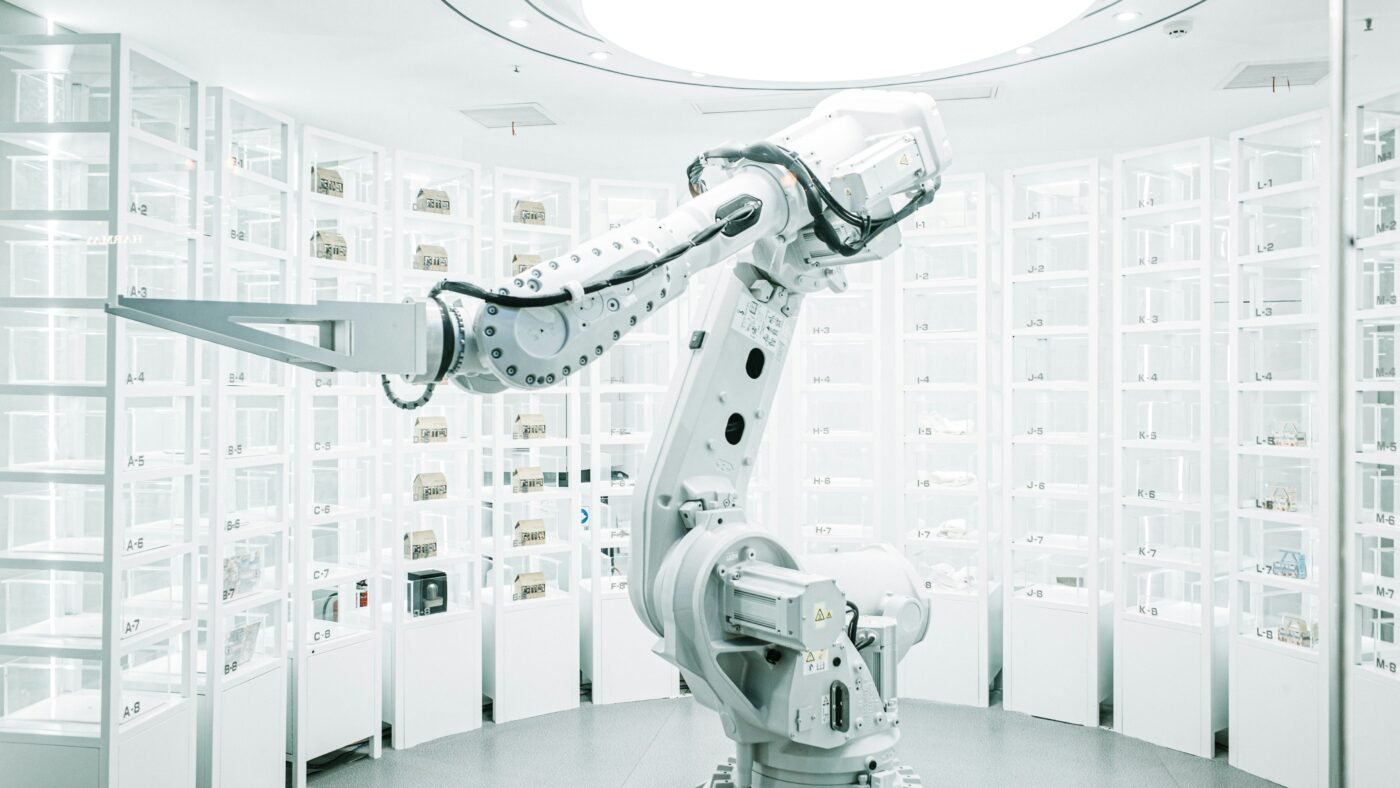
Nvidia unveiled GR00T 2, a new open source foundation model that teaches robots complex physical skills by watching ordinary video of humans doing the same tasks, alongside a major update to its Isaac Lab simulation software.
The announcement came at the Conference on Robot Learning, where Nvidia also released Isaac Lab 3.0, a set of simulation tools meant to let robotics companies train and test their machines in virtual environments before ever touching real hardware. Nvidia says robots trained on GR00T 2 hit roughly 95% success rates across a batch of test tasks the company has not fully detailed, a number that is striking if it holds up outside a carefully controlled demo.
Why learning from video matters
Most robots today learn by repetition in a lab, with engineers manually programming movements or running thousands of trial and error attempts on physical hardware. That approach is slow and expensive, and it does not scale to the huge variety of tasks a general purpose robot would eventually need to handle. GR00T 2’s pitch is that it can shortcut a lot of that process by learning from the same kind of video data that is already abundant online, people picking things up, folding laundry, assembling parts, and generally doing the physical tasks robotics companies want machines to replicate.
This is not a brand new idea. Researchers have been chasing learning from demonstration techniques for years, and Nvidia itself has iterated on the GR00T line since its first version. What is different this time is the scale and the fact that Nvidia is open sourcing the stack rather than keeping it locked behind a partnership agreement, a move the company is framing as an attempt to make advanced robotics development accessible to smaller teams that cannot afford to build this kind of foundation model from scratch.
Isaac Lab 3.0 and the simulation bet
Isaac Lab 3.0 is arguably the less flashy but more consequential half of the announcement. Simulation has become the backbone of modern robotics development because it lets companies run millions of virtual training iterations without wearing out a single physical actuator. Nvidia’s simulation tools already have a strong foothold in the robotics industry, and this update reportedly adds better physics fidelity and faster training throughput, both of which directly affect how quickly a robotics startup can go from idea to working prototype.
The combination of GR00T 2 and Isaac Lab 3.0 is clearly designed to work as a package, train in simulation, fine tune with real or human video data, deploy to hardware. That pipeline is exactly what companies building humanoid robots have been assembling internally, and Nvidia open sourcing a version of it effectively hands smaller competitors a shortcut that used to require years of in house tooling work. We saw how fast that competitive landscape is moving when Agility Robotics became the first pure-play humanoid robot company to list on Nasdaq earlier this month.
The skeptical read
A 95% success rate sounds impressive until you ask what the tasks actually were. Robotics demos have a long history of looking flawless in a controlled setting and falling apart the moment lighting changes, an object is slightly out of place, or a human bumps into the workspace. Nvidia has not published the full list of the roughly 50 test tasks behind that figure, which makes it hard for outside researchers to judge whether the benchmark reflects genuinely hard, varied physical work or a narrower set of tasks picked because the model happens to do well on them.
There is also the question of who actually benefits from an open sourced model like this. Nvidia does not make money by giving away software, it makes money selling the chips that run it. Every robotics company that adopts GR00T 2 and Isaac Lab is, by extension, a more likely buyer of Nvidia’s GPUs for both training and inference, which makes the generosity here look less like pure research philanthropy and more like a smart way to lock in demand for silicon as the humanoid robotics market tries to figure out what it actually wants to build.
That dynamic is not unique to robotics. Nvidia has run a similar playbook across gaming, self driving cars, and generative AI for years, give away enough of the software layer to make its hardware the default choice, then collect on the chip sales once an ecosystem forms around it. The strategy keeps working because very few companies in robotics or AI have the resources to build a credible alternative stack from the ground up.
The timing also lines up with a broader surge of capital flowing into humanoid and general purpose robotics, from well funded startups to established industrial giants retooling around an AI driven labor narrative. Nvidia positioning itself as the default infrastructure layer for that entire wave, rather than betting on any single robot maker winning, is a hedge that has served the company well in every other AI subfield it has touched so far, including the memory and chip supply crunch now reshaping Samsung’s own AI chip spending plans.
The bottom line
GR00T 2 is a genuine technical step forward if the success numbers hold up under independent testing, and open sourcing it will likely speed up how fast smaller robotics teams can get working prototypes off the ground. Just do not mistake a strong conference demo for robots that are ready to work unsupervised in your home or warehouse. That gap has swallowed plenty of robotics hype cycles before this one.

The Teck Hustlers Editorial Team covers technology, business, finance and gaming news for readers who want the story behind the headline. Every article is researched, written and edited by our in-house team, checked against company announcements, filings and reputable reporting, and updated when new facts emerge. We focus on what each development means for founders, professionals, investors and everyday users. Have a tip or a correction? Reach us through our contact page.