Written by Admin Alex · Fact-Checked by M.Ali · Info Verified September 2026
Published: September 26, 2026 · Last updated: September 26, 2026
TL;DR: Midjourney V7 still wins on artistic style, Imagen 4 and Flux 2 Pro lead on photorealism, and Stable Diffusion 4 is the only one you can run for free if you self-host it. Pick based on what you’re making, not which name you’ve heard most.
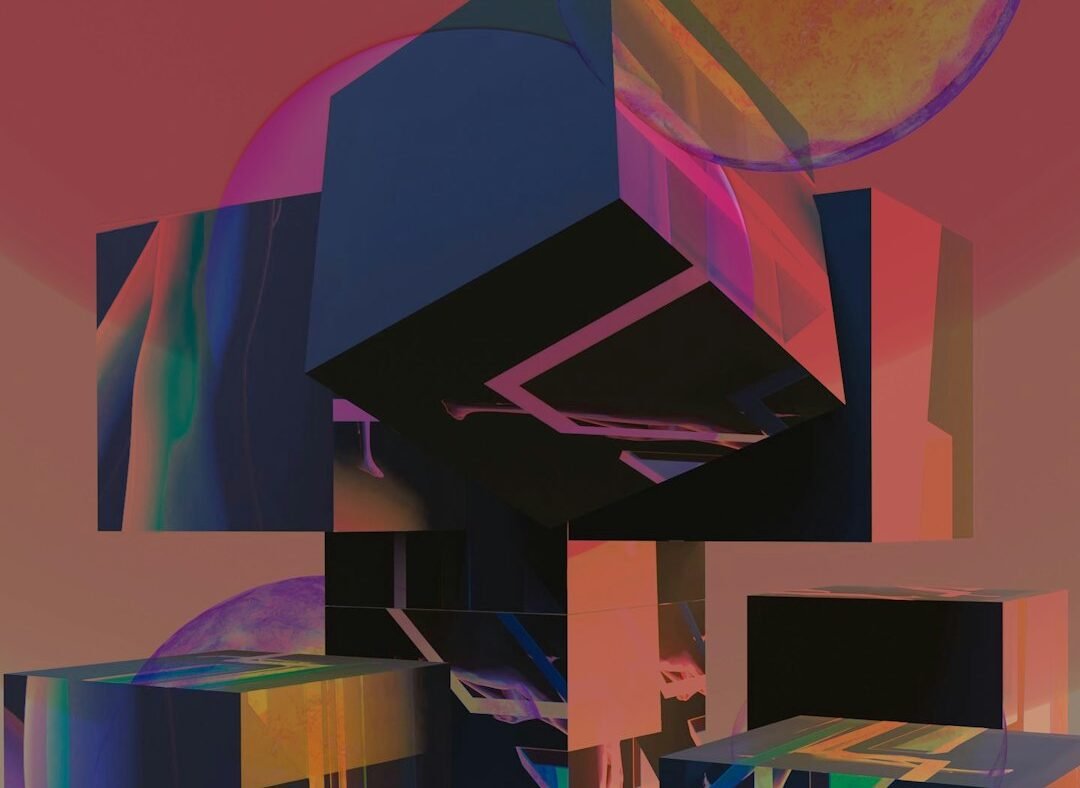
Type the same prompt into five different image generators and you’ll get five genuinely different pictures. That’s easy to forget when every headline just says “AI image generator” like it’s one thing. It isn’t. Each model has a distinct visual signature, a different price structure, and a different job it’s actually good at.
Midjourney V7
Still the one people mean when they say an image “looks AI-generated” in a good way. Midjourney’s aesthetic leans stylized and painterly, strong for character design, fantasy art, and marketing creative that wants to look intentional rather than photographic. Pricing runs $10 to $120 a month depending on generation volume and commercial usage rights.
Flux 2 Pro and Imagen 4
These two are the photorealism leaders right now. Flux 2 Pro is an open-weight model with strong prompt adherence, priced around $0.05 to $0.10 per image through an API, or free if you have the hardware to self-host it. Imagen 4, Google’s entry, particularly excels at human faces and natural scenes, running $0.04 to $0.08 per image through Vertex AI.
DALL-E 4 and the Nano Banana wildcard
DALL-E 4 costs $0.04 per image through the API, or comes bundled into a $20-a-month ChatGPT Plus subscription, which makes it the easiest on-ramp if you’re already paying for ChatGPT. Worth knowing about separately: Google’s Gemini 2.5 Flash Image, nicknamed Nano Banana, offers a genuinely free tier through Google AI Studio, no credit card required, with roughly 500 images a day at 1024×1024 resolution before you hit a limit.
Stable Diffusion 4 and Ideogram 3
Stable Diffusion 4 is free if you self-host it, or roughly $0.01 to $0.05 per image on hosted APIs. It remains the most customizable option, with extensive support for LoRAs and fine-tuning if you want a model trained on a specific style. Ideogram 3 sits apart from the rest of this list because its real strength is text rendering, actually spelling words correctly inside an image, which makes it the pick for logos and text-heavy posters. It runs $7 to $50 a month.
A real prompt, run through two different models
Prompt: “a lighthouse on a cliff at sunset, dramatic clouds.” Run through Midjourney V7, you’d typically get a moody, painterly composition with exaggerated color grading, closer to a movie poster than a photo. Run the same prompt through Imagen 4 or Flux 2 Pro, and the result leans photographic, natural lighting, realistic cloud texture, the kind of image that could pass for a real photograph at a glance. Same eleven words, two completely different outputs. That gap is the entire reason this list has five different tools on it instead of one.
Related: curious how AI coding tools compare the same way? See our Best AI Coding Assistants in 2026 roundup, and for text instead of images, our QuillBot AI review.
Bottom Line: There’s no single best AI image generator, only a best one for what you’re actually making. Stylized art means Midjourney, photorealism means Flux or Imagen, free means Stable Diffusion self-hosted or Nano Banana’s daily quota.
Follow Teck Hustlers: Facebook · X · Instagram · LinkedIn · TikTok · Pinterest