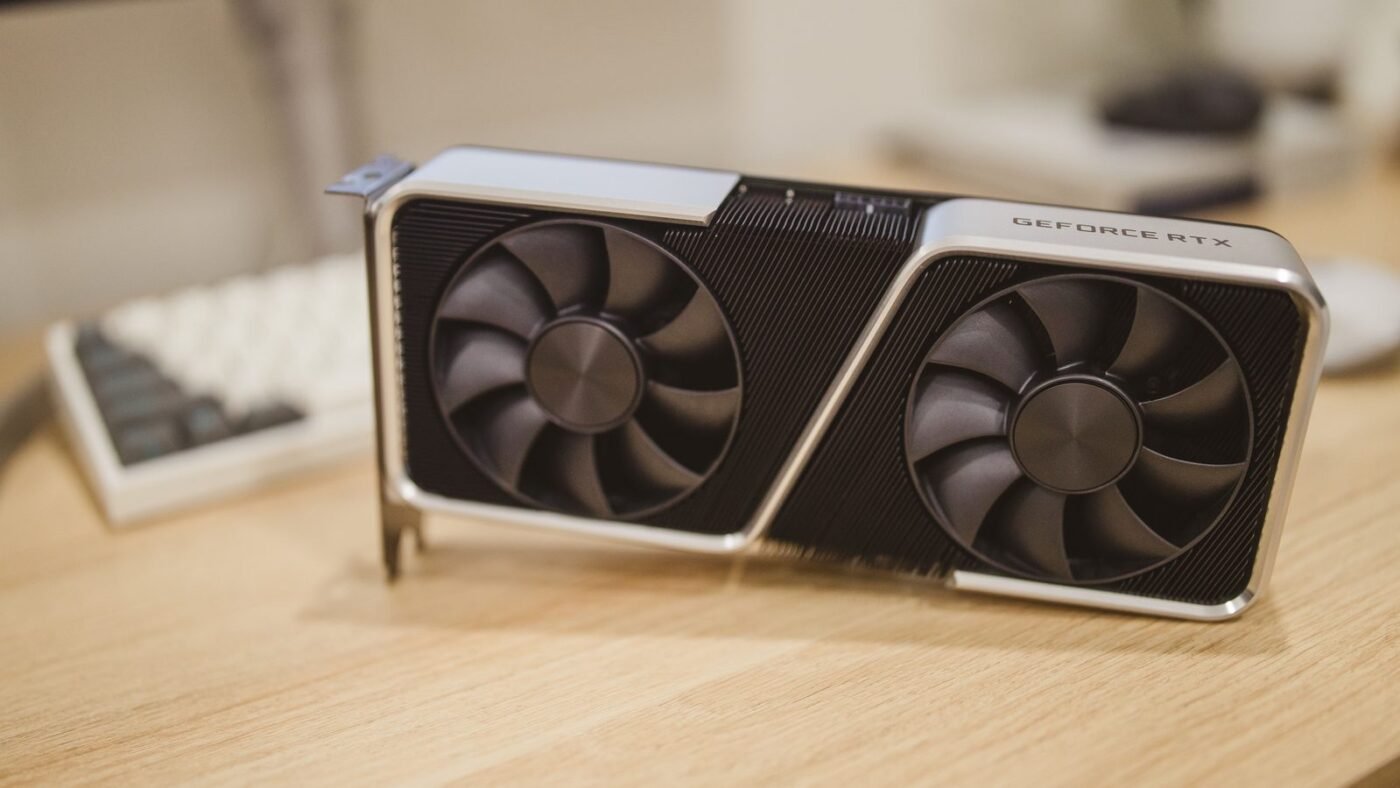
TL;DR: ByteDance, Alibaba and Tencent have ordered more than 3 million Nvidia RTX PRO 5500 graphics cards, worth over $35 billion at about $11,400 each, Reuters reported on October 20, citing people familiar with the matter. The RTX PRO 5500 is a workstation chip that can still legally be sold in China under US export rules. Chinese companies plan to use the cards mostly to run AI models. The catch: Nvidia has reportedly told customers it can’t guarantee delivery, and some buyers may get only 5% to 10% of what they asked for.
The Nvidia RTX PRO 5500 China orders show how much demand for AI computing power remains in the country, even after years of US restrictions. According to Reuters, total orders from Chinese customers for the card have passed 6 million units. Nvidia has reportedly said it can make no more than 3 million globally in 2027. Here’s what’s in the report, why a workstation card has become so sought-after, and what it means for Nvidia and China’s AI industry.
The orders, by the numbers
| Detail | What Reuters reported |
|---|---|
| Buyers | ByteDance, Alibaba, Tencent |
| Units ordered by the three | More than 3 million RTX PRO 5500 cards |
| Approximate price per card | About $11,400 |
| Combined sticker value | More than $35 billion |
| Total orders from China | More than 6 million cards (two sources) |
| Nvidia’s reported 2027 output limit | No more than 3 million cards globally (one source) |
| Possible fulfilment | As little as 5%–10% of requested quantities (one source) |
| Timeline | Early samples in December; commercial deliveries from Q1 2027 |
ByteDance, Alibaba and Tencent didn’t respond to Reuters’ requests for comment. The US Commerce Department’s Bureau of Industry and Security and China’s Ministry of Industry and Information Technology didn’t respond either.
What is the RTX PRO 5500, and why does China want it?
The RTX PRO 5500 is a workstation graphics card, built for powerful professional desktops rather than the giant data-centre clusters that train frontier AI models. It’s less powerful than Nvidia’s H200 and B300 chips, which are designed to be linked in large numbers. But Reuters describes it as “among the most powerful Nvidia chips that are still available to Chinese buyers.”
The export picture, as Reuters lays it out:
- B300 (Blackwell data-centre chip): not allowed to be sold to Chinese buyers under US export controls.
- H200 (Hopper): exports reviewed case by case and subject to licensing conditions.
- RTX PRO 5500: export-compliant, and similar in performance to the RTX 6000D, according to product specifications Reuters saw.
The three companies want the cards mainly for inference, meaning running already-trained models to answer chatbot queries, according to Reuters’ sources. Inference generally needs less computing power than training, which makes a workstation card a workable, if imperfect, substitute when the best chips are off limits.
A U-turn from last year
The demand is a shift from the reception Nvidia’s previous China-compliant workstation chip got. Nvidia launched the RTX 6000D in mid-2025 as a reduced-capability product designed to meet US rules. Reuters reported at the time that major Chinese tech firms showed little interest, with some declining to order. Buyers saw it as too expensive for what it could do and hoped Washington would eventually allow sales of more powerful processors.
Those hopes have faded, Reuters’ sources say. Restrictions have stayed in place and AI computing capacity has stayed scarce, so the RTX PRO 5500 now looks like the best available option. One source said the RTX 6000D has since been discontinued and that its market price in China has doubled.
The rush isn’t limited to the big three. In an October 13 filing, Shenzhen-listed fintech and AI-computing company Tansun Technology said it had agreed to buy 20,000 RTX PRO 5500 cards from an unnamed counterparty. It warned that supply shortages, demand and overseas technology controls could delay deliveries or reduce volumes.
Why Nvidia can’t promise to fill the orders
Two of Reuters’ sources pointed to Nvidia’s manufacturing priorities. From 2027, Nvidia is expected to devote much of its capacity at Taiwan Semiconductor Manufacturing Co (TSMC) to Rubin, its next-generation platform for large data centres, rather than products like the RTX PRO 5500. TSMC declined to comment.
That leaves Nvidia balancing two things. Rubin is where it expects its biggest data-centre revenue, while Chinese buyers want large volumes of a lower-end, export-safe part. For context on how investors are reading Nvidia right now, see our recent coverage of Nvidia’s slide to $214 amid AI debt worries.
What Nvidia says
Nvidia didn’t comment on the orders directly. A spokesperson told Reuters that Chinese producers of workstation chips and cards have seen “unprecedented growth since 2022,” when the curbs were first imposed. “US firms continue to be restricted by a combination of outdated US export controls, which cover gaming products released nearly a half a decade ago, and China’s own limit on US imports,” the spokesperson said.
CEO Jensen Huang has said the restrictions cut Nvidia’s share of China’s AI data-centre chip market from a near monopoly to effectively nothing. Reuters notes that the RTX PRO 5500 demand suggests Nvidia still has a sizeable potential market in China through less powerful products.
What it means for China’s AI push
- Compute is still scarce. The scale of the orders, which Reuters says hadn’t been reported before, shows how tight computing supply is as Chinese firms race to build and deploy AI models.
- Domestic chips are gaining, but not enough. US curbs have pushed Chinese companies toward local suppliers, and Huawei in particular has gained share. Reuters notes Chinese chipmakers have generally struggled to match leading US products, partly because separate rules limit access to advanced chipmaking equipment.
- Policy pressure goes both ways. Beijing has encouraged the use of homegrown chips, and Nvidia’s spokesperson pointed to China’s own limit on US imports. China has also been tightening its own technology export rules, as we covered in China’s new AI export permission requirements.
- Grey-market risk remains. Scarcity has fed chip smuggling before. US prosecutors recently charged a tech company owner over an alleged $300 million Nvidia chip smuggling scheme.
What to watch next
- December samples: whether early RTX PRO 5500 samples arrive on the schedule Nvidia reportedly gave customers.
- Allocation: how much of the order book Nvidia actually fills in early 2027, and how it splits supply among Chinese buyers.
- Washington’s response: any move by US regulators to tighten rules on workstation-class cards, given the volumes involved.
- Nvidia’s earnings: any comment on China demand for compliant products when Nvidia next reports.
For now, the report shows that Chinese tech companies still want Nvidia hardware badly enough to place huge orders for a card that isn’t designed for data centres. Whether they get much of it depends on Nvidia’s factory priorities and on Washington.

The Teck Hustlers Editorial Team covers technology, business, finance and gaming news for readers who want the story behind the headline. Every article is researched, written and edited by our in-house team, checked against company announcements, filings and reputable reporting, and updated when new facts emerge. We focus on what each development means for founders, professionals, investors and everyday users. Have a tip or a correction? Reach us through our contact page.