Published: September 27, 2026 · Last updated: October 19, 2026
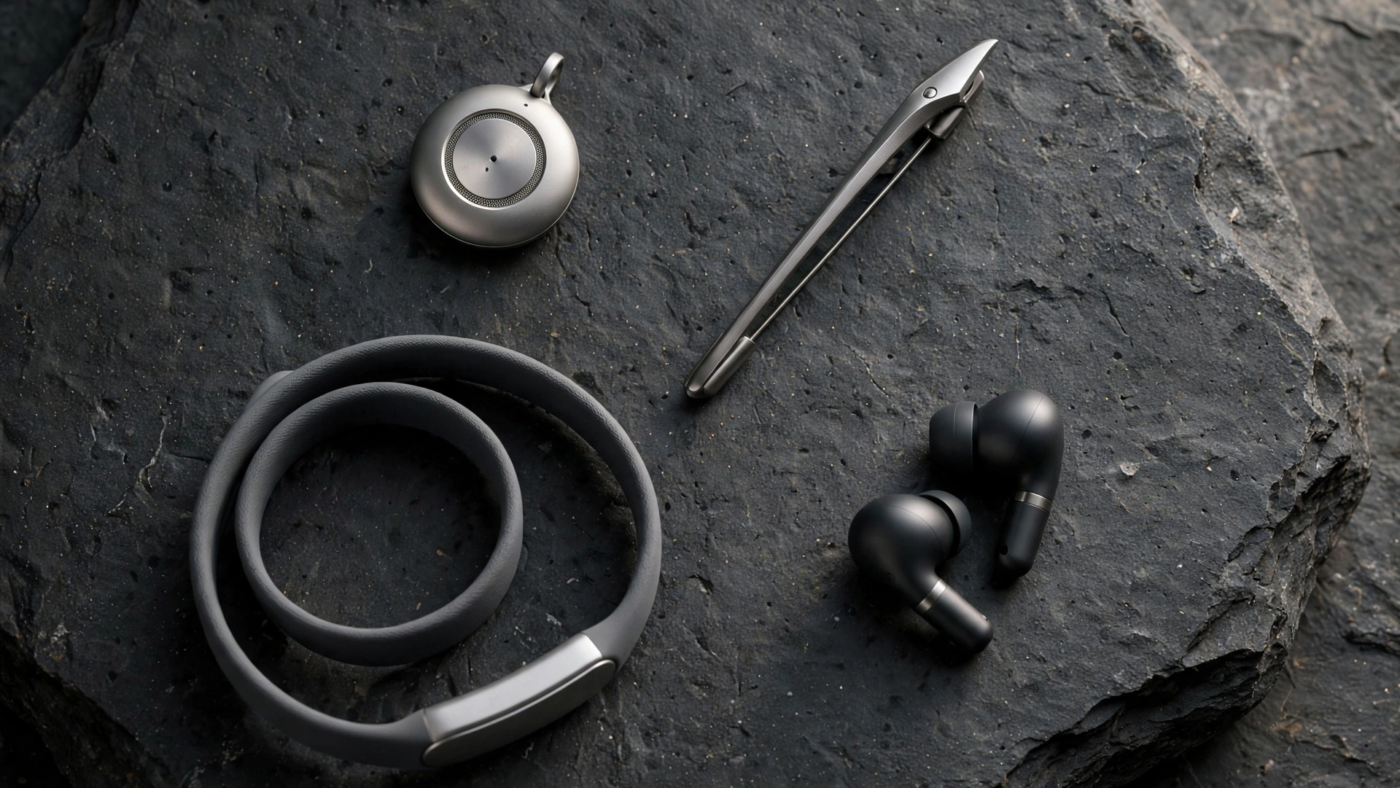
TL;DR: The AI wearable category looked dead after Humane’s AI Pin flopped and its servers went dark in early 2025. It is not dead, it just moved on from expensive standalone gadgets to cheap always-on recorders. Bee Frontier ($75) is the best value after Amazon retired the $50 Pioneer, Plaud NotePin ($159 device, $100 to $240 a year) has the most useful summaries, the Limitless Pendant is discontinued (Meta bought the company and stopped sales), and Omi ($179 device, free plan included) is the most experimental. None of them replace a phone. All of them raise the same question: who else can hear what these things record?
Start With the Warning Label: What Happened to Humane
In November 2023, Humane launched the AI Pin at $699 with the pitch that it would replace your phone. It did not. The company hoped to sell 100,000 units by the end of its first year and had shipped roughly 10,000 by August 2024, with returns actually outpacing new purchases that summer. A price cut to $499 that October did not save it. In February 2025, HP bought most of Humane’s assets, patents, and software for $116 million, explicitly excluding the AI Pin hardware business. Humane shut its servers off on February 28, 2025. Every AI Pin already sold went dark the same day, and customer data was deleted with it.
That is the backdrop for everything below. The category learned an expensive lesson: nobody wants to pay $699 for a device that stops working the moment its parent company runs out of money. The wearables that are actually worth buying now are cheaper, more honest about what they do, and built by companies that are not promising to replace your phone.
The Four Worth Considering
Bee Frontier, $75, no required subscription. Amazon acquired Bee in 2025 and launched the Frontier ($75) in October 2026 to replace the discontinued $50 Pioneer; a phone-mount sibling, the Bee Eclipse ($100), joined the lineup. This is the value pick by a wide margin. It records continuously, generates daily summaries, pulls out to-do items, and answers questions in a chat mode, all without a monthly fee. Battery life runs about 7 days, longer than anything else on this list. The tradeoff is polish: reviewers describe the always-on summaries as functional rather than refined.
Plaud NotePin, $159 device with a free Starter plan (300 transcription minutes a month) included, plus optional Pro at $99.99 a year (1,200 minutes a month) or Unlimited at $239.99 a year. Unlike Bee, this one requires you to manually start a recording per meeting rather than running always-on, which some people will actually prefer. It transcribes through ChatGPT and Claude, builds mind maps, and offers summary templates aimed at specific professions. It is HIPAA compliant and keeps the original audio, and reviewers consistently call its summaries the most immediately useful of the group.

Limitless Pendant, $199 device — when you could still buy one. Meta acquired Limitless in December 2025 and stopped new Pendant sales; existing owners get the Unlimited plan free, with support confirmed through 2026. As a new purchase, this one is effectively dead. This is the most expensive entry and the one that feels the most like a finished product. It runs always-on lifelogging, learns your voice specifically, and produces nested bullet point summaries plus calendar navigation. Battery life is the shortest of the four at around 2 days, and the free tier caps out fast if you actually use it daily.
Omi, $179 device (often on sale for $129) with a free plan included; an optional Unlimited tier costs $29.99 a month. This is the one built for tinkerers. It supports third party plugins, including a cognitive bias detector and a mentor app, and leans hardest into always-on ambient AI. Battery life is a single day, the shortest here, and the plugin ecosystem is exactly the kind of thing that should make you ask harder questions about where your recorded conversations end up.
A Real Example: What a Recorded Day Actually Looks Like
Say you wear one of the always-on devices, Bee or Omi, through a normal Tuesday: a commute, a team meeting, lunch with a friend, an evening call with a contractor about a home repair. The daily summary that comes back is not a transcript, it is a compressed, interpreted version of your day, written in whatever tone that device’s model defaults to. Bee’s summaries lean toward a slightly poetic style, turning “picked up dry cleaning” into a small narrative beat. That is charming until you need the actual words someone said in the contractor call, at which point you are back to digging through raw audio, if the device even kept it. Plaud, by contrast, requires you to hit record for that contractor call specifically, which means no daily narrative, but you get a cleaner, retrievable transcript exactly when you wanted one. Neither approach is wrong. They are just different bets on whether you want everything captured by default or only what you deliberately choose to capture.
Frequently Asked Questions
Is any AI wearable a full phone replacement?
No. None of the four devices here attempt that. They function as recording and summarization accessories alongside a phone, not instead of one, which is part of why they have avoided Humane’s failure mode.
Are these devices always recording, even in private conversations?
Bee and Omi default to always-on recording, while Plaud and Limitless require more deliberate activation or have shorter always-on windows. Anyone considering one should check the specific device’s privacy controls and disclosure obligations in their jurisdiction before recording other people.
What happens to my recordings if the company shuts down, like Humane did?
This is a real, unresolved risk across the category. None of these companies have published a binding data-export or continuity guarantee comparable to what a much larger company might offer, so treat anything you cannot re-download locally as recoverable only for as long as the company stays in business.
Related: Ray-Ban Meta Gen 3 Glasses Launch: New Frames, Longer Battery, Same $449 Price and Best AI Image Generators in 2026, Ranked and Compared.
Bottom Line: The AI wearable category did not die with Humane, it got cheaper and more honest about what it actually is: a recorder with a summarizer attached, not a phone replacement. Bee is the easiest recommendation for most people because it asks for $75 once and nothing more. Everything else on this list is a genuinely good product too, but every single one of them is also asking you to trust a small company with a running record of your conversations, and that is the real price tag, not the sticker one.
Follow Teck Hustlers: Facebook · X · Instagram · LinkedIn · TikTok · Pinterest

The Teck Hustlers Editorial Team covers technology, business, finance and gaming news for readers who want the story behind the headline. Every article is researched, written and edited by our in-house team, checked against company announcements, filings and reputable reporting, and updated when new facts emerge. We focus on what each development means for founders, professionals, investors and everyday users. Have a tip or a correction? Reach us through our contact page.